
Summer Fantasies: Three Reveries

This post was written in preparation for our September 2016 summer program.
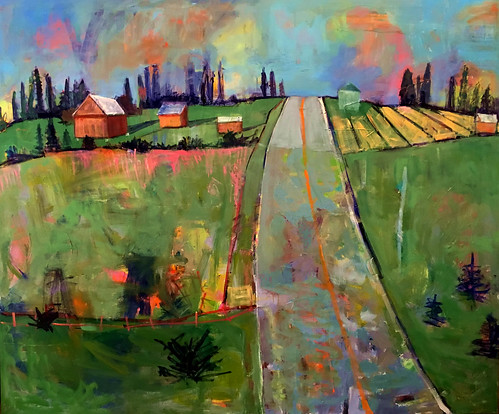
“The Secret Life of Barns (Cedar)” by Ellie Harold, 2016 Collaborating Artist
For our Summer Fantasies concert, we invite you to join us in a colorful journey for the imagination as we visit the themes of summertime and all of its fantastical elements. In this series of brief articles, you can learn more about the pieces on the program; the composers who penned them and the events that inspired them.
Within our Summer Fantasies concert program, there are three pieces I’ve dubbed reveries. I refer to them this way primarily because reverie is an intentional nod to their French origins, but also because each was inspired by or intended to evoke a dream-like fantasy.
Pastorale
— Gabriel Pierné (1863-1937)
Though he was a talented and very active musician and composer in his day, much of the compositional output of Gabriel Pierné is seldom performed (at least internationally). Like many composers whose works bridged the late-Romantic and 20th century (e.g. Jacques Ibert), he wrote for many different genres and types of ensembles and this is perhaps why he never received long-lasting notoriety for any particular accomplishment.
His colorful Pastorale, composed around 1886, is a vivid example of Pierné’s mastery of the colors within the wind quintet. Beginning with a lyrical if not somewhat plaintive solo from the  oboe, we’re guided into the warm and lush pastureland of the French countryside. This theme is passed about freely between flute, oboe, and clarinet, while the horn and bassoon provide the unmistakable voice of the bagpipe’s drone.
This is a journey across fragrant and sunny pastures or even the Lake Michigan coastline, guided not by a particular sense of destination, but merely a yearning to wander and to feel the warmth of the sun and the embrace of a fleeting breeze that comes and goes.
Golliwogg’s Cakewalk
— Claude Debussy (1862-1918)
Certainly a contrast from the nearly obscure Pierné, Claude Debussy is no stranger to concert programs. Although Debussy disliked the label of “Impressionist” being applied to his works, it is perhaps his association with this movement and his fascination with the musical elements it contained that has given most of his works lasting influence.
Much like the painters who were classified as impressionists, composers who became associated with impressionism often used moods and emotions as themes for their works. Similar to an artist skillfully using their pallete, a composer uses stark contrasts of color, texture, and timbre to blur the traditional framework of “melody vs. harmony” or “foreground vs. background”. The effect causes the viewer or the listener to focus attention on a larger perspective rather than small details.
Debussy dedicated his solo piano suite, Children’s Corner (1908), to his three-year-old daughter. Each movement is inspired by toys from Claude-Emma’s toy collection. For our concert, we’ve selected the final movement, “Golliwogg’s Cakewalk”, transcribed for wind quintet by Tom Kennedy.
On the surface, this is a colorful dance movement with very abrupt dynamic and tempo changes. But there are deeper historic and musical details within this seemingly simple movement.
When the movement was composed, Golliwogg dolls were very much in fashion due to the popularity of the series of children’s  books written by Florence Kate Upton (1873-1922). Golliwoggs were stuffed black dolls with red pants, red bow ties, and wild hair — a mimicry of black-face minstrels. Perhaps due to the fact that Upton did not trademark her Golliwogg character, the later free use of these characters as menacing villains and garish icons in literature and advertising has led to the modern perception of Golliwoggs as overtly racist against people of African descent.
A most detailed history of Golliwoggs can be found here — as part of the ongoing work of Dr. David Pilgrim at Ferris State University. When examining the Golliwogg character from an historic context, it’s difficult to see its beginnings as anything but racially insensitive at best. Debussy’s music being associated with a character that became purposefully demeaning to people of color is certainly unfortunate.
Meanwhile, the cakewalk itself is a product of black minstrel shows. Beginning somewhere in the mid-1800s, the dance was a parody of upper-class whites performed by black dancers as entertainment for white audiences. At the conclusion of the dance, the most elaborate dancer would be awarded a prize — a hoecake wrapped in a cabbage leaf. Gradually, the dance became a popular sensation regardless of the race of the dancers.
Debussy also embedded a bit of satire into the music by quoting Richard Wagner’s love-death leitmotif from the opera Tristan und Isolde. Each time this quote appears it is immediately followed by distinct banjo imitations — an immediate contrast between drama and mirth.
Despite negative associations and undertones of darker themes, Debussy’s piece has remained a concert favorite. At least  the murkier side of its origin has provided important discussion for students, teachers, and historians. Personally, rather than imagining the demeaning, clown-like dance of a Golliwogg, I imagine the energetic, boisterous play of children during a performance of this piece; what I imagine Debussy himself likely intended.
Our unique challenge as a quintet is to perform this piece with the precision of a single pianist’s 10 fingers rather than the 50 fingers belonging to the 5 individuals we are! The contrasts and abrupt changes are enough to make any ensemble flex their muscles.
Pavane
— Gabriel Fauré (1845-1924)
While there are certainly more renowned French composers, it was Gabriel Fauré’s scholarship and teaching philosophy that freed French art music from its stubborn rut, paving a clear path between the Romantic era and the 20th century. When he was appointed head of the Paris Conservatoire in 1905, a crowning achievement of his life’s work, he rocked the boat considerably by broadening the curriculum of study — extending it well into ancient times as well as into very modern works which had been completely banned previously. His appreciation for a wide variety of music and intuitive compositional technique enlivened future generations of composers (e.g. Maurice Ravel & Nadia Boulanger).
Originally written for piano and chorus in the late 1880’s, the orchestral version of Fauré’s Pavane was premiered in 1887. During this period, his career as a composer was beginning to bring both modest income and (gasp) the extra-marital romantic entanglements which would delight, inspire, and torment him.
Appropriately, the choral lyrics lament the romantic helplessness of man. Fauré described the work as “elegant, but not otherwise important” little realizing it would become one of his most performed  pieces, inspiring similar works by Debussy and Ravel. The orchestral version is often performed with or without chorus and can also include dancers.
Manitou Winds’ performance of Fauré’s Pavane is based on the orchestral version of the work arranged for wind quintet by Tracy Jacobson. An unavoidable challenge facing wind players is the sheer necessity of breathing without interrupting Fauré’s long, enticingly chromatic phrasing. This breathing difficulty is complicated by the tendency for most orchestras to perform this work at a tempo much slower than the composer intended. The memory of these inspired performances tempts us to play more slowly than our lungs will allow. Meanwhile, we invite you sigh along with us, getting lost in Fauré’s light-hearted romantic daydreams.
The reverie-themed paintings in today’s article are from our collaborating artist, Ellie Harold’s studio. For more information about Ellie’s home studio and gallery and to view many more examples of her work, visit www.EllieHarold.com.
Händel’s Fireworks

This post was written in preparation for our September 2016 summer program.
“The Secret Life of Barns (Cedar)” by Ellie Harold, 2016 Collaborating Artist
For our Summer Fantasies concert, we invite you to join us in a colorful journey for the imagination as we visit the themes of summertime and all of its fantastical elements. In this series of brief articles, you can learn more about the pieces on the program; the composers who penned them and the events that inspired them.
Music for the Royal Fireworks
— Georg Friederich Händel (1685-1759)
From the beginning, Händel led a successful career as a composer. Having garnered the favor of royal patronage, his primary audience was both powerful and wealthy. But it was his arrival in London in 1710 that led to his immense popularity, winning him the commissions 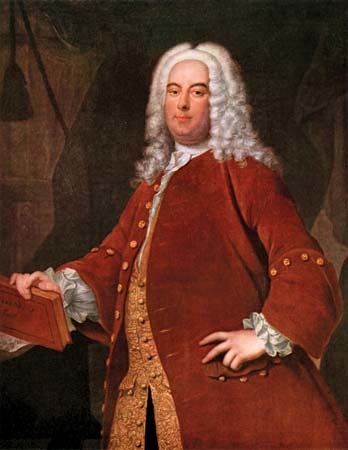 which led him to compose music that still shows up on concert programs nearly 300 years later.
In our modern era of iPods, online streaming music, and non-stop news-feeds, live music is so commonly bypassed in favor of the convenience of “canned music” that it’s almost inconceivable for us to envision music being written and performed expressly for a single occasion. However, it was exactly that sort of one-time occasion that prompted King George II to commission Händel in 1749 to write Music for the Royal Fireworks.
As the title so clearly suggests, the music was intended to accompany an elaborate fireworks display. The fireworks were only one part of a gigantic outdoor celebration of the recently-signed peace treaty which ended (albeit only temporarily) the War of Austrian Succession.
This particular commission carried with it some fairly difficult requests Händel was required to honor; among them, a commandment about the instruments to be used. Rather than the traditional orchestra, the king commanded only wind instruments be used (No fiddles of any kind!). This edict led to the formation of a rather strange ensemble comprised of 24 oboists, 12 bassoonists, 1 contrabassoonist, 9 trumpeters, 9 horn players, 3 timpanists, and a battery of side drums. Having begrudgingly complied, Händel later added strings to his score and (thankfully) it is this version that is most often performed!
In an odd twist of fate, it was an unauthorized public rehearsal held a week prior to the big party that was the more successful premiere. That rehearsal performance (which Händel had vehemently opposed) led to one of London’s first  traffic jams as concertgoers crammed the streets, stalling traffic for more than three hours. A week later, during its intended premiere performance, many spectators were distracted by the fireworks which had set fire to one of the elaborate pavilions in the middle of the show.
One month later, Händel himself conducted a performance of his revised score (with added fiddles, zero fireworks, and hopefully far fewer oboes) and this set his suite on the road to becoming one of his most popular works.
Manitou Winds’ performance will feature three of the smaller movements from Händel’s suite painstakingly arranged especially for wind quintet by Trevor Cramer.
The first selection, II. Bourrée, is based on a stylized French dance that was especially popular during the Baroque period (1600-1750). Composers often elaborated on this quick dance rhythm in inner movements of multi-movement works as a contrast to slower, 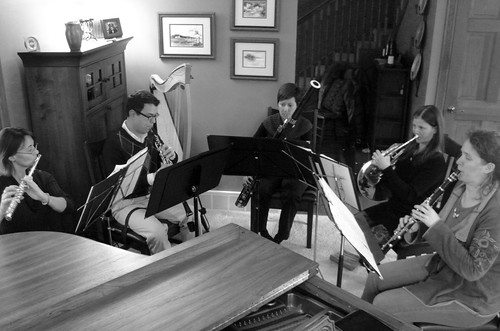 heavier material. These pieces were not actually intended to be danced to for any performances, but they have a tendency to get one’s toes tapping.
III. La Paix (Largo alla siciliana), “The Peace“, was Händel’s acknowledgement of the peace treaty his music was commissioned to celebrate. It’s a wonderfully serene movement based on the siciliana style marked by lilting rhythms. Perhaps to denote the happy occasion, Händel broke from tradition and composed this siciliana in a major key, avoiding the darker sounds we normally associate with minor keys.
We close out our visit to the royal fireworks party with what is probably the most recognizable movement from the entire suite: IV. La Réjouissance (“The Rejoicing“). This boisterous theme was undoubtedly Händel’s way of letting the guests know the party was definitely not over!
___________________________________________________________
Don’t miss Summer Fantasies
Friday, September 30th, at 6pm
Oliver Art Center
132 Coast Guard Road
Frankfort
Admission is free.
Summer Fantasies: The Art of Collaboration
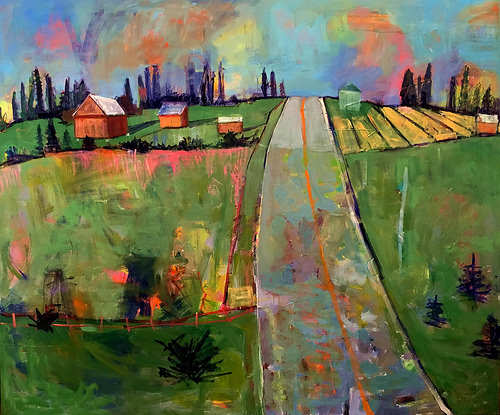
“The Secret Life of Barns (Cedar)” by Ellie Harold, 2016 Collaborating Artist
For our Summer Fantasies concert, we invite you to join us in a colorful journey for the imagination as we visit the themes of summertime and all of its fantastical elements. In this series of brief articles, you can learn more about our collaborative artist and the individual pieces on the program.
When you attend a Manitou Winds concert, not only are you able to experience and witness the unique, intimate quality of chamber music, you can also experience the unique visual art provided by our collaboration with a local artist we’ve personally selected.
What does it mean to “collaborate” with an artist? How can musicians and visual artists truly collaborate when each works in a completely different medium? We’ve learned that each collaboration means something a little different. Each experience is flavored by the music we’ve chosen for the concert and also by the artist’s personal style, their existing work, and their eagerness to engage and bond with a bunch of musicians.
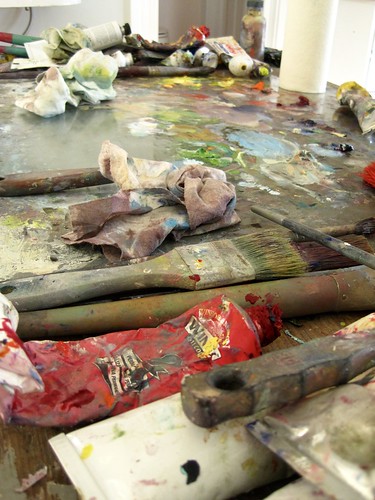
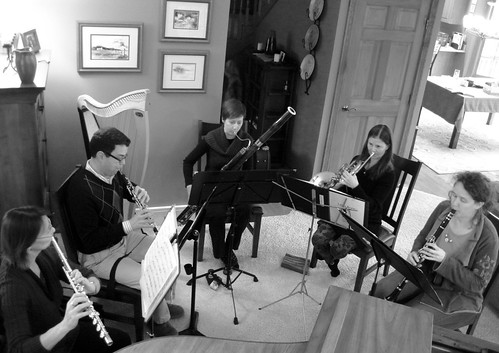
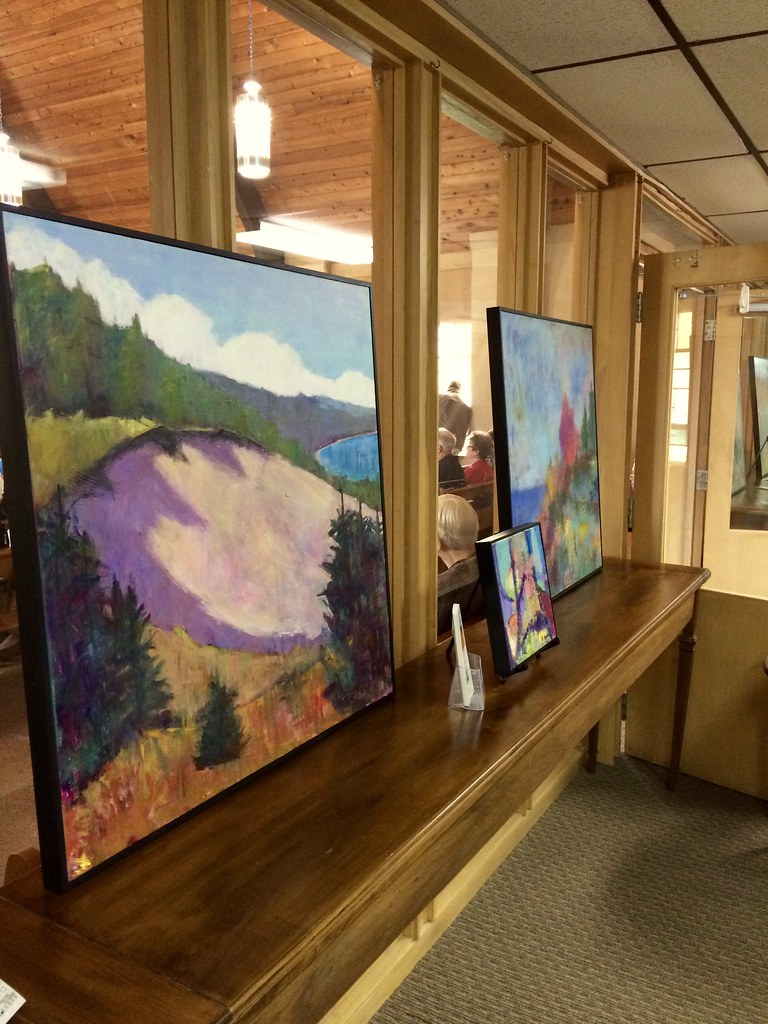
Our 2016 collaborating artist is Ellie Harold of Frankfort. You can read all about Ellie and her marvelous home studio and gallery in an article we posted earlier this year while we were working toward our spring concert. Ellie’s work is unique for its boldness of colors and contrasts and its blurring of the lines between representational and abstract art. The immediate and unmistakable effect of her artwork was what initially drew us to reach out and ask her to collaborate with us. However, it has been her personal artistic philosophy and her openness to explore new facets of the creative process that has made her an inspiration to 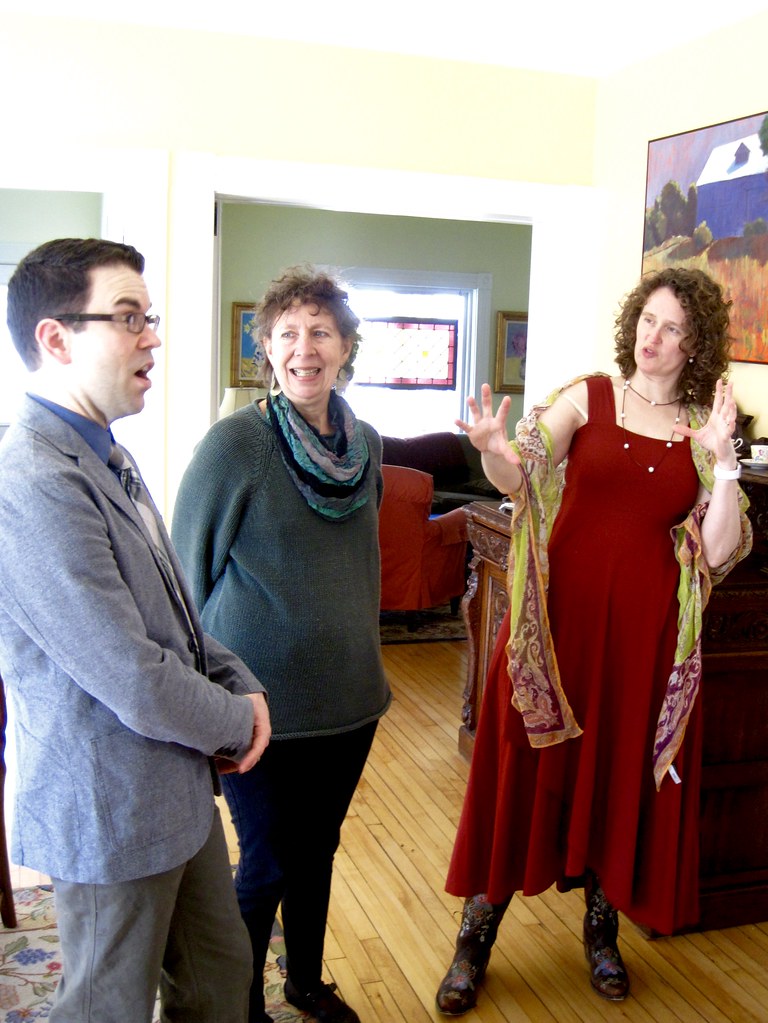 us and has insured more joint projects for us in the future.
Our collaborating artists typically provide artwork to help us promote our concert, and we always offer the artist an opportunity display a collection of their artwork at the concert venue. But, not too long before the concert, Ellie approached me with an even bolder idea. “About a week before the concert, a friend asked if I was going to paint ‘live’ during the event,” Ellie recalls. “I’d heard of artists ‘performing’ live before an audience and had not given it much thought, but in this circumstance it seemed like a perfect way to expand our notion of collaboration.”
I remember getting Ellie’s e-mail about painting live while I was in the midst of pulling together some rehearsal details. I had been struggling with ways to demonstrate for the audience the deeper connection between our music and Ellie’s art. Though I was immediately touched by our synchronicity of thought, her idea seemed very risky to me initially. I thought, perhaps, a few audience members may find the presence of an artist and a canvas distracting or feel it was some form of artistic non sequitur. Still, though, I found the idea irresistibly refreshing. After polling the rest of the group members to be sure they wouldn’t find it distracting to their own performance and okaying it with the concert host, I gave Ellie the green light.
Ellie arrived to set up her exhibit in the narthex — a very exciting sampling of the contents of her gallery. Then, she brought in the very blank 30″ x 40″ canvas that was to be her part of the performance. “How on earth is she going to fill up a canvas that size?” I wondered, “And will she feel nervous with a live audience or be rushed by the clock and the program as it sweeps by?”
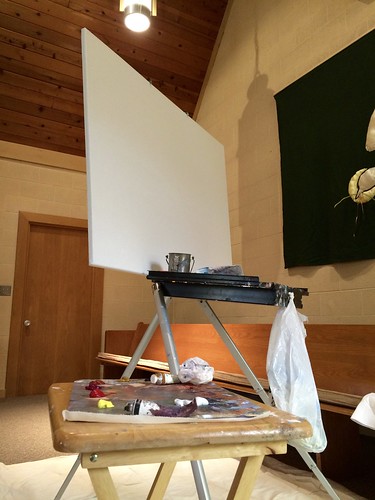
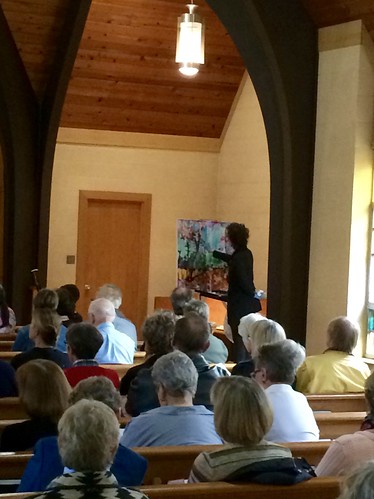
“I had located my gear off to one side in the area occupied on Sunday mornings by the choir. I squeezed out some paint and placed the blank canvas on my easel. With no particular image in mind, I simply responded to the music as I was hearing it in the moment,” Ellie recalls. “Deliberately setting aside my thoughts, as in meditation, I painted intuitively, allowing the brush or palette knife, this color or that, to make their way to the canvas without thought, according to impulses arising both from the music and within me. Within a short time, I found myself at one with the music, in a sort of fearless, inspired, altered state I’d previously only experienced when speaking or teaching in church.”
“As a whole, the painting seems to have come from a space that includes me, but also transcends me.”
— Ellie Harold
By intermission, you could tell our audience was intrigued by the joint creative process they were witnessing. The music we were performing was less than 20 years old and certainly not familiar to most concertgoers. The titles and composers listed on the program did not provide many clues. Only the performance itself could reveal the intent and direction of the music. Meanwhile, Ellie’s painting was even newer — each color and shape an unfolding mystery for the eyes.
Following the concert, audience members gathered around Ellie’s canvas to see her creation up close. For the members of Manitou Winds, it was especially exciting because we’d been completely unable to see the canvas during the performance. Ellie dubbed the painting “New Voices” (the theme and title of the concert).

“To me the painting speaks of the reality of how Art Ideas can find expression when there’s openness and trust in the process of consecrated action,” Ellie says. “I can recognize familiar elements in this work, but I also see lyrical passages that seem directly related to the music. As a whole, the painting seems to have come from a space that includes me, but also transcends me.”
Speaking personally, I find the landscape Ellie brought to life during the performance a very intriguing piece — at once welcoming and foreboding. There’s an apparent direction to the forms, but throughout there’s also a very open and improvised feeling, not unlike the mystifying pattern of falling raindrops. I feel drawn into this landscape to explore and discover the mysteries hiding behind those forms.
You can find Ellie’s painting (“New Voices”) on display in her gallery at 402 Forest Avenue, Frankfort, alongside her other paintings newly created this summer. Also among her summer’s bounty is the painting selected to promote our upcoming concert entitled “The Secret Life of Barns (Cedar)”. We’re looking forward to our performance with this magnificent landscape as a colorful backdrop.
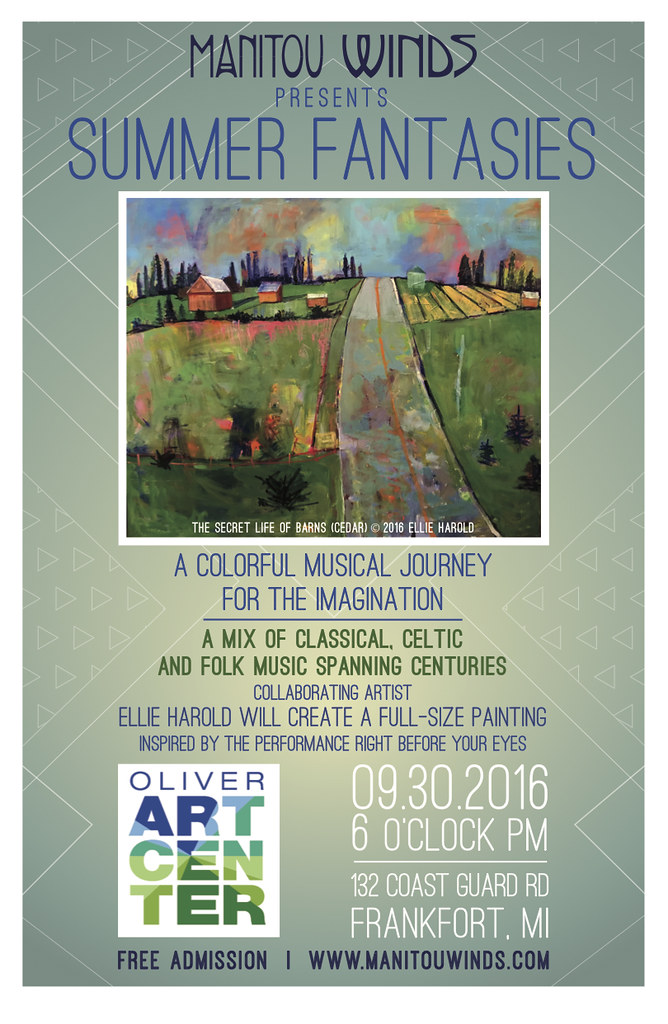
On September 30th, Ellie will join us once again on-stage at the Oliver Art Center in “Summer Fantasies” as we explore the many moods and colors of summertime. Ellie says the canvas will be even bigger, this time! We’re all excited to see where her brush will take us as the music guides us along an uncharted, fantastic journey.
For more information about Ellie’s home studio and gallery and to view many more examples of her work, visit www.EllieHarold.com.
___________________________________________________________
Don’t miss Summer Fantasies
Friday, September 30th, at 6pm
Oliver Art Center
132 Coast Guard Road
Frankfort
Admission is free.
New Voices: Jason McKinney

This post was written in preparation for our May 2016 spring program.
There’s an undeniable pleasure and pride that comes with reviving classic works written by the masters, but to select a piece of music which has little or no performance history and bring it to life presents a unique opportunity for the musician and the audience. Our May 1, 2016, concert entitled New Voices will be a program full of new music — all written within the past 20 years by living composers.
Compiling and researching the music for this concert has been a rich and rewarding experience for me and the members of Manitou Winds. Since the composers who created the music we’re performing are alive and well, we’re able to correspond with them, learn firsthand about their unique approaches to composition, and ask probing questions about their work. This more personal connection unlocks a new dimension of the musical experience.
“I did not sit down, one day, and decide I would write Three Narratives,” says Jason McKinney (b. 1979). “The piece just happened to come together during a very difficult time in my life.  The structure of the piece, the melodies inside the structure — these were all comforts to me, a way of coping.”
Three Narratives (for flute, clarinet, bassoon, and piano) tells of the composer’s very personal journey of coming out to his family and friends — a journey that led him through fear, self-hatred, and finally joy.
He began writing the piece in 1999 (originally scored for oboe, mezzo-soprano vocalise [no lyrics], and piano) and performed an early version as part of his 2001 junior recital. Still, Jason insists Manitou Winds’ performance on May 1st will be the true premiere. “I have revisited and revised the piece many times over the years — adding lines, refining sounds, creating entirely new sections. In many ways, it’s only now the piece I truly meant for it to be” he says. “I think I’m ready for the music to speak to other people who may be having similar struggles.”
Many of the composer’s favorite lines in the three-movement piece were conceived in one particular practice room of his university’s music annex. “I think a lot of people picture a grieved artist staying up all hours of the night, baying at the moon,” he says. “For me, it was usually early morning. I would wake up from a fitful night of sleep, grab a tall coffee, and make my way to my favorite piano long before classes were to start.” It was during these early morning solo piano sessions that the lines of each movement began to take shape. Jason eventually committed those lines to paper.
“Once I started putting the melodic lines onto the staff paper and sketching the underlying supporting material, I began to get the sensation that the music was something of a narrative — telling a story with characters coming and going with the  phrases,” he says. “I’d never written anything quite like it before and I’ve not since.”
Movement one, entitled “Once”, is dedicated to Jason’s mother, Brenda, whom he credits for his having been allowed to pursue music. “Mom not only encouraged us to succeed, she was a kind of force behind us.” he says. “She was determined we would have opportunities she missed out on. So, when I showed musical aptitude, she did everything she could to see that I had an opportunity to take lessons.” The movement also depicts Jason’s childhood and adolescent memories of musical exploration.
The joy of the first movement ends very abruptly without harmonic resolution, segueing into movement two, entitled “In the Dark”. Jason identifies its first melody as the theme of utter self-hatred. “It’s a melody without any real direction or resolution; persistent and unwilling to be ignored. The drone in the clarinet is like a ghostly reflection in a mirror.” The self-hatred Jason wrote about in his score was also being written down in his personal journals which he’d kept since early high school.
“For years, I’d prayed almost nightly that God would make me not gay anymore. I thought if I tried hard enough not to be gay, one day I would be rewarded and it would be completely erased. Eventually, I began praying that I would die — specifically, that I would not wake up the next morning. It was a prayer I said often for about three and a half years. Every sunrise was like a reminder that I was doomed.”
As the theme of self-hatred reappears in many forms throughout the movement, we hear depicted Jason’s struggle to move on with his outward life at university while his inner life was falling apart. He says it was his close friend, Amanda, who helped him eventually heal. “We talked for hours about our fears and our self-hatred. It was the first time I’d ever talked to someone who had the same ‘sickness’ as me.”
As the second movement nears its close, the composer’s anguish resolves into peaceful epiphany as the music shifts from a very discontented, climactic atonality to a relieved Eb major. “I don’t like to call it an epiphany, but it was like rays of light came tearing through the darkness I’d been wandering in for ages. In that moment, I knew the change I  needed to make was to stop trying to change — to stop hating myself. I’d been trying to go in the wrong direction,” he explains.
“Tired of asking why. Tired of reasoning… I was just hanging my head there in silence. And then, like reading for the first time words I’d overlooked a hundred times, a voice in my mind: You can’t be fixed because you aren’t broken. You are who you were made to be; stop trying to be someone you aren’t.“
Movement three, entitled “Turning”, depicts Jason’s eventual acceptance and coming out to his friends and family. Though the movement’s final theme was actually penned years before they met, Jason insists the music depicts the moment he met his husband, James. “I told him during our vows (five years later) that it was like that cheesy Savage Garden song: I knew I loved you before I met you, I think I dreamed you into life.”
“It’s strange that I don’t really journal much anymore. I used to spend hours writing in journals, unloading so many thoughts. I’ve tried picking it back up, but it somehow doesn’t seem to be necessary for me anymore. I guess it’s because my life is no longer ‘closeted’. I’m able to be honest with myself and this allows me to be honest with everyone around me. I don’t have to guard things behind the covers of a journal, scrawled in nearly illegible handwriting… or encoded in music.”
Can music tell a story completely independent of language? Our audience will be the judge of that when Manitou Winds premieres Three Narratives.
New Voices: Bonnie L. Cochran

This post was written in preparation for our May 2016 spring program.
There’s an undeniable pleasure and pride that comes with reviving classic works written by the masters, but to select a piece of music which has little or no performance history and bring it to life presents a unique opportunity for the musician and the audience. Our May 1, 2016, concert entitled New Voices will be a program full of new music — all written within the past 20 years by living composers.
Compiling and researching the music for this concert has been a rich and rewarding experience for me and the members of Manitou Winds. Since the composers who created the music we’re performing are alive and well, we’re able to correspond with them, learn firsthand about their unique approaches to composition, and ask probing questions about their work. This more personal connection unlocks a new dimension of the musical experience.
Many composers have the uncomfortable (or some would say blissfully ignorant) task of writing music for instruments they do not themselves play. In terms of music written for full orchestra or wind ensemble, it’s especially understandable considering the number of instruments represented. The most successful of chamber music composers, however, often write music featuring at least one of the instruments they know intimately.  Such is the case with Bonnie L. Cochran (b. 1975) whose catalog of compositions explores the many voices of the flute.
Bonnie grew up in Georgia and began composing music around the age of 12, but did not formally study composition until attending college and university where she eventually studied with John Heiss, John Clement Adams, Larry Bell, and Ronald Byrnside. She earned her Bachelor of Arts in Music and Religious Studies from Agnes Scott College (Decatur, GA) and a Master of Music in Flute Performance from Boston Conservatory.
Perhaps the biggest impetus for her composing in recent years has been the formation of the Amaryllis Chamber Ensemble; an ensemble which she founded. The ensemble (a mix of violin, viola, cello, harp, and Bonnie’s flute) performs workshops and outreach programs as well as special events and concert appearances in and around the greater Boston area.
While searching for music for our New Voices program, finding Bonnie’s music was a happy surprise. The flute is capable of so many modern special effects and extended techniques (too many to list here!) that a large swath of modern flute music tends to explore these extra-musical sounds and effects rather than drawing the listener in with an intriguing melody. Bonnie’s music manages to be undeniably modern and yet unquestionably musical and so I knew her Suite for Flute & Piano (2003) would be an excellent fit for our concert.
The suite contains three movements and Bonnie says the melodies and especially the forms within the work evolved into their present form over the course of 6-8 years.
O Rose thou art sick.
The invisible worm,
That flies in the night
In the howling storm:Has found out thy bed
Of crimson joy:
And his dark secret love
Does thy life destroy.— William Blake (1757-1827)
Movement one (A Dying Rose) was inspired by Blake’s “The Sick Rose” — a text which Bonnie says both fascinated and haunted her from the moment she was first introduced to it. She says she originally intended the theme to be a piece for vocalist and piano however she gave into the urge to play it on her own instrument and so she can’t hear it any other way.
Movement two (Meditation) is “reflective in nature, a little sad, yet hopeful,” says Bonnie. Like many aspects of programmatic music, the colors and inflections of the harmony — though interpreted as exactingly as the composer penned them — can sometimes strike the performer or an audience member in different ways.
 Sam Clark, Manitou Winds’ flutist, said that the title of “Meditation” originally seemed odd to her since the chromatic melodic lines drawn by flute seemed to suggest anxiety or distraction. Once she was in rehearsal with Susan Snyder, our guest pianist for New Voices, she realized the movement does reach a state of meditative peace in the last few measures with the aid of colors added by the piano.
In contrast to the more enigmatic and somewhat somber themes in the first two movements, the final movement of the suite (Little Dance) is “a light-hearted romp” according to Bonnie. While the first two movements of the suite explore the dark and breathy bottom register of the flute, the third movement travels higher and higher as the dance progresses. Sam and I agree that the third movement is both graceful and spontaneous — not unlike the dancing of an exuberant, young ballerina in training. Oh — and there is a surprise ending: one last flourish as the flutist graces up to a high A (the very highest note in the entire suite).
Three contrasting scenes combined into one fascinating little suite… we look forward to sharing Bonnie’s remarkable piece with our audience.
New Voices: Deborah J. Anderson

This post was written in preparation for our May 2016 spring program.
There’s an undeniable pleasure and pride that comes with reviving classic works written by the masters, but to select a piece of music which has little or no performance history and bring it to life presents a unique opportunity for the musician and the audience. Our May 1, 2016, concert entitled New Voices will be a program full of new music — all written within the past 20 years by living composers.
Compiling and researching the music for this concert has been a rich and rewarding experience for me and the members of Manitou Winds. Since the composers who created the music we’re performing are alive and well, we’re able to correspond with them, learn firsthand about their unique approaches to composition, and ask probing questions about their work. This more personal connection unlocks a new dimension of the musical experience.
I happened across the music of Deborah J. Anderson (b. 1950), last fall, by pure chance. I was searching for a modern piece for our clarinetist, Anne Bara, but was having difficulty finding something that fit the mood of the program. So, as creative director, I  decided to go in a different direction. I read a brief description of Deborah’s Five Songs for Kathleen for oboe, mezzo-soprano, and piano and decided to investigate further. To my delight, I was soon having a very cordial e-mail exchange with Deborah who gave me permission to transcribe the oboe part for clarinet.
Deborah says she began composing music around the age of six while growing up in Tacoma, Washington, but never pursued music or composition in academia. Though her schooling was primarily in French and language instruction, her catalog of compositions reveals a consummate musician with a unique flair for combining musical colors.
Five Songs for Kathleen (2007) is a brilliant song cycle combining the often bittersweet imagery of the poets’ lines with Deborah’s signature warm and graceful melodic writing.
Winter Sun
There was a bush with scarlet berries,
And there were hemlocks heaped with snow,
With a sound like surf on long sea-beaches
They took the wind and let it go.The hills were shining in their samite,
Fold after fold they flowed away;
“Let come what may,” your eyes were saying,
“At least we two have had to-day.”— Sara Teasdale (1884-1933)
 I asked Deborah about the backstory of the song cycle. It turns out it was a surprise gift for a long-time friend from college. “Kathleen is a retired opera singer whom I met many years ago when we were both freshmen at Lawrence University.” Deborah says, “At one point, Kathleen found it difficult to maintain her singing career while balancing family life. I composed Five Songs for Kathleen to encourage her.”
The cycle brings to life the poetry of Sara Teasdale, Emily Dickinson, and Sheila Nickerson with the added bonus of a small poem written by Deborah, herself, entitled “Swift Feet”.
Adding this song cycle to our program has given us a unique opportunity to work with the talented Claire Olinik, soprano soloist from the Traverse City area. Claire says that she’s always loved the poetry of Sara Teasdale and Emily Dickinson. When asked to pick her favorite song from the cycle, she says she would have to choose Dickinson’s “No Surprise”.
Apparently with no surprise
To any happy flower,
The frost beheads it at its play
In accidental power.The blond assassin passes on,
The sun proceeds unmoved
To measure off another day
For an approving God.— Emily Dickinson (1830-1886)
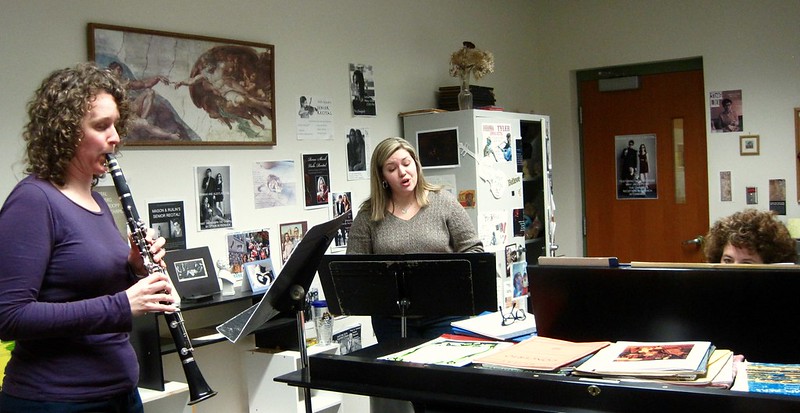
“The poetry is so heartbreaking, yet matter-of-fact.” said Claire, “It’s been fun to play with those tones and try to find a balance.”
Rehearsal for this song cycle has also been a rewarding musical opportunity as we’ve enlisted the talents of Susan Snyder, collaborative pianist at Interlochen Center for the Arts, to bring Deborah’s 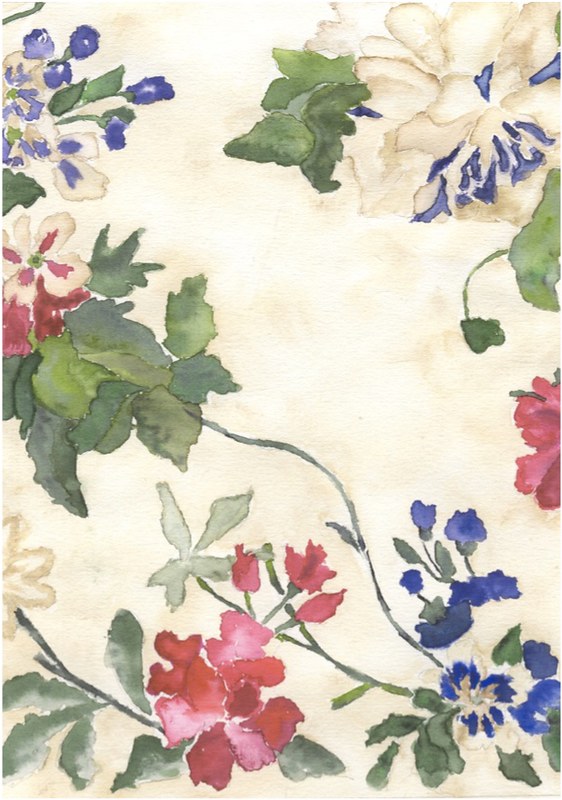 piano score to life. Susan’s interpretation enlivens the poetry further and allows the colorful duet of soprano and clarinet to soar.
Anne admits she initially worried the timbre of the clarinet would differ too greatly from what was originally scored for oboe, but she’s now in love with her part. While each song offers a chance for the clarinet to shine, certainly the most virtuosic moment is in Deborah’s setting of “Dolphin” by Sheila Nickerson. It features “dolphin calls” for both the soprano and the clarinet along with florid passages running up and down the instrument’s range — a colorful and vivid delight.
It would certainly be remiss to not convey what an inspiring experience it has been to work with a female composer who has set to music the texts of female poets. Likewise, it has also been a unique opportunity to place this special music in the hands of three very masterful women — together, perhaps, giving at least a modicum of long overdue vindication to the countless female composers who were overshadowed or suppressed throughout history.
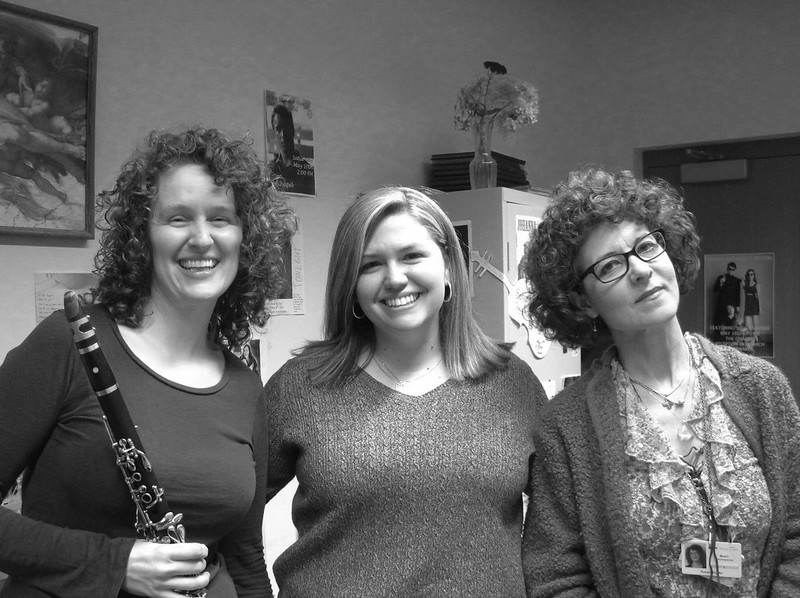
We look forward to sharing Deborah J. Anderson’s lovely song cycle with our audience and hope to explore more of her compositions in future programs.
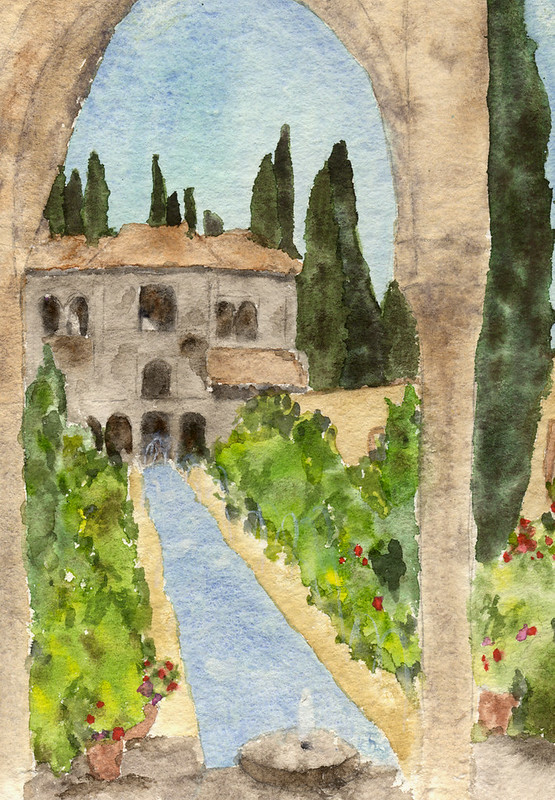
Note: The beautiful watercolor paintings you see in this article were created by the composer, Deborah J. Anderson.
New Voices: The Art of Collaboration

This post was written in preparation for our May 2016 spring program.
One of the aspects we enjoy most about putting together one of our seasonal concerts (other than the music itself) is the opportunity to collaborate with one of the talented local artists in our area of Northern Michigan. But, what does it mean to “collaborate” with another artist — especially when you work in a completely different medium?
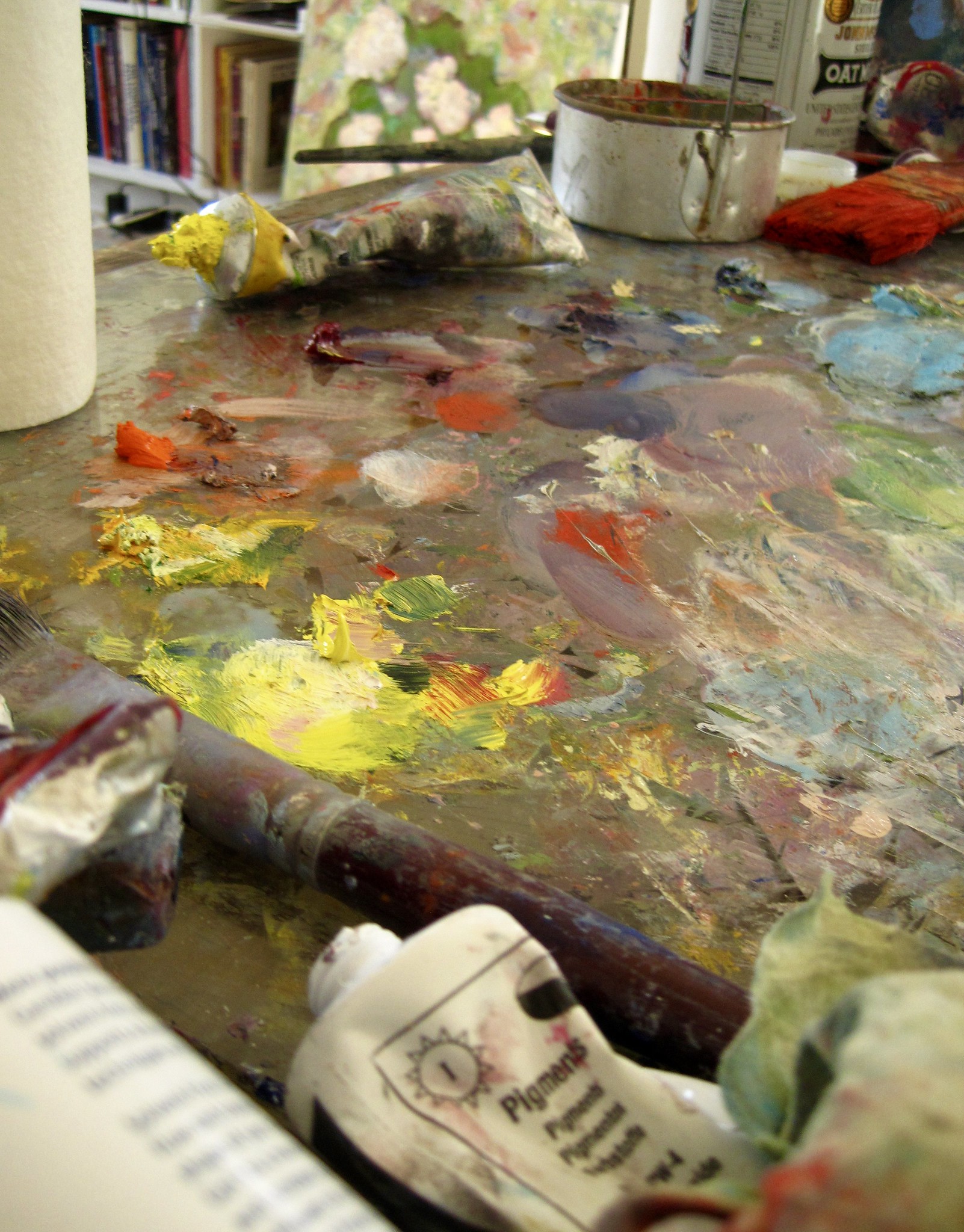

Honestly, with each collaboration we participate in, it means something a little different; it all depends on the artist, their work, and their eagerness to engage with a bunch of musicians!
For our May 1st concert (New Voices), we were hoping to find an artist in the Benzie County area. Not only would this make their collaboration more accessible to the concert venue, but it would help 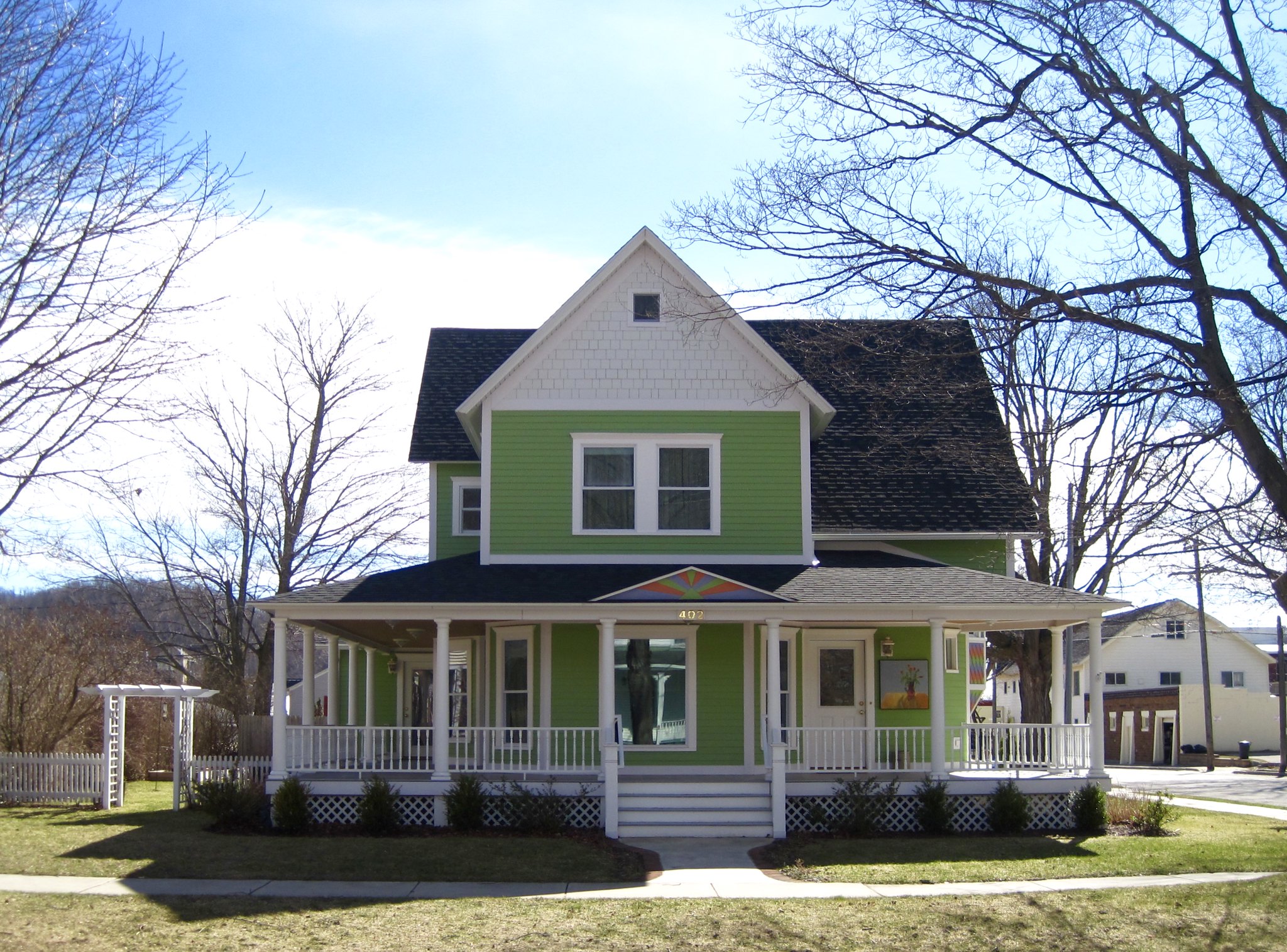 give our whole program a firmer grounding in the Benzie area. We were very fortunate, then, to come across the artwork of Ellie Harold of Frankfort.
Though Ellie is originally from Atlanta, like so many others, she visited Northern Michigan and quickly gave into its powerful charm. Within a year of her visit, she bought property and began putting down roots in Frankfort! Her home — an 1895 Victorian house in Frankfort’s historic district she and her husband have lovingly restored — is also her art studio and gallery.
“For me it’s important to have a place to ground myself, but it also serves as a springboard for exploring a larger arena. Likewise, as the music of ‘New Voices’ draws inspiration from a personal experience or a local scene, as an artistic expression it also extends its influence much farther afield.” — Ellie Harold
Grounded in the beauty of Northern Michigan, Ellie’s art recently reached a very large audience in February 2016 when one of her paintings (Morning Light) was selected for the Prince Street Gallery‘s 8th National Juried Exhibition in New York City. Ellie was one of only 64 artists whose work was chosen from over 700 submissions for the juried event.
Though her artwork often has a certain representational quality, the colors and techniques she employs result in an image that goes beyond mere representational art. A glimpse of the Lake 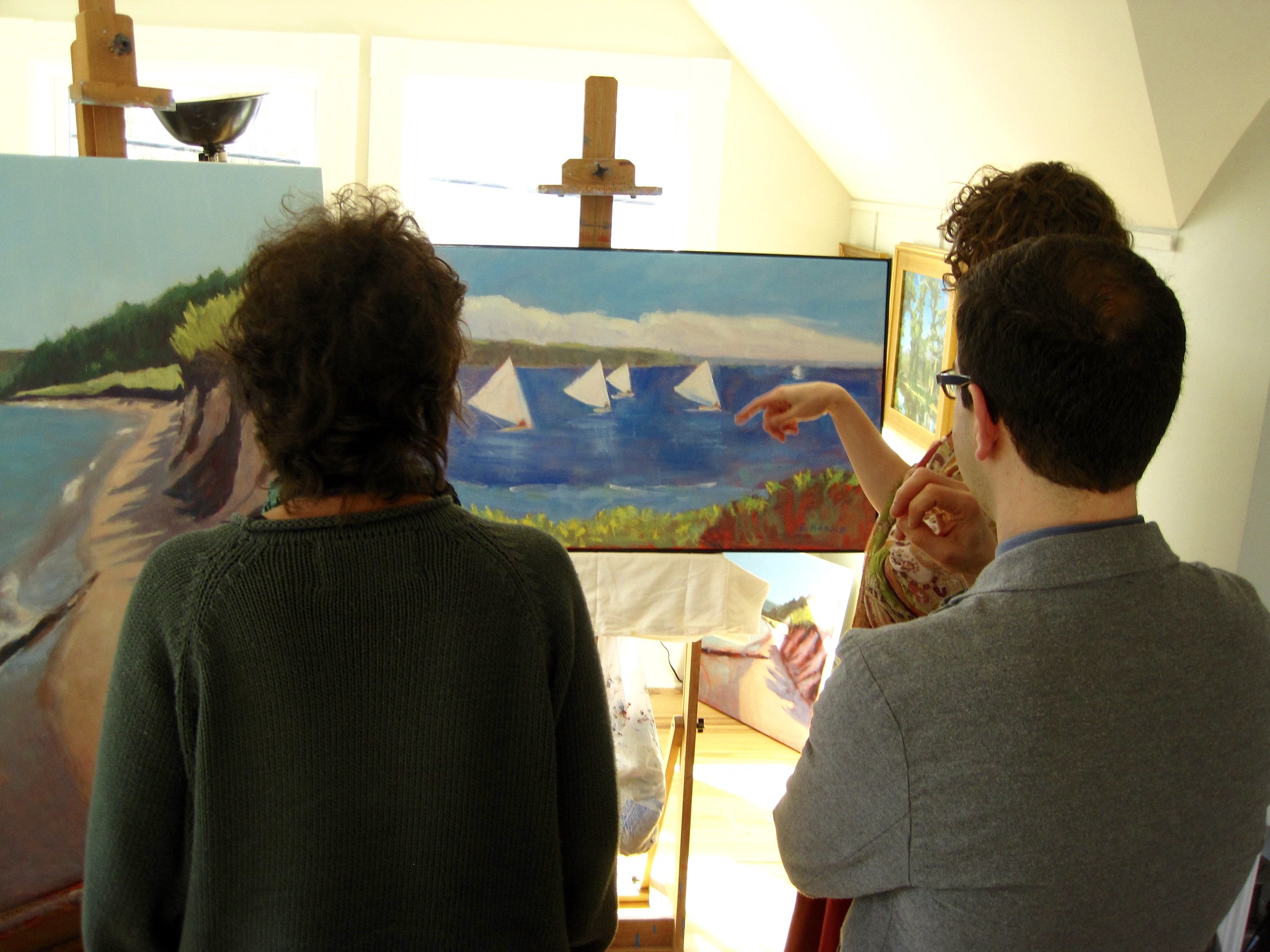 Michigan coastline, for example, becomes alive with shades of colors and angular figures — evoking not only the image perceived by the eye, but also the colors and shades of human emotion. One can almost hear the music!
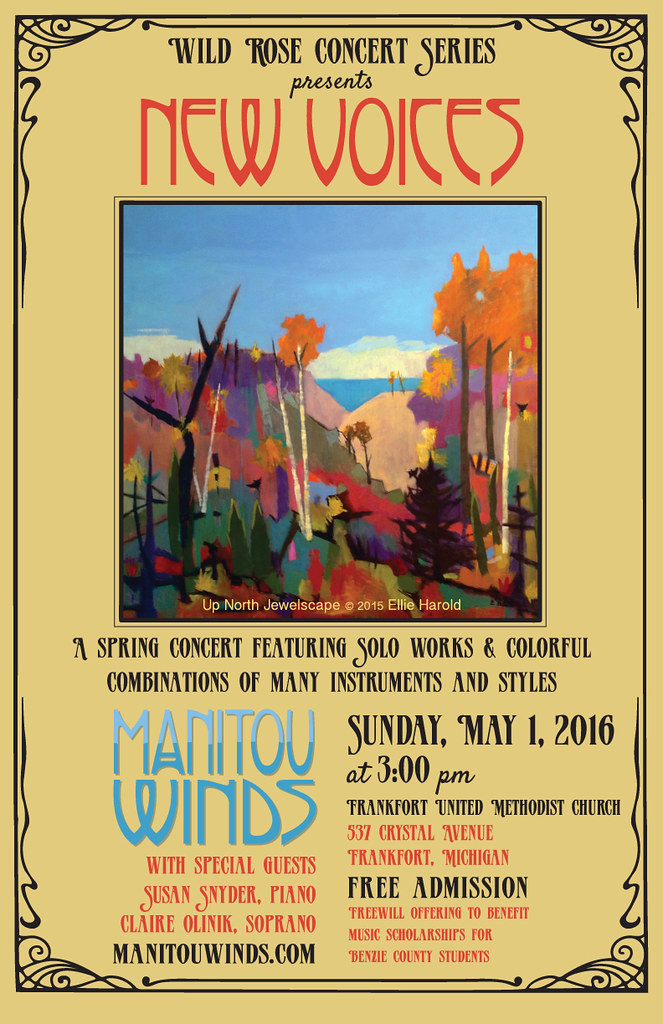
We toured Ellie’s gallery earlier this spring, hoping to learn more about her art and to also find one of her paintings that would adorn our concert poster. Finding a work that spoke to our theme of New Voices was not difficult at all. Narrowing our selection down to the perfect choice took some doing, however!
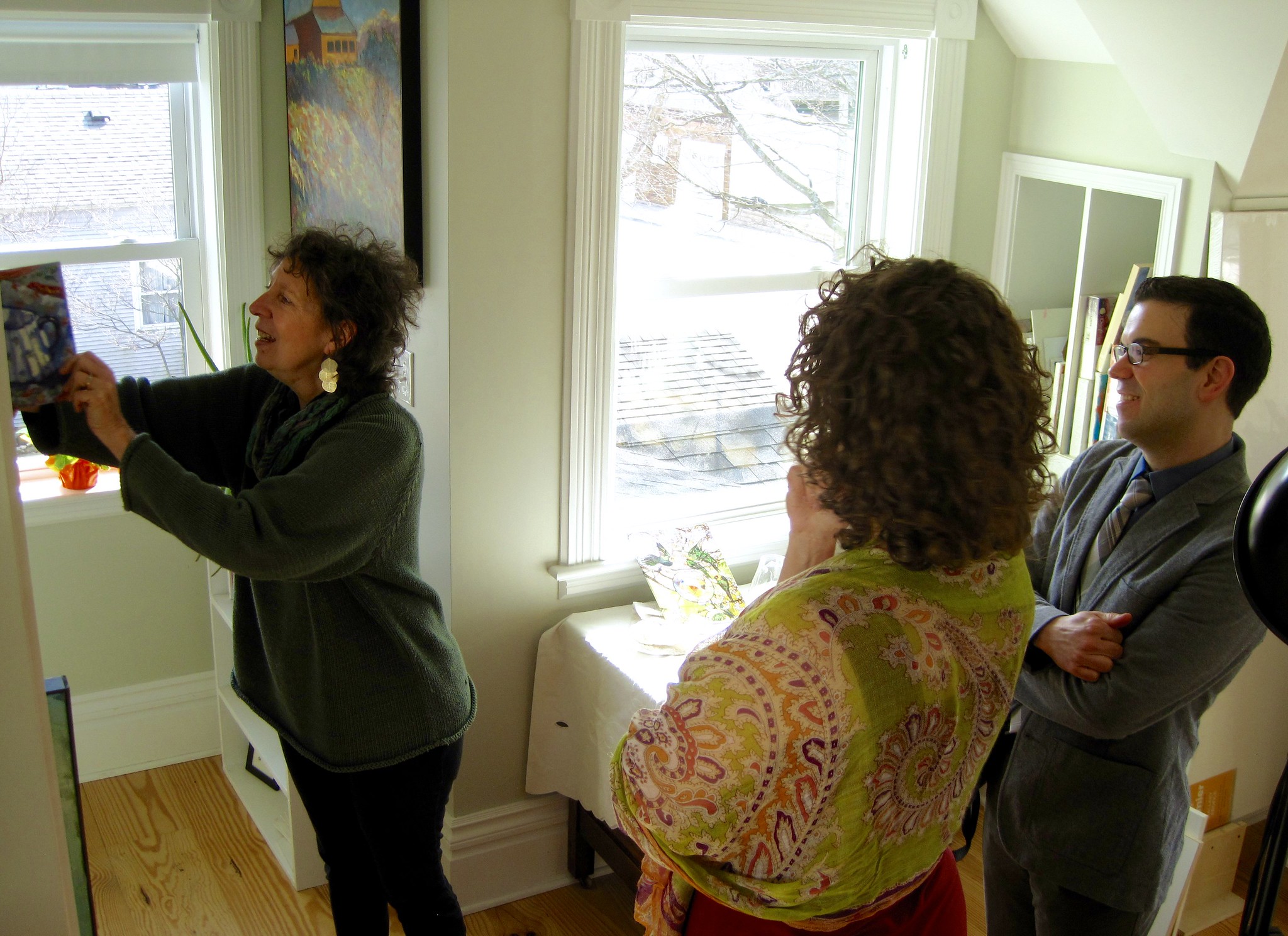
Up North Jewelscape is the perfect visual complement to the music for New Voices because it blends the familiar with the abstract and unexplored. Like Ellie’s beautiful landscape, our concert will guide the audience on a journey — to places both real and 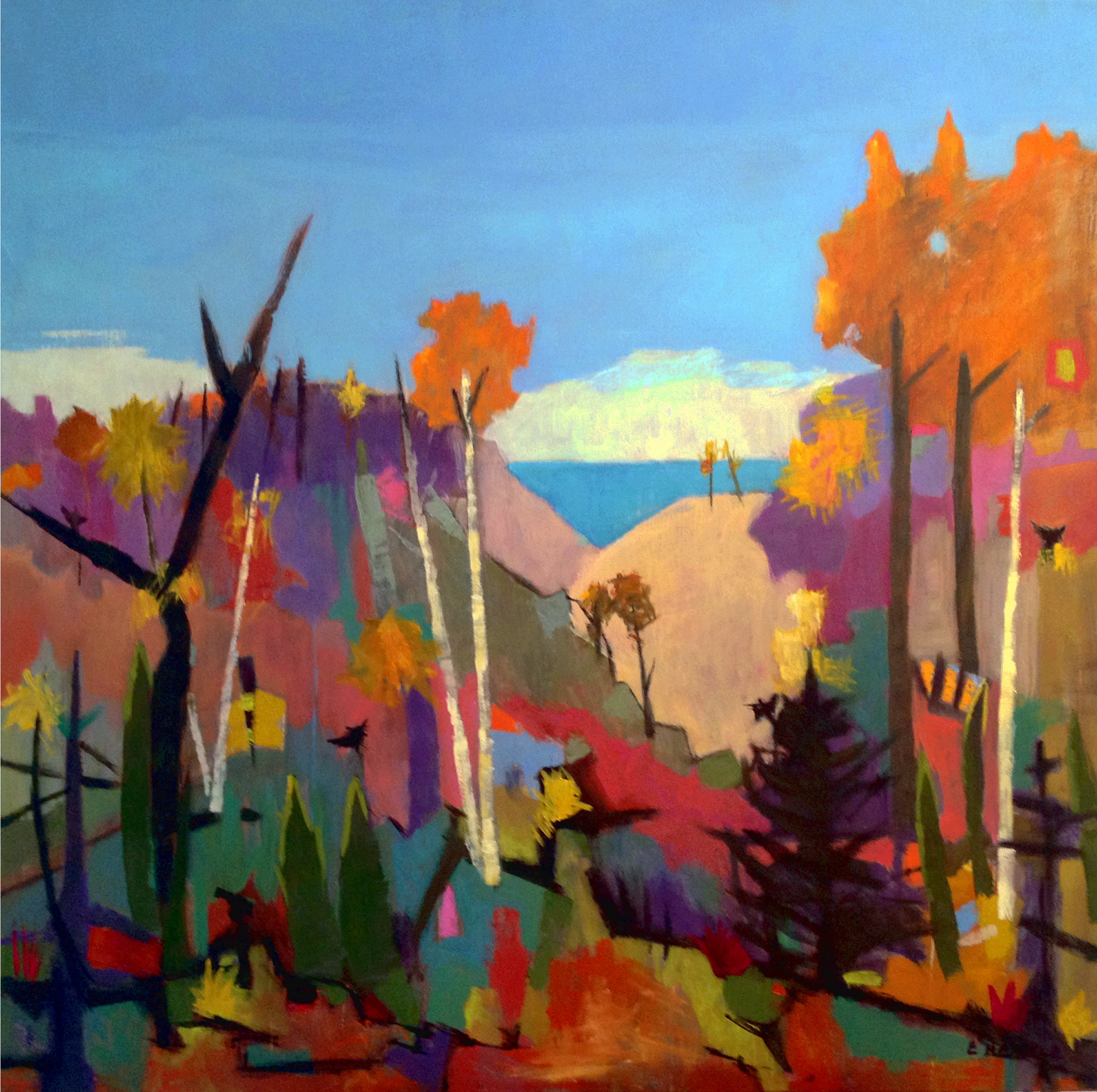 imaginary, past and future. According to Ellie, the “painting refers to elements I appreciate in the Lake Michigan shoreline but was also inspired by a trip I took to Paris last year. To me it’s a joyful and intuitive painting that celebrates nature and the visual play of complementary and secondary hues. I like that several birds have landed in the branches of those colorful trees.”
Manitou Winds recently visited with Ellie to unveil our concert poster design and to talk a bit more about art, music, and where our two mediums intersect. Like a few of the composers on our concert program, Ellie has very modest formal training in her art. Instead, her works are the result of patient and careful learning by experience. Her artistic philosophy is rooted in her understanding and experience of art as meditation. It’s proven to be a self-reflective practice, a way for her to understand herself.
While putting together the program for New Voices we’ve found a few composers who feel the same: their work is the result of an exploration of their subject, not a mere academic application of composition technique. A textbook, after all, cannot explain how to write a piece of music that will paint a perfect still life of red daisies in a silver vase on a table in a sunny kitchen nook; or tell the story of majestic but broken wings being mended by careful and loving hands.

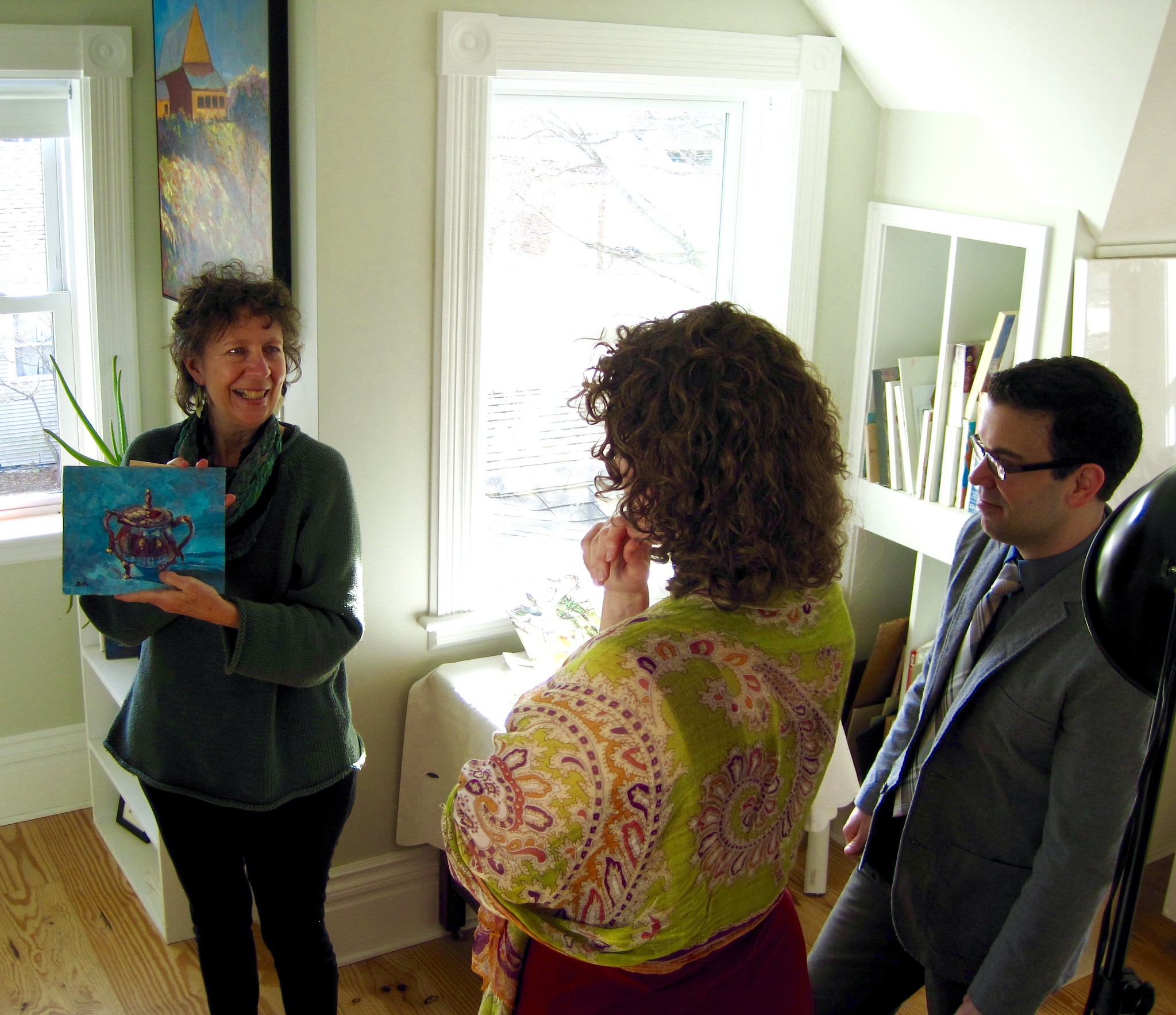
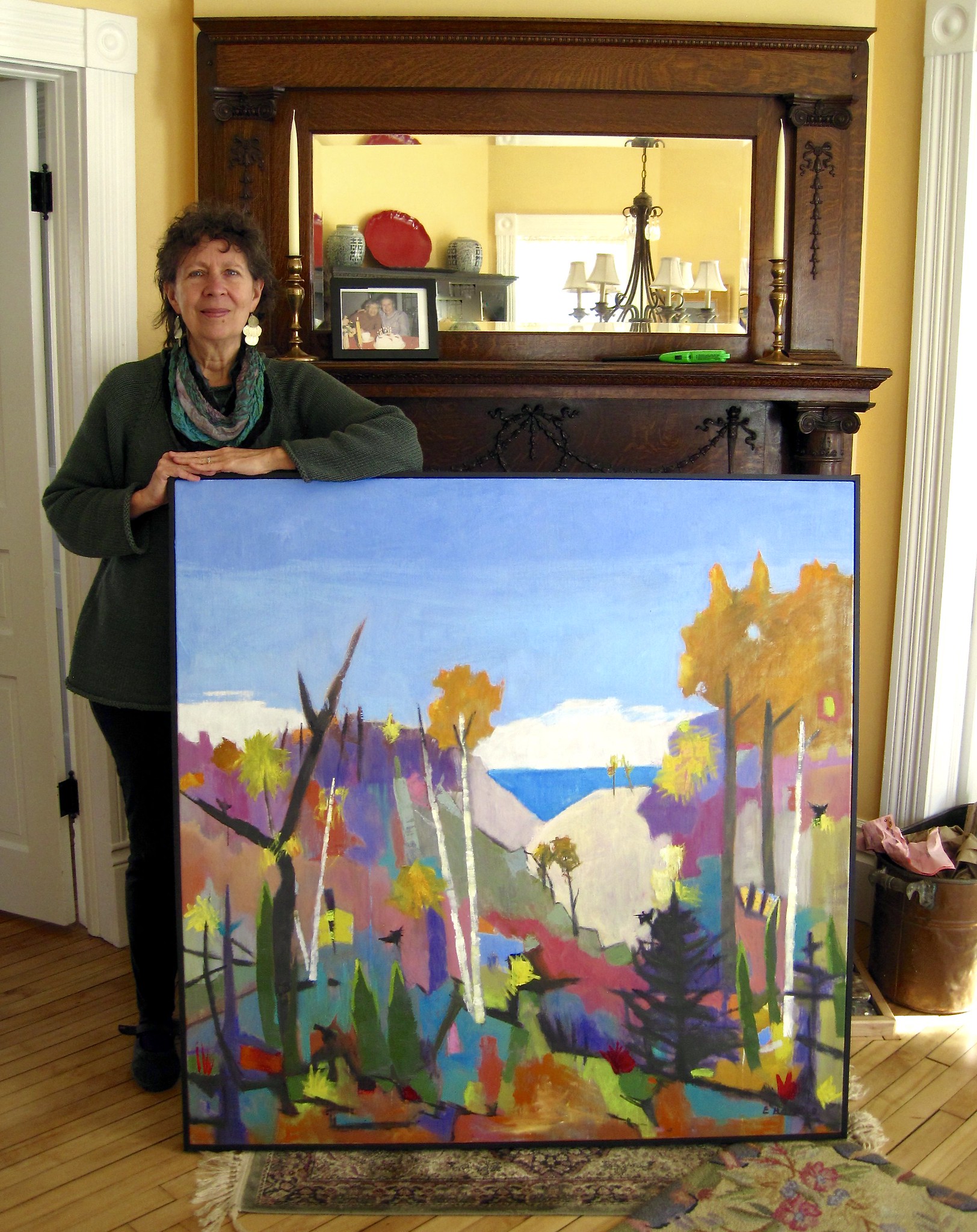

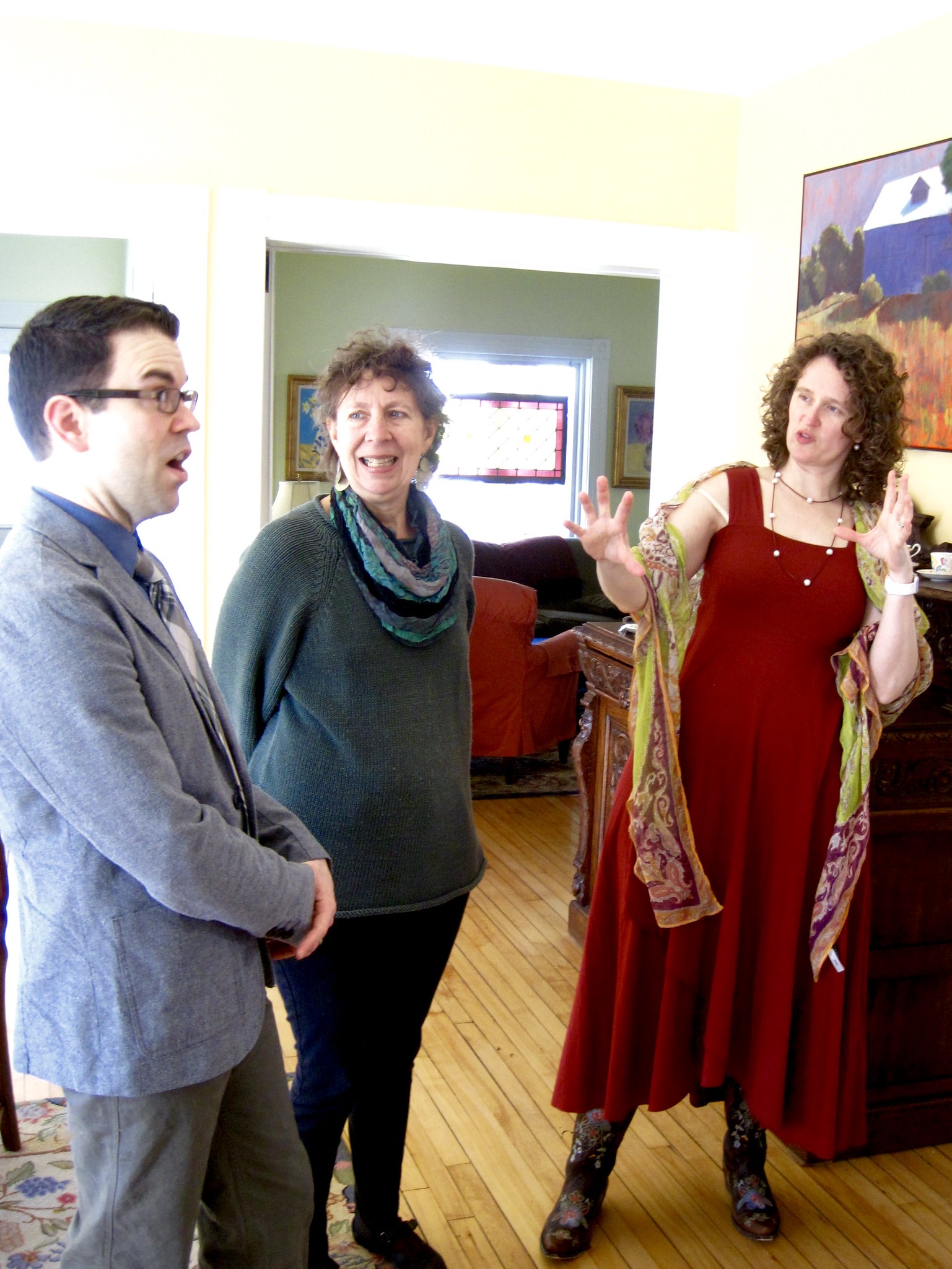
As a result of our collaboration for this concert, Ellie and Manitou Winds are eager to discuss future projects. Among the possibilities is the creation of a series of paintings inspired by an original composition. Artists of varied art forms have always managed to inspire one another to create. Ellie’s approach to the canvas resonates with me and my 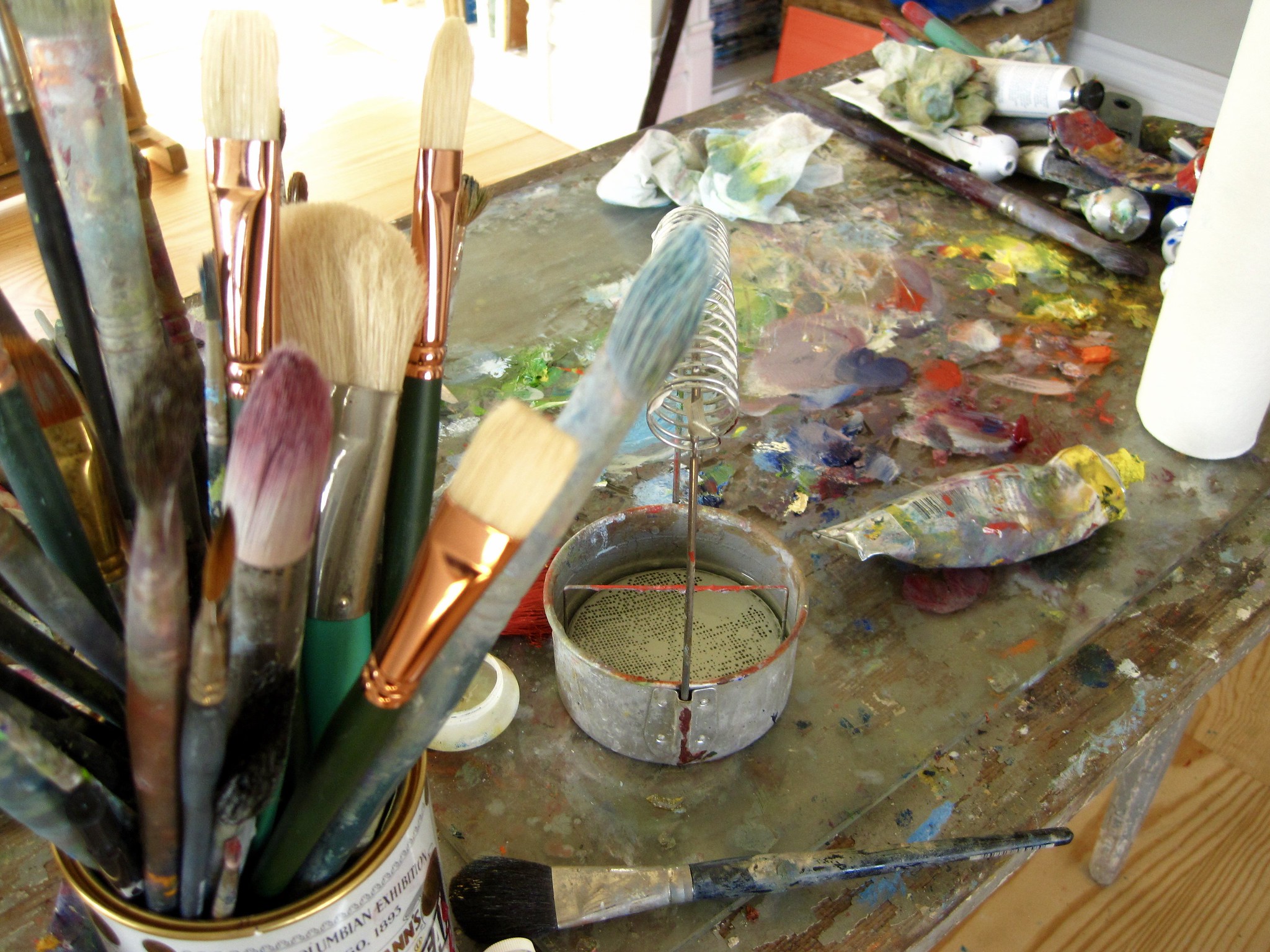 own approach to composition. As we both love the landscapes of Northern Michigan, I expect our inspiration for a future project will be easy to find.
As part of the collaboration, Ellie Harold will display select paintings in a special exhibition at the concert venue. Come join us for a glimpse of inspiration with New Voices.
Our Virtual Potluck: Part VI


The table is set, the buffet dishes are in place, the napkins are neatly folded, the kitties are on their best behavior. It’s time for the Manitou Winds Virtual Potluck!
 With everyone here and all the dishes assembled and in place, it’s clear we’re a group with lots to share and contribute! Now that we’ve all discussed the weather and how we feel about winter in Northern Michigan, the conversation could go anywhere!
If you could magically play any instrument without having to take lessons, what instrument would you pick up?
Sam: “I’d love it if I could magically play the piano.”
Jason: “I’ve always wanted to play viola; altos secretly have all the fun.”
Anne: “I’d love to play the cello. I love the rich sound, and… well, I just think I’d look really cool playing it!”
Laura: “I would love to play the violin so I could fiddle.”
Christina: “I’ve always thought the cello would be neat to learn. It’s the same range as the bassoon, and it has the best sound of all the stringed instruments to me.”
So, in magical-musical-fantasyland, Manitou Winds would maybe be more like Manitou Strings?! I wonder if there are any string players out there who wish they could play a wind instrument. Somehow I doubt that!
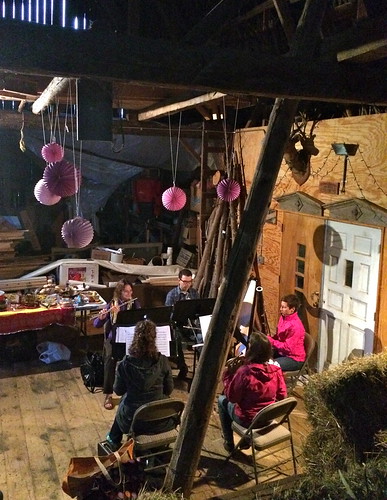 In a contest to determine who among us has the most pets, Laura is hands-down the winner. “We’ve got one very big and old chocolate lab, a cat who lives in the barn, two horses on our farm, two horses who live at another farm, and pigs and chickens in the summer months (they’re in the freezer now!),” says Laura.
Comparing our woes with our separate instruments is also fodder for conversation…
Christina says, “Fingerings for bassoon can have up to all of your fingers down for a single note — your left thumb operates 6 keys all by itself… and the reed…”
“Reeds are probably the worst thing about playing clarinet,” says Anne. “A reed can either make or break you!”
“Don’t even talk to me about reeds,” interrupts Jason, putting away his reed knife.
“Staying in shape on the horn is probably the most challenging thing,” says Laura. “It’s a very physically demanding instrument, so if you take too many days off, it takes a while to get back into 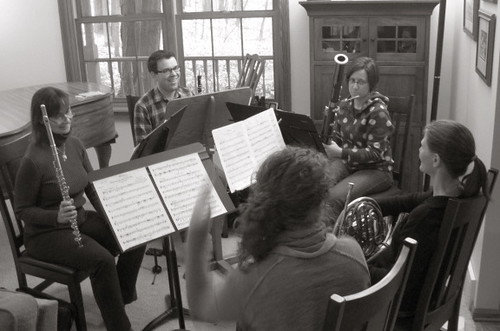 shape.”
“On the flute, it’s so hard to get a good, solid tone throughout the whole range of the instrument,” says Sam. “You need to have the right embouchure for your individual mouth structure, but also tons of air support to direct the air correctly and overcome the ‘wasted air’ factor.”
“You’ve got wasted air?” says Jason, “I can’t get rid of my air fast enough… turning beet red, over here.”
Needless to say, each of us chose our instruments in spite of the challenges they inevitably bring. In the hands of knowledgeable composers and arrangers, these quirky instruments of a wind quintet can actually form a very unique and uniform sound — the better qualities of each instrument shining through.
 In our rehearsals, we’re currently working on music for our spring concert. The theme, “New Voices”, aims to explore music written only within the last 20 years. We enjoy highlighting the work of lesser-known composers and so programming new music was a natural way of accomplishing that.
But, to take it a step further, we wanted to demonstrate for our audience that new music isn’t necessarily something to be feared — even though we can all agree that older, familiar music is more comfortable. In order to bridge the gap between old and new, we sought out composers who incorporate modern techniques and sounds into their music, but who also value intriguing melodies and rich harmonies.
In the coming weeks, we’ll begin to share more with you about the music on our program and the composers who penned it.
It looks like everyone cleaned their plates and had their fill… but not too full, I hope! To top off this potluck feast, I’ve got a wintry dessert to make sure no one goes home hungry…
___________________________________________________________
Pear & Gingerbread Trifle
Serves 8
This recipe is right at home on a wintry Northern Michigan potluck table — our local pears are excellent and for this recipe you can use fresh or canned. The gingerbread can be baked and then frozen months in advance. Except for the whipped cream, all the components can be prepared days in advance and then assembled just a few hours before serving.
Gingerbread Cake:
3/4 cup all-purpose flour
1/2 cup whole wheat flour
3/4 teaspoon baking soda
 1/4 teaspoon baking powder
1 teaspoon ground cinnamon
1 teaspoon ground ginger
1/4 teaspoon sea salt
1/4 cup vegetable oil or melted unsalted butter
1/4 cup granulated sugar
1/4 cup dark brown sugar
1/4 cup molasses
1 large egg, beaten
1/2 cup warm water
Pear Filling:
2 pounds ripe but firm Bartlett pears (or 2 15oz cans of pears in light syrup)
1/4 cup pear preserves or jam
1/4 cup granulated sugar
1/2 teaspoon ground cinnamon
1/2 tablespoon balsamic vinegar
1-2 tablespoons brandy (optional)
Custard Cream:
2 cups whole milk
2 large eggs plus one egg yolk
1/4 cup granulated sugar
3 tablespoons cornstarch
1 teaspoon vanilla extract
1-2 tablespoons brandy (optional)
Whipped Cream:
1 1/2 cups heavy cream
2 tablespoons confectioners sugar
1 teaspoon vanilla extract
To make the Gingerbread Cake: Preheat oven to 350-degrees.
Place flour, baking soda, baking powder, spices and salt into a large bowl and mix well. Place oil and sugars into a separate bowl; beat until creamy. Add molasses, beaten egg and then the warm water, mixing after each addition. Blend the dry ingredients into the wet ones, stirring well.
Pour batter into a lightly oiled 9-inch cake pan. Bake for 30 minutes or until tester comes out clean. Cool completely. Tear into small pieces or cut into cubes and set aside.
To make the Pear Filling: In a large , heavy skillet, heat pears over medium high heat. Add jam, sugar and spices and cook until the mixture boils and begins to thicken. Remove from heat, cool for a moment or two, and then stir in the balsamic vinegar and brandy. Set aside to cool.
To make the Custard Cream: Heat milk in a heavy-bottomed saucepan, stirring frequently, just until bubbles begin to form around edges of pan. Meanwhile, whisk eggs, sugar and cornstarch in a bowl. When the milk is ready, slowly pour half of milk mixture into the egg mixture, whisking the entire time. Then stir this mixture back into the hot milk. Cook for ten minutes, whisking constantly, but do not allow to boil. The custard will thicken as it cooks, and thicken further as it cools. Remove from heat, add vanilla and brandy to taste.
Pour finished custard into a sieve set over a clean bowl and let it fall through, removing any lumps. Use back of spoon or spatula to help all the custard go through sieve. Cover with plastic wrap, laying the wrap directly on the surface of the custard so it does not develop a  skin. Chill for at least two hours.
To make the Whipped Cream: Using chilled beaters and bowl, whip cream until it starts to thicken. Slowly add sugar and then vanilla, beating until cream is thick enough to form peaks on beaters when removed.
Assembly: In a deep bowl, a large glass trifle bowl, or individual serving dishes, layer the ingredients in approximately half-inch layers this order: 1) custard cream; 2) gingerbread pieces; 3) pear filling; and 4) whipped cream. Continue to layer, using a spatula to press down, or swirl creme as needed, until the serving dish is filled. Be sure to end with a hefty layer of whipped cream! Refrigerate for at least two hours and up to 8 hours before serving.
___________________________________________________________
Looking for more recipes? Check out the other recent Woodwind Gourmet series:
Series I: Oboes, Oranges & Almonds
Our Virtual Potluck: Part V

The table is set, the buffet dishes are in place, the napkins are neatly folded, the kitties are on their best behavior. It’s time for the Manitou Winds Virtual Potluck!
What better way to celebrate the swirling of snow and the chill outdoors than to surround yourself with music, friends, and a potluck feast? It’s okay to go back for seconds… I think I hear our last guest pulling up…
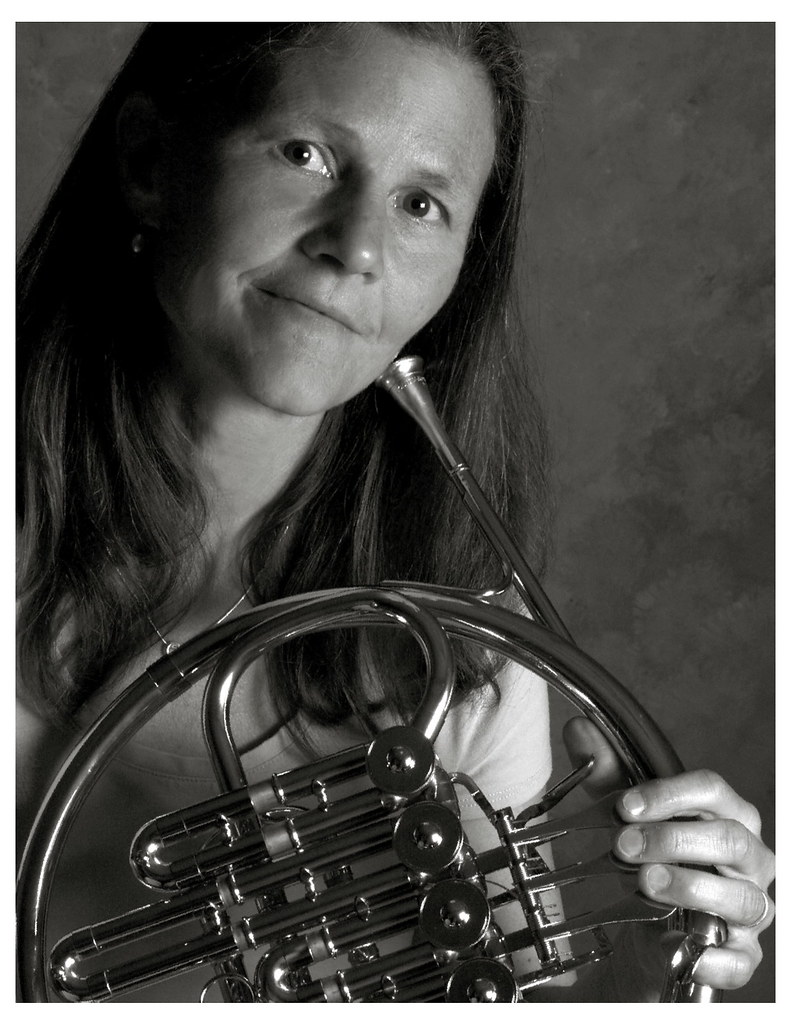 It’s Laura Hood, our horn player and our guitarist! One of Manitou Winds’ multi-instrumentalists, Laura adds a unique twist to all of our concerts with her versatility. But it does mean lugging around 2 or 3 instruments in addition to juggling so many other things!
Yes! It’s cold outside! “Winter is my favorite season of the year up here. I like being one of the ‘hearty ones’ that live here all year long,” Laura says. “I love the silence of a blanket of fresh snow — and I love to ski (all types: cross-country, skate, alpine, and tele)!” She’s quick to add, however, that scraping off the car first thing in the morning and dealing with the sometimes icy roads is not exactly a plus.
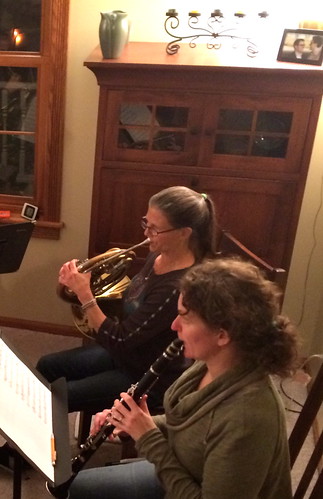 Although Laura was the second official member to join Manitou Winds, as the horn player she wasn’t able to actually attend rehearsals until a full quintet was formed which took some time and searching. There is not a lot of music written outside of quintets that matches horn with woodwinds. That first rehearsal was spent getting to know one another through our first few quintets. Since then, through research and Laura’s and Jason’s compositions and arrangements, we’ve been able to find more imaginative ways of including Laura’s musicianship.
Do horn players in particular ever feel like outsiders in a “woodwind group”? Not at all! Laura says the horn’s role in both woodwind and brass chamber groups sets it apart in many ways. “We are often asked to represent the heroic themes in music,” she says, “so a horn player must have some guts. But, we’re often asked to play the beautiful, melodic lines with the cello too… so a horn player also needs to have soul.”
“I think horn players are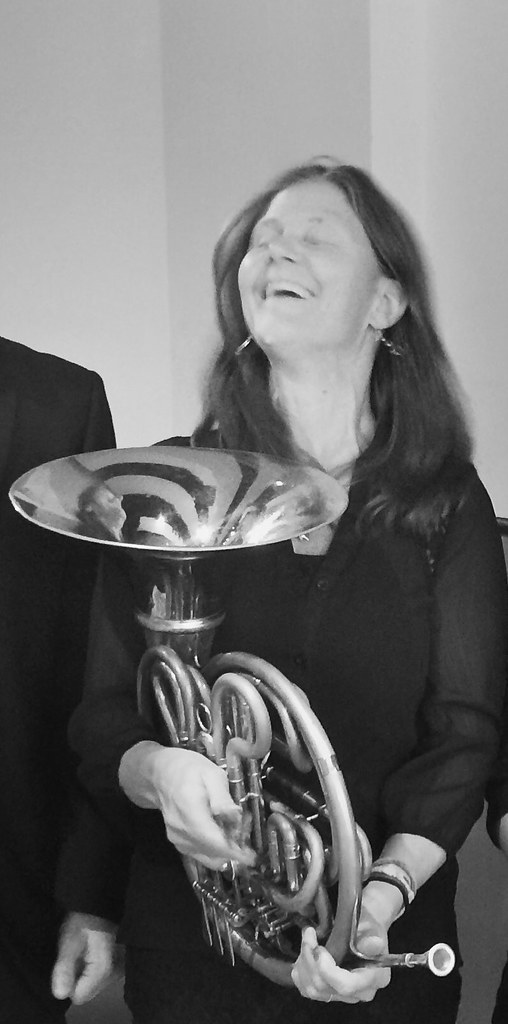 often stereotyped as being a bit quirky but down-to-earth. I would have to say that’s me,” says Laura. Being a part of a chamber group allows for each musician’s unique qualities to emerge and be refined for the betterment of the ensemble. “With no conductor, we all must really listen to each other. It’s a wonderful communication through music that’s very special,” she adds. “After playing with the same group of musicians for a while, you begin to anticipate each other’s interpretation of the music in that very moment of performing. It’s just really cool.”
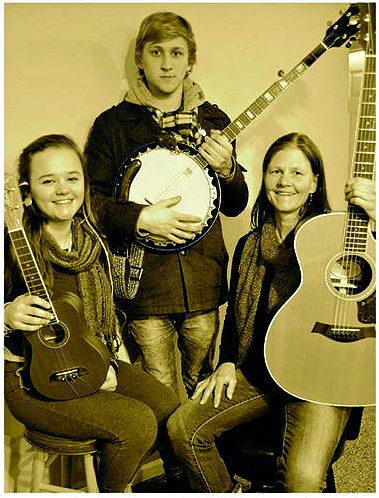
Although Laura loves Classical music, she enjoys a very wide variety of music outside the genre. In fact, she and her daughter Jessie make up two-thirds of an Indie-folk group they dubbed “Sista’ Hood & Joe“. The group is more or less on hiatus now that Jessie has started her undergraduate studies in Ohio as of this fall. Still, the group does reunite from time-to-time to raise money for worthy causes and for the love of making music together.
 Laura and her husband Bruce (both educators at the nearby Leelanau School) live in an intentional community within the heart of Leelanau County. Apart from the serene surroundings living on more than 40 acres of farmland provides, she and her family produce and preserve quite a bit of their own food. “In the summer, we basically eat straight from the garden,” she says. “In the winter we make a lot of soups and stews.”
With their farm as a splendid backdrop, they usually make the most of the holidays and other breaks in the college schedule by having impromptu campfires and cookouts. With both children away at college and most dinners left to the grown-ups, Laura and Bruce find they eat most meals at home. “I’m actually the kitchen assistant,” she confides. “Bruce is a fabulous cook, and I am very happy to do all of the dishes!”
For today’s potluck, Laura’s brought a favorite from her family’s kitchen and garden…
___________________________________________________________
Spring Rolls
Serves 4
In addition to the ingredients below, you’ll find spring rolls allow for incorporating all sorts of leftovers. You can also bake or fry the rolls if you choose. Laura says, “My daughter and I like to invent different types of spring rolls. If we are home together for dinner, just the two of us, that is what we always make.”
 2 14-ounce packages extra-firm tofu, drained
sesame oil or olive oil
6 cups shredded cabbage
2 cups shredded carrots
1-2 tablespoons minced fresh ginger
2 tablespoons rice wine vinegar
4 large eggs, lightly beaten
24 spring roll wrappers
low-sodium soy sauce
wasabi
Thinly slice the tofu into strips as desired. In a large non-stick skillet, heat a small amount of oil; brown the tofu over medium heat, stirring occasionally. Remove tofu to a plate and set aside.
To the now empty skillet add approximately 1 tablespoon of oil; add the cabbage, carrots and minced ginger. Cook, stirring occasionally, until the cabbage is wilted and softened (approximately 8 minutes). Add the vinegar and stir until completely incorporated. Remove the cabbage mixture to a large bowl; wipe skillet clean with a paper towel.
Add a small amount of oil to the skillet, swirl it to spread evenly. Pour in the beaten eggs; swirl to spread evenly. Cook the eggs just until set. Using a spatula, roll the eggs into a cylinder and remove to a cutting board. Slice into thin strips.
Fill a large shallow pan with about an inch  of warm water. Working with one spring roll wrapper at a time, dip the wrapper into the water, allow excess water to drip off. Place the wrapper on a lightly moistened cutting board or work surface. Fill the top third of the wrapper with a small amount of the tofu slices, cabbage mixture, and eggs. Roll the wrapper over the filling once, then fold the sides over the filling and continue rolling until completely sealed. Continue with the remaining filling and wrappers. Serve immediately with soy sauce and wasabi.
___________________________________________________________
Looking for more recipes? Check out the other recent Woodwind Gourmet series:
Series I: Oboes, Oranges & Almonds
Our Virtual Potluck: Part IV

The table is set, the buffet dishes are in place, the napkins are neatly folded, the kitties are on their best behavior. It’s time for the Manitou Winds Virtual Potluck!
The silverware and napkins are over there by the plates. You might as well dig in. I think I hear our next guest arriving…
 It’s Anne Bara, our clarinetist. In addition to her music stand and the requisite reams of sheet music, Anne often brings two clarinets with her — one is her Bb clarinet and the other is an A clarinet (used for all those pieces with sharps in the key signature). They look almost identical except the A clarinet is slightly longer. Do they sound alike? That’s a constant source of debate and discussion!
Yes! It’s cold out there!! “I grew up in South Dakota,” Anne says, “so a winter without snow and storms and ice would just seem wrong! I will say I miss the sun we always had in South Dakota. Even when there was a wind chill well below zero for days in a row, there was always sun — certainly can’t say that here!”
In spite of the cloudy days a Northern Michigan winter most reliably brings, Anne doesn’t mind winter at all. “My children love to play in the snow,” she says. “This winter I’ve been outside way more than I ever have in previous years. I love to snowshoe and  ice skate, too, but those are both pretty impossible to do with a 2- and 4-year-old!” In fact, just bundling up all those hands, feet, and faces to brace against the wind is likely a feat of planning unto itself!
Anne was the last official member to join Manitou Winds, coming aboard a few months after we initially began. It was tough to find a clarinetist who was not only up to the challenge but also willing to devote the necessary rehearsal time to learning what’s often very demanding music.
Chamber music places unique demands on clarinetists. A typical clarinet part in a wind quintet contains music that runs the gamut from “backup singer” to “complete diva” — leaving no room for timidity or fumbling fingers. The performer must have a comfortable grasp on the full range of the instrument and be able to change  moods and character at a moment’s notice in order to hold up their part of the overall piece.
“My favorite thing about being a part of a chamber group is just being able to play really awesome music and getting to see friends on a regular basis. We then get to perform together this music we’ve worked so hard to perfect,” she says. “My least favorite part? When I screw up during rehearsal or when I know I haven’t had time to prepare like I ought to — I can’t hide!” Nerve-wracking as those wrong notes or missed entries can be for any musician, they’re usually a welcome source of comedic relief during rehearsals! You’re never allowed to take yourself too seriously for very long.
Anne and her husband, Tom, (both musicians and educators) have lived in the Traverse City area since 2002. The area is rife with scenic beauty, cozy lakeside towns, and unique artsy finds of all sorts. What would the Bara’s do if they were given a week-long “staycation” where errands and chores were forbidden? “I would spend lots of time hiking with my family,” says Anne, “That’s one thing we all enjoy — although the youngest prefers to be carried in a backpack!  I’d also love to tour the wineries again — it’s been years since we’ve done that and there are so many new ones now. We’d definitely go to the farmer’s markets and cook elaborate feasts at home.”
Anne and her family tend to eat more meals at home than at restaurants. Their favorite go-to recipes this time of year are chicken paprikash, lentils & rice, chickpeas with spinach & tomatoes, or a big pot of chili. She enjoys cooking and spending time in the kitchen, attributing most of that fascination to a summer off from college she spent in New York City living with her aunt.
“She taught me all about fresh mozzarella and parmesan (I’d only ever had the kind you shake onto pizza at Pizza Hut!),” says Anne. “She taught me about farmer’s markets where we bought countless vegetables I’d never had or even heard of before. She taught me how to make bread — I kept a sourdough starter in my fridge for years after that.”
Anne still enjoys those gourmet pursuits but finds it more challenging with the sometimes finicky palates of her two young children as her critics.  “Our kids are mostly tolerant — even if they don’t always eat a lot of the food we make,” says Anne. “My son, particularly, likes to help me cook and bake — even though it does mean an extra hour or two to complete a project!”
Other than cooking, Anne loves spending time in the garden — an activity that the kids are getting more involved with each passing year in the digging, weeding, and watering. “I used to spend the whole summer outside taking care of our flower gardens. Fortunately, I have all perennials, so the gardens still look good even though I’ve taken about four years off.”
For today’s potluck, Anne’s brought a sure-fire party favorite that marries her love of the kitchen with her love of the garden.
___________________________________________________________
Tex-Mex Guacamole
Yields about 2 cups
Anne says this is her favorite recipe to take to parties. It’s quick and easy to put together and adds a welcome reminder of summer during these cloudy wintry days.
 2 medium-size Haas avocados
2 teaspoons fresh lime juice
1/2 teaspoon sea salt
2 green onions, finely chopped
1 small tomato, seeded and finely chopped
1-2 cloves garlic, minced
2 tablespoons finely chopped jalapeño pepper (leave seeds in for a zesty dip!)
1-2 tablespoons minced fresh cilantro
Halve the avocados lengthwise. Remove and reserve the pits. Scoop the flesh into a medium bowl. Add the lime juice and salt; mash with a fork or potato masher, mixing well.
Add the green onions, tomato, garlic, jalapeño, and cilantro; mix well. Serve immediately or press the avocado pits halfway into the dip and cover tightly with plastic wrap to prevent browning. Will keep nicely for 2 days. Serve with tortilla chips, salsa, and cheese.
___________________________________________________________
Looking for more recipes? Check out the other recent Woodwind Gourmet series:
Series I: Oboes, Oranges & Almonds