
Dolce e Delizioso III

In our final recipe collection in the Theme & Variations series, we’ll play sweetly in the kitchen; calling upon a single versatile cake recipe to deliver an array of tempting treats fit for finishing a meal or rounding out a special occasion.
Dolce e Delizioso
I really hope you’ve enjoyed following along as we’ve taken the Classical form of “Theme & Variations” into the kitchen — making simple changes to recipes to create exciting new dishes. Marrying food and music — two of my most favorite things — is something of a passion of mine.
To demonstrate the Classical form that inspired this series, here’s probably one of the finest examples of Theme & Variation form: Mozart’s 12 Variations in C major on Ah! vous dirai-je, Maman, K.265. The theme you’ll immediately recognize; in America, we know this tune as “Twinkle, Twinkle, Little Star.” Listen to all the ways Mozart turned this simple tune on its ear. By the end, it’s barely recognizable!
[youtube https://www.youtube.com/watch?v=nGuJ_nGLPAU?rel=0&w=560&h=315%5D
As you can see, performing a piece in Theme & Variations form — while exhilarating — can be quite demanding for a musician. Fortunately, our culinary spin on this form has been both fun and delicious for both the chef (the musician) and the tasters (the audience).
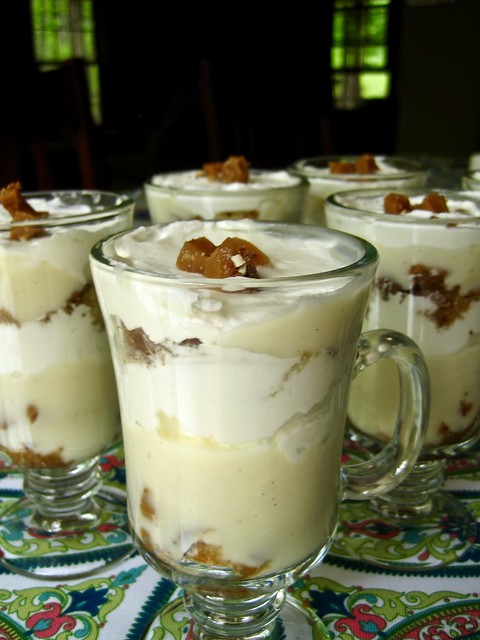
In today’s final variation in our Dolce e Delizioso collection, we take one more layer of that easy-to-make butter cake and turn it into a decadent layered dessert marrying its buttery flavors with toffee and coffee to make a fancy treat that can be made into elegant individual servings or an impressive presentation in a trifle dish.
___________________________________________________________
Toffee-Coffee Trifle
Serves 8
Trifles make an exciting dessert because their layered presentation and variety of textures offer a different experience in every bite. With ample chilling time, the toffee pieces maintain a bit of crunch, but yield a caramel-odius counterpoint to the coffee and buttery flavors in the rest of the dessert!
Vanilla Custard:
 2 1/4 cups milk
1/2 cup granulated sugar
1/8 teaspoon sea salt
1 large egg
3 tablespoons corn starch
2 teaspoons vanilla extract
Whipped Cream:
1 cup heavy cream
3 tablespoons confectioners’ sugar
Layer Ingredients:
1 8-inch layer of Golden Butter Cake
(recipe here)
1/2 cup Kahlúa (coffee liqueur)
1 cup crushed toffee pieces (e.g. Skor or Heath)
To make the vanilla custard: heat the milk, sugar, and salt in a medium saucepan over medium heat. Stirring to dissolve sugar, heat until milk is scalded but not boiling. Meanwhile, in a medium bowl, whisk together the egg and corn starch until thoroughly combined. While whisking, slowly add the hot milk mixture; whisk until completely incorporated. Return entire mixture to the saucepan and heat over medium heat until thickened and just beginning to boil; remove from heat and stir in vanilla. Pour into a bowl, cover with plastic wrap placed on surface to prevent skin from forming. Allow to reach room temperature, then refrigerate 1-2 hours.
To make the whipped cream: pour the cream into a medium bowl. Beat at medium speed until frothy; add confectioners’ sugar, 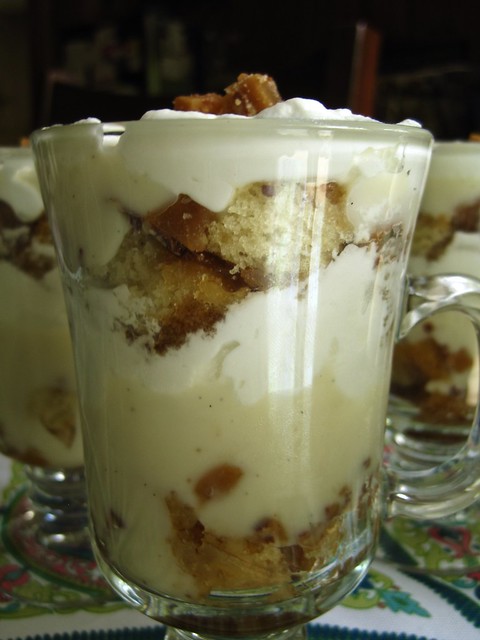 increase speed, and whip until stiff peaks form. Cover and chill until needed.
To assemble, slice cake layer into bite-size pieces. In individual containers or in a trifle dish, alternate layers of cake pieces, drizzle cake with Kahlúa, sprinkle with toffee pieces, top with vanilla custard, then whipped cream. You can make as many or as few layers as you like. Chill for about two hours before serving.
Dolce e Delizioso II

Dolce e Delizioso
When you start with a cake that’s super-easy to make and tastes great, it takes only a little more embellishment to send it way over the top. Today’s variation turns one cake layer into a simple but decadent layer cake sure to please any fans of the classic Moon Pie sandwich cookie: buttery cake layers separated by fluffy marshmallow creme, all enclosed in a shell made of rich chocolate.
___________________________________________________________
Mezzaluna Cake
Serves 6-8
Who knew one cake layer could reach such celestial heights? With a little time in the freezer to anchor the layers into place and align the straight side of the cake, you’ll find the  chocolate coating will cover a multitude of imperfections (not that anyone will notice once they have a taste!).
1 8-inch layer of Golden Butter Cake (recipe here)
1 1/2 cups marshmallow creme
1 cup semi-sweet or milk chocolate chips
4 tablespoons unsalted butter
Using a long serrated knife, split the cake layer into two rounds; leave stacked atop one another. Split the two round layers down the middle to form four semi-circle layers. Place the layers (still arranged as a single round layer) into the freezer for about 10 minutes to firm them up.
Place one of the bottom semi-circles on a cake plate or cardboard round. Stir the marshmallow creme only until it reaches a 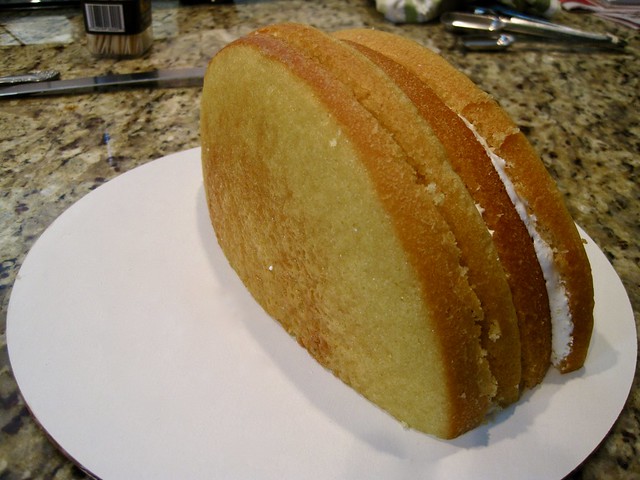 fairly spreadable consistency. Spread about a third of the cream onto the cake layer, leaving about 1/4 border all the way around to avoid seeping. Lining up the straight sides as evenly as possible, place a top semi-circle layer over the filling; spread with another third of the marshmallow creme. Continue with remaining cake layers and marshmallow creme. Carefully turn the assembled cake onto its straight side (see photo) and place in the freezer for 15 minutes to firm up the filling and align the layers.
Meanwhile, combine the chocolate chips and butter in a microwave-safe bowl. Microwave for 20 seconds, stir, and continue 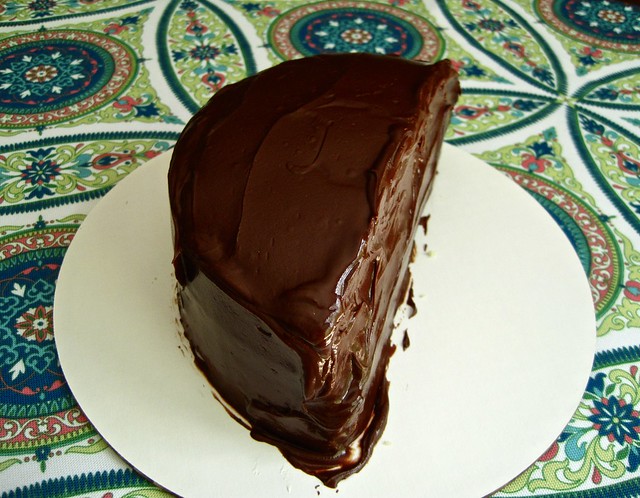 microwaving in 10-20 second intervals, stirring between each heating, until mixture is smooth. Remove the cake from the freezer and place it upright. Spread the chocolate glaze over the top and then sides to completely cover (the chocolate will harden and help keep layers and filling in place. Serve slices chilled or at room temperature.
Lines & Spaces III

In our second recipe collection in the Theme & Variations series, I decided we should explore the lines and spaces of the musical staff to uncover what savory surprises we can experience when we use simple ingredients to create a masterpiece.
Lines & Spaces
For the final variation in our Lines & Spaces series, we’ll stick with our vegetarian motif, but throw a few new twists into the taste. Swapping out the greens with some colorful beans and aromatic veggies, next we’ll take out the familiar ricotta cheese and replace it with nutty, creamy fontina for a lasagna like no other.
KEY INGREDIENT: Fontina Cheese — Noted for its nutty, earthy, slightly mushroomy taste, this creamy cow’s milk cheese originally from Italy is right at home in a homespun vegetarian lasagna. You can find it in the fine cheeses case in your supermarket. The best Fontina is Fontina Val D’Aosta (the original fontina), but there are many makers of good fontina, so feel free to use what you like best and is easiest to find. Can’t find Fontina? Try shredding Raclette or thinly sliced Brie or Camembert for an equally cheesy experience.
___________________________________________________________
Lasagna con Fagioli
Serves 4
Not quite as tomato-y or as saucy as the typical lasagna, the earthy flavors of the beans and fontina cheese are what really stand out to make this a vegetarian lasagna worth coming back to over and over again! Feel free to mix varieties of beans together for a more colorful presentation.
1 15-ounce can cannellini beans or red kidney beans, drained and rinsed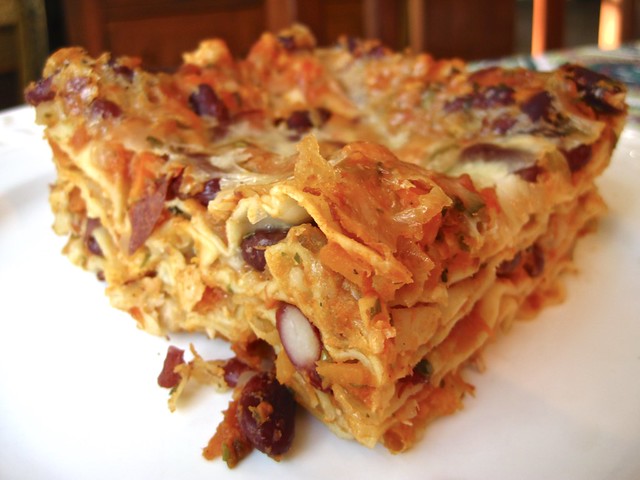
2 tablespoons extra-virgin olive oil
1 medium onion, finely chopped
3/4 cup finely chopped carrots (app. 2 medium)
1/3 cup finely chopped celery (app. 1 large rib)
6 garlic cloves, minced
1 bay leaf
1/2 teaspoon dried thyme
3/4 cup white wine (try sauvignon blanc)
1 tablespoon tomato paste
1 14.5-ounce can diced tomatoes with juices
1/4 cup chopped fresh parsley
Salt & Pepper to taste
6 ounces Fontina cheese, shredded
8 no-boil lasagna noodles
Preheat oven to 375-degrees. In a medium bowl, mash half beans together to form a thick paste. Reserve the mashed beans separately from the whole beans.
Heat the oil in a 12-inch skillet over medium-heat. Add the onions, carrots, and celery; cook until softened, about 10 minutes. Add the minced garlic, bay leaf, and thyme; cooking, stirring constantly, until fragrant (about a minute). Pour in the wine, scraping the bottom of the pan to deglaze; cook until wine has nearly evaporated. Stir in the tomatoes (including juices), bring to a simmer; lower heat, cover and cook 7-10 minutes until carrots are tender. Stir in the mashed beans and 1/3 cup water; stirring to dissolve thicken the sauce. Remove from the heat, discard bay leaf; stir in parsley, reserved whole beans, and salt and pepper to taste.
Spread 1/2 cup bean sauce in the bottom of an 8-inch square baking dish. Top with 2 lasagna noodles, a fourth of the sauce, and a fourth of the shredded fontina. Repeat layering with remaining noodles, sauce, and cheese. Loosely cover with parchment-lined foil (keeps the cheese from sticking to the foil!). Bake 30 minutes. Uncover and bake until bubbly and delightfully browned, about 15 minutes. Let cool 20 minutes, then slice and serve.
Variety: It’s the Spice!
Our concert on September 24th is going to be a celebration of musical variety — a daring departure from organization and the expected! Not only is everything on the program a secret, but even the musicians don’t know the order the concert will be performed in.
Ordinarily, we use articles in our Manitou-Zine to fill you in on what will be performed in upcoming programs — insight into the composers who wrote the music, their inspiration for the pieces, and descriptions of what you can expect to hear. For Variety: It’s the Spice!, you’ll get none of that! It’s a complete surprise!
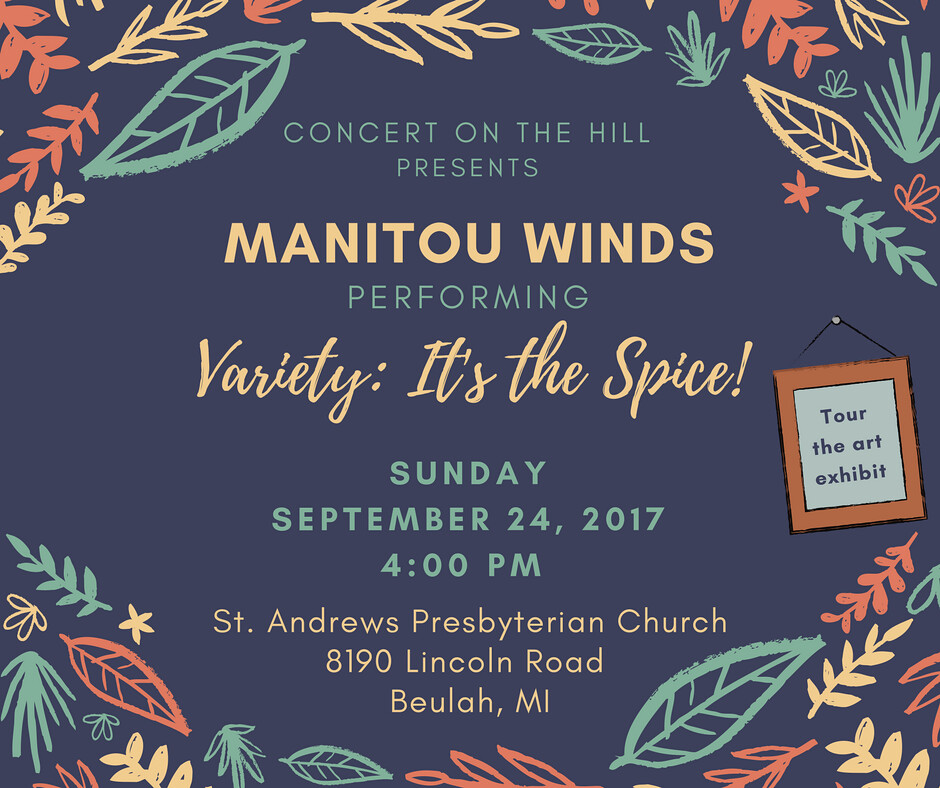
But, since we don’t want to leave you completely in the dark, we’ve promised to provide you with a few clues along the way. The concert order will be decided by audience members participating in a game. Following that same logic, the clues we’re providing you will be in the form of a game: a crossword puzzle!
Click HERE for your free printable crossword puzzle!
Stay tuned to our Facebook Page & this website; we’ll be sharing the puzzle’s key soon.

Our kudos to anyone who can complete the puzzle without consulting Google (or a member of Manitou Winds!). No cheating! So, put on those thinking caps and see if you can guess a few of the pieces on September’s program!
Lines & Spaces II

Lines & Spaces
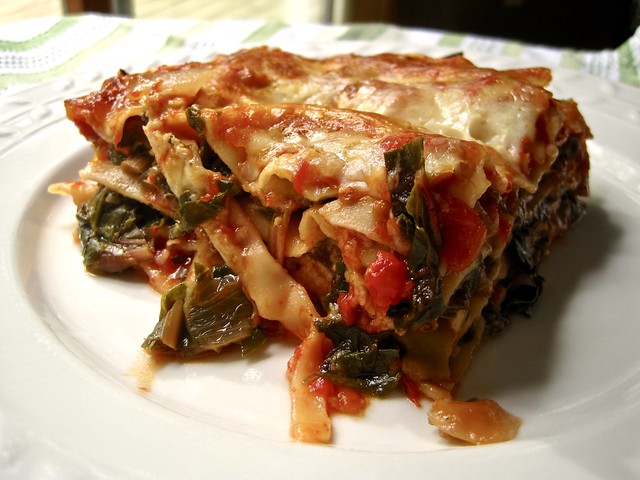
Our first variation spins our lines and spaces in a brand new, green direction — replacing meat with leafy Swiss chard and coarsely chopped onions for a lighter lasagna that still delivers the warm-fuzzies we all expect from comfort food.
___________________________________________________________
Swiss Chard Lasagna
Serves 4
Easily one of my favorite ways to eat leafy greens! Remember to squeeze dry frozen greens before adding them to the recipe. If you’re using fresh greens, you’ll want to keep the chopped stems separate so you can saute them first to make sure they’re tender before adding in the greens to wilt.
3 tablespoons extra-virgin olive oil
 1 medium onion, coarsely chopped
1 pound Swiss chard, stems and leaves separated, thinly sliced
Coarse salt and pepper
6 cloves garlic, minced
1/2 teaspoon red-pepper flakes
1 can (28 ounces) whole peeled plum tomatoes with juices
8 no-boil lasagna noodles
8 oz whole-milk or part-skim mozzarella, shredded
Preheat oven to 375-degrees. Heat a large skillet over medium-high heat. Add 2 tablespoons oil, onion, and chard stems. Cook, stirring occasionally, until soft, about 4 minutes. Stir in chard leaves, season with salt, and cook until tender, about 2 minutes. Transfer to a plate. Wipe skillet; return to medium-high heat. Add remaining 1 tablespoon oil, garlic, and pepper flakes. Cook until fragrant, about 30 seconds. Add tomatoes with juices and simmer; simmer, breaking into pieces, until thickened, about 3 minutes. Season with salt and pepper to taste.
Spread 1/2 cup tomato sauce in the bottom of an 8-inch square baking dish. Top with 2 lasagna noodles, 3/4 cup sauce, one-third of chard mixture, and 1 cup cheese. Repeat layering twice. Top with remaining noodles, sauce, and cheese. Loosely cover with parchment-lined foil (keeps the cheese from sticking to the foil!). Bake 30 minutes. Uncover and bake until bubbly and delightfully browned, about 15 minutes. Let cool 20 minutes, then slice and serve.
Lines & Spaces I

Lines & Spaces
Within the five lines and four spaces of a staff, a composer creates all manner of beauty and complexity. Everything the composer wants to communicate to both the musician and the audience is condensed into the staves on the page. Whether summoning all the colors of a full orchestra or the singular artistry of a solo instrument; it’s all contained within those lines and spaces.
For our second Theme & Variations recipe collection, we take our cue from the staff to make a delicious composition of our own in the kitchen using everyone’s favorite comfort food as our theme: lasagna!
Today’s recipe is what most people imagine when they think of lasagna: layers of hearty meat sauce alternating with luscious lasagna noodles and a tempting mixture of cheeses. It’s a recipe with a fancy look but humble origins — you can find everything you need in almost any grocery store (some of it’s probably already in your kitchen!).
___________________________________________________________
Classic Lasagna
Serves 4
Unlike traditional lasagna recipes with pre-boiled noodles filling a gigantic pan of sauce and cheese to meld together in the oven, this smaller four-serving casserole goes into the oven with very little babysitting required. The hardest part is letting it cool for 20 minutes before digging in.
2 tablespoons extra-virgin olive oil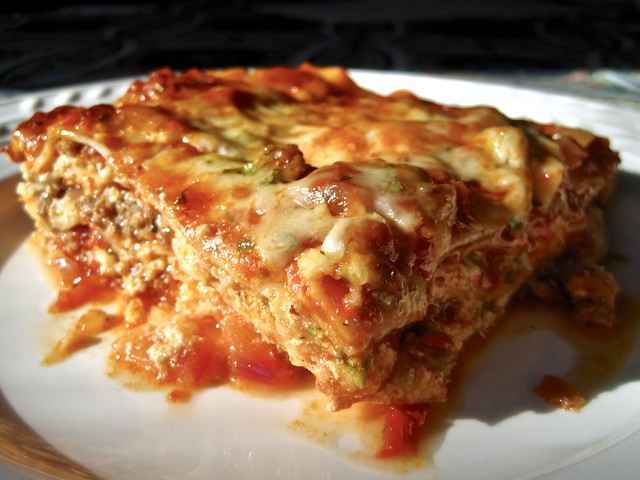
8 ounces mild Italian sausage, casings removed (or 8 ounces lean ground beef or turkey)
1 large onion, finely chopped
6 cloves garlic, minced
1 teaspoon dried oregano
1/2 teaspoon dried thyme
2 14.5-ounce cans whole tomatoes with juice
salt and pepper
8 ounces whole or part-skim ricotta cheese
1 large egg
2 tablespoons chopped fresh parsley (plus more for garnish)
1/4 cup grated Parmesan cheese
8 ounces part-skim mozzarella cheese, shredded (divided)
8 no-boil lasagna noodles
Preheat oven to 375-degrees. Heat the oil in a 12-inch skillet over medium-high heat until just shimmering. Add the Italian sausage; cook and crumble until evenly browned and no pink remains. Using a slotted spoon, remove crumbled sausage to a plate. To the skillet, add the onion; cook, stirring occasionally, until softened and just beginning to brown. Add the garlic, oregano, and thyme; cook, stirring, just until fragrant (about 30 seconds). Add the canned tomatoes, scraping the browned bits from the bottom of the pan. Stir and crush the tomatoes into mixture; bring to a low boil and allow to simmer for 5-10 minutes until slightly thickened; season with salt and pepper to taste. Set sauce aside to cool slightly.
Meanwhile, in a medium bowl, combine the ricotta, egg, parsley, grated Parmesan, and half of the mozzarella. Season to 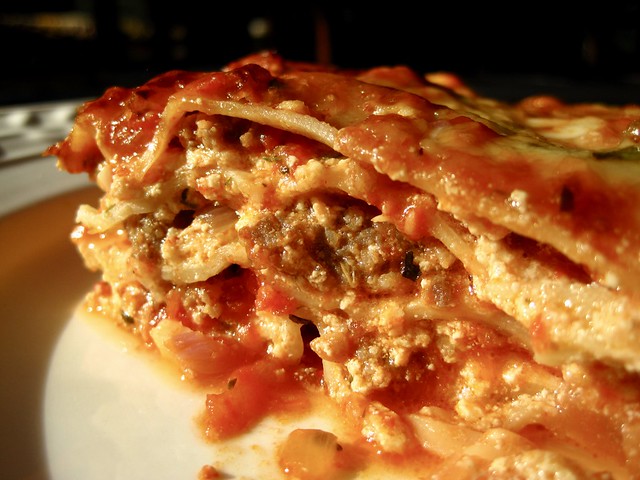 taste with salt and pepper.
Spread 1/2 cup of the tomato sauce in the bottom of an 8-inch square baking dish. Top with 2 lasagna noodles centered in the dish (the noodles will expand quite a bit during cooking and cover all the way to the edges). Spread 1/3 of the ricotta mixture atop the noodles and top with 1/3 of the remaining sauce. Repeat layers with the remaining noodles, cheese, and sauce. Top the entire casserole with the reserved shredded mozzarella cheese and additional chopped parsley as desired. Loosely cover with parchment then top with foil to seal (keeps the cheese from sticking to the foil!). Bake 30 minutes. Uncover and bake until bubbly and slightly browned on top, about 15 minutes more. Let cool 20 minutes, then slice and serve.
Musical Fruit III

For our first recipe collection in the Theme & Variations series, I decided we should explore the musical fruit (beans!) by starting with a very basic recipe and then expanding its flavor horizons a bit…
The Musical Fruit
Our theme was a Cajun-inspired pot of red beans and rice, last week we turned that theme into a Tex-Mex number with chorizo and peppers. Our final variation on the theme abandons flashy spices but still provides a show-stopping performance through a touch of elegance and subtlety.
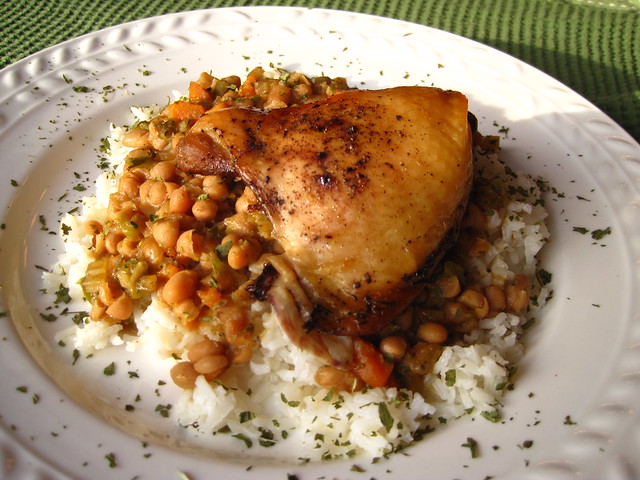
Once again, we’ll swap out the beans; this time replacing them with navy beans. Instead of cured or heavily-seasoned meat, we’ll impart deep flavors by adding dark meat chicken and an all-star cast of herbs and spices. We’ll transform the recipe into a hearty dinner reminiscent of cassoulet (but with a lot less time and effort!).
___________________________________________________________
Braised Chicken Thighs with White Beans
Serves 4
Even if you aren’t a fan of eating the skin, browning dark meat chicken and allowing the skin to cook along inside the slow cooker infuses everything in the pot with a deep chicken flavor. This is a very easy but elegant dinner.
1 tablespoon extra-virgin olive oil
4 bone-in chicken thighs (app. 1.5 pounds)
1/2 teaspoon sea salt
 1/4 teaspoon freshly ground black pepper
1/2 teaspoon dried thyme
1 large onion, finely chopped
2 medium carrots, finely chopped
2 large celery ribs, finely chopped
1 cup dried navy or cannellini beans, rinsed and sorted
5 cloves garlic, minced
1 teaspoon paprika
1 teaspoon dried thyme
1/2 teaspoon dried savory
1/2 teaspoon dried rosemary
3 cups low-sodium chicken broth
1 tablespoon lemon juice
Salt and Pepper
4 cups cooked basmati rice (optional)
Heat the oil in a large skillet over medium-high heat until shimmering. Meanwhile, sprinkle the chicken pieces on all sides with the salt, pepper, and thyme. Add the seasoned chicken pieces to the skillet skin side down; cook 3-5 minutes or until just browned. Turn and cook an additional 2 minutes or until lightly browned on the underside.
Meanwhile, in the slow cooker, combine the next 10 ingredients (onion through chicken broth). Place the browned chicken thighs atop the bean mixture, nestling them into the broth but not submerging them. Cover and cook on high for 5 hours or until beans are sufficiently tender.
If you’d like to crisp the skin on the braised chicken before serving, remove the chicken pieces to a broiler pan and place them beneath the broiler for about 2 minutes; otherwise just remove to a plate and keep warm. Meanwhile, using a slotted spoon, remove 1 cup of cooked bean mixture to a medium mixing bowl; mash with a fork to form a paste. Stir the mashed beans back into the slow cooker to thicken the beans. Stir in the lemon juice; add salt and pepper to taste.
If serving with rice, divide the cooked rice evenly onto four plates. Top with the beans, and serve the chicken atop the beans. Served without rice, this goes excellently with toasted baguette pieces or a side salad.
Musical Fruit I

Musical Fruit
For our first collection in the Theme & Variations series, I decided we should explore the musical fruit (beans!) by starting with a very basic recipe and then expanding its flavor horizons a bit.
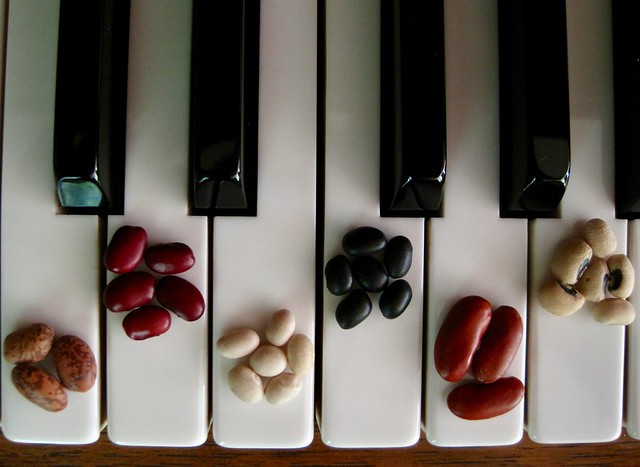
Beans have a reputation that is only partly deserved. Sure, they can be pretty hum-drum and they have an undeniably unavoidable side effect, but with a few choice ingredients and a hands-off approach thanks to the slow cooker, you can have an exciting, hearty (not to mention affordable) meal on the dinner table any night of the week!
Being a South Louisiana native, this first “theme” recipe is near and dear to me since it features the bold tastes of Cajun cuisine. All of the ingredients are easy to find. If you can’t find a salt-free Cajun seasoning blend, I’ve provided my personal recipe at the bottom.
___________________________________________________________
Cajun-Style Red Beans & Ham
Serves 4
No matter how far you are from the Mason-Dixon line, this simple slow cooker dish features pantry staples sure to be available anywhere. A savory ham hock will flavor the beans perfectly, so don’t be tempted to add salt until after the beans have cooked.
1 cup dried red kidney beans, rinsed and sorted
1 large onion, finely chopped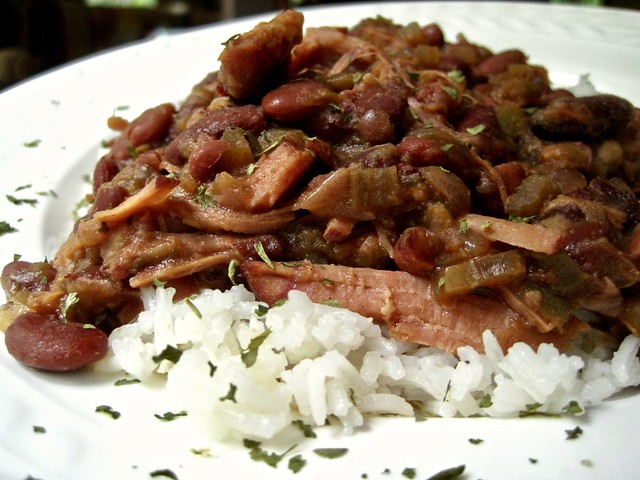
1 large green bell pepper, finely chopped
2 large celery ribs, finely chopped
7 cloves garlic, minced
1 tablespoon salt-free Cajun seasoning blend*
1 bay leaf
1 large ham hock or a 6-7 ounce chunk of bone-in ham
Combine all the ingredients with 3 cups water in a slow cooker. Cover with lid, cook on high 5 hours or until beans are thoroughly tender.
Remove the ham hock or ham to a cutting board, allow to cool. Using a slotted spoon, remove 1 cup of cooked bean mixture to a medium mixing bowl; mash with a fork to form a paste. Stir the mashed beans back into the slow cooker to thicken the beans. Pick the ham from the bone, discarding fat and bone. Shred ham with fork and return it to the pot. Add salt and pepper to taste.
Serve beans atop a bed of fresh-cooked rice, top with finely-sliced green onion or parsley.
* Uncle Jason’s No-Salt Cajun Blend
Yields approximately 2 tablespoons1 teaspoon freshly ground black pepper
1 teaspoon garlic powder
1 teaspoon onion powder
1 teaspoon dried parsley
3/4 teaspoon cayenne pepper
1/2 teaspoon smoked paprika
1/2 teaspoon sweet paprika
1/2 teaspoon dried oregano
1/2 teaspoon dried thymeMix all ingredients thoroughly. Use immediately or store in an airtight container. I keep a bunch of this in a bottle in my spice cabinet. Try it on eggs, vegetables — just about anything, actually. It’s also an essential ingredient for blackening chicken or fish.
Dancing in the Sky

This post was written in preparation for our May 2017 concert, Music Speaks
In our 2017 spring concert,
Manitou Winds explores the meandering, mystical path connecting music and words.
Our concert, May 27th, will showcase music from many different genres and styles — from traditional wind quintets in the Classical tradition to modern works and American folk tunes for all sorts of combinations of instruments. While the oldest work on the program premiered in 1830, the newest work will be receiving its world premiere!
We’re very excited and honored to premiere another chamber work by our friend and fellow ensemble member, Laura Hood. In her latest work, Sky Dance, Laura composed both the music and the lyrics, arranging for flute, clarinet, ukulele, guitar, harp, and a very special mother-daughter vocal duet (sung by Laura and her daughter, Jessie Hood).
I recently chatted with Laura about her latest chamber work to get some insider information on the upcoming premiere:
So, where did you get the inspiration for this new piece? Are there any particular memories attached to Sky Dance?
The basic song structure was actually written over ten years ago. I was on a spring camping trip with some Leelanau School students on North Manitou Island. We’d all just finished a very intimate, moving council on gratitude, and I was sitting on the beach, watching the light change during sunset. That’s when I first jotted down some of the main lyrical ideas in my little journal.
“So quietly, in the gentle hour,
the hour of blue,
When the sky meets the earth, and where they join, there is you.
Suspensions of the day, they are resolved, the root holds on and the tonic remains true.”— from Sky Dance
Laura Hood (b. 1961)
Our concert program explores the connection between music and words. Several lines from your lyrics marry musical terms with natural imagery — I love the masterful mixing of metaphors you’ve made here! A lot of the music on the concert program tells a story or evokes a specific scene. Were you also hoping to tell a story or paint a scene with this piece?
I think of it as more of a scene than a story. The first part of Sky Dance is about the tender and intimate moments of dusk; the delicate transition between light and darkness. It’s about this fine line where everything becomes very real. I wanted the vocal lines here to be subtle and low, so the supporting instrumentation is quite transparent too. Then the song transitions into the safety and celebration of nighttime — a dance party with the Aurora Borealis. Here, everyone is playing in a fun 5/4 time — each instrument and the voices all have their own part to play in the celebration.
As I was working on the scoring, my husband Bruce shared with me a chapter from The Sand County Almanac by Aldo Leopold, called “Sky Dance”. It was about the intricate mating ritual dance the woodcock does in springtime right at dusk. The male bird establishes his territory on the ground, spirals up into the sky, and then tumbles back to the ground to begin again. It’s just be another example of the kind of magic happening during those precious moments of transition at the end of the day.
“Let the night enfold you.
Let it lift you into the sky.
In darkness all of your shadows disappear,
your soul is free, no chains of fear.
And you can dance and you can sing.”— from Sky Dance
Laura Hood
You mentioned this piece began over ten years ago. I imagine time has changed some of the meaning of the lyrics for you — probably also the music itself. While scoring it for a chamber group, did you find translating that original vision into printed music a challenge? Did it change your vision?
It was a fun challenge to score one of my songs for a group rather than just solo guitar and voice. First of all, I had to notate the vocal parts which are very unstructured and folk-y. That was probably the hardest part and — at times — it felt like I was 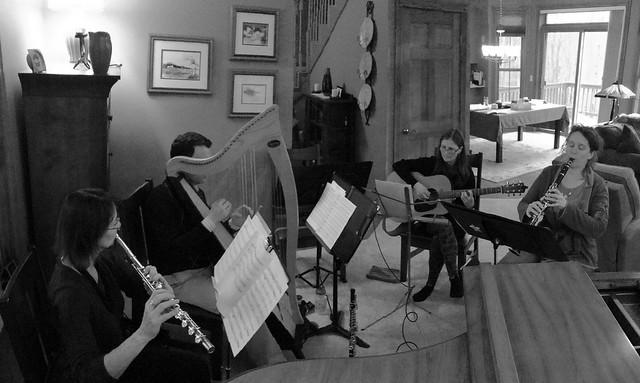 putting my melody into a box where it didn’t belong.
The flute and clarinet parts added a whole new challenge and dimension to the song — possibilities I had not thought about before. Since I’m a brass player, it took me a couple of tries to write parts that were not only fun for Sam and Anne to play, but also helped to create the sound I was hoping for.
Then came the harp part, which I usually approach much like a bass part (but with many possibilities for pizzaz). I knew that if I gave you a chord structure, you would come up with something cool more or less on your own, so all I had to provide was an outline for the harp.
Maybe rather than changing, I guess you could say your vision expanded! Performing your music is always such a treat because the music is challenging and yet not nearly so rigid as typical chamber music. We’re often invited to change our parts in subtle and not-so-subtle ways — there’s definitely that element of improvisation you naturally expect of us!
I feel so fortunate to work with you, Sam, and Anne. You’re able to play anything I write, you’re willing to give me suggestions, add your own ideas to the music. It was an amazing process to hear the notes I wrote on a piece of paper just spring to life, creating what I think is a really cool piece. I feel humbled and honored by this whole process.
The honor is certainly ours! We’re grateful you share your music with us — not to mention your great horn and guitar playing! For this upcoming concert, our audience will also get to hear  you sing for the first time — your daughter Jessie, as well, will be performing with us for the first time. Can you tell us more about your musical work with Jessie?
Jessie and I have been playing music together for about three years as Da Sista Hood, playing at local establishments and for events and fundraisers in the area. It’s been fun to work as musical colleagues, creating the sweet harmonies that just come from blending voices of the same family. Matching tone and timbre just comes 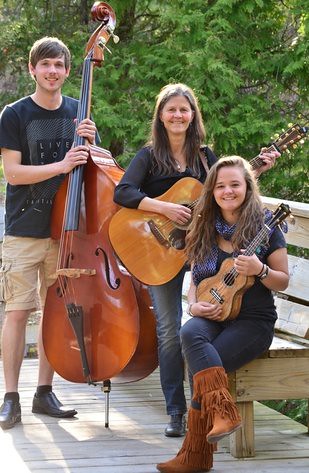 naturally for mother and daughter, so we’re able to focus on the sweetness of the harmonies, our inflection and interpretation of the lines. I’m continuously amazed by Jessie’s poise, her musicianship, and her ability to learn new material. I’m of course very proud of her and thankful for opportunities to share music together — including this premiere performance.
We hope you’ll join us for this one-of-a-kind premiere of another original work by Laura Hood.
A Bunch of Nonsense?

This post was written in preparation for our May 2017 concert, Music Speaks
In our 2017 spring concert,
Manitou Winds explores the meandering, mystical path connecting music and words.
We’ve been discussing for the past few weeks how music can enliven poetry and prose — bringing out hidden meanings from the words, engaging the listener beyond what the naked words ever could. But, when the words are basically nonsense, can the reverse occur? Can a composer use words to play with music rather than using music to play with words?
I happened upon Two Songs for Tenor and Wind Quintet and the music of David Jones (b. 1990) while Manitou Winds was still in rehearsal for our debut appearance in 2015. My chance encounter was  thanks to the modern wonders of internet searching. I was brainstorming for ideas and asked the ether of cyberspace for music written for vocalist and wind quintet. Thanks to the internet, discovering undiscovered and unpublished student composers is easier than ever.
David was about to graduate with his Bachelor of Musical Arts in Composition from Brigham Young University-Idaho when I first got in touch with him back in 2015. He’s now received his Master of Music Composition and is presently a graduate teaching assistant at BYU in Provo, Utah. Among his influences, he credits Stravinsky, Debussy, Hindemith, and Holst for shaping his motive-driven style. His brilliant settings of these two songs actually began as a light bit of competition.
“I wrote each of these pieces for two separate art song competition recitals put on by the voice faculty at BYU-Idaho,” David recalled. “The assignment for the first was to write something light or humorous since the recital was being held on April Fools’ Day.”
For a light and humorous subject, David consulted the poetry of Lewis Carroll (1832-1898), selecting Jabberwocky for his text. David says it was the “creative vocabulary” of Carroll’s poetry that initially drew him to it. “The light mood in which Carroll presents what could be considered a fairly dark topic appealed to me, so I sought to capture that in the nature of the music,” David says.
‘Twas brillig, and the slithy toves
Did gyre and gimble in the wabe;
All mimsy were the borogoves,
And the mome raths outgrabe.“Beware the Jabberwock, my son!
The jaws that bite, the claws that catch!
Beware the Jubjub bird, and shun
The frumious Bandersnatch!”He took his vorpal sword in hand:
Long time the manxome foe he sought—
So rested he by the Tumtum tree,
And stood awhile in thought.
And as in uffish thought he stood,
The Jabberwock, with eyes of flame,
Came whiffling through the tulgey wood,
And burbled as it came!One, two! One, two! and through and through
The vorpal blade went snicker-snack!
He left it dead, and with its head
He went galumphing back.“And hast thou slain the Jabberwock?
Come to my arms, my beamish boy!
O frabjous day! Callooh! Callay!”
He chortled in his joy.‘Twas brillig, and the slithy toves
Did gyre and gimble in the wabe;
All mimsy were the borogoves,
And the mome raths outgrabe.— “Jabberwocky”
from Through the Looking-Glass (1871) by Lewis Carrol
First published in 1871 as part of Carroll’s novel Through the Looking-Glass (the sequel to Alice’s Adventures in Wonderland (1865)), Jabberwocky remains one of the greatest nonsense poems ever written in English. Beneath the surface of the playful 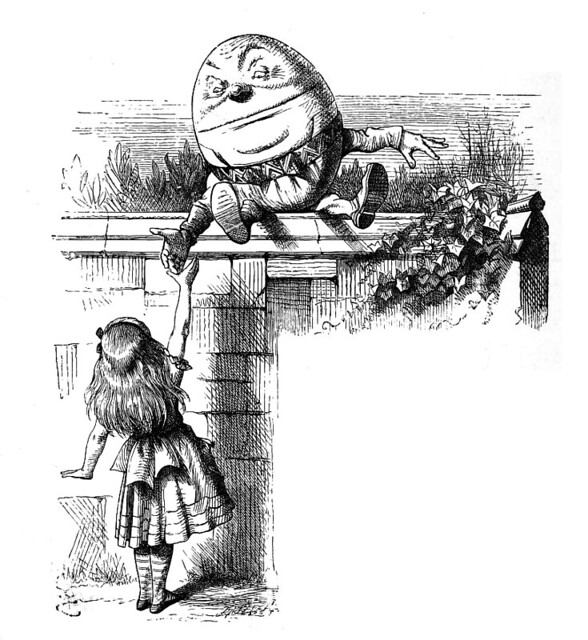 language is a tale of the heroic slaying of a terrifying beast, but somehow it’s the words that stick with folks rather than the gory details.
“It seems very pretty, but it’s rather hard to understand!… Somehow it seems to fill my head with ideas — only I don’t exactly know what they are! However, somebody killed something: that’s clear, at any rate.”
— Alice
from Through the Looking-Glass
David’s setting pairs the modern-day wind quintet (flute, oboe, clarinet, horn, and bassoon) with a vocalist armed with Carroll’s playful lexicon. What results is a fantasy tale set to music. Using a central theme presented by the vocalist, David manipulates the timbres of the quintet in inventive ways, altering the theme as needed to further portray the story.
The second song was written under slightly different circumstances: another competition but slightly different rules. All of the composers were required to use the same text: The Owl and the Pussycat by Edward Lear (1812-1888).
The Owl and the Pussy-cat went to sea
In a beautiful pea-green boat,
They took some honey, and plenty of money,
Wrapped up in a five-pound note.
The Owl looked up to the stars above,
And sang to a small guitar,
“O lovely Kitty! O Kitty, my love,
What a beautiful Kitty you are,
You are,
You are!
What a beautiful Kitty you are!”
Kitty said to the Owl, “You elegant fowl!
How charmingly sweet you sing!
O let us be married! too long we have tarried:
But what shall we do for a ring?”
They sailed away, for a year and a day,
To the land where the Bong-Tree grows
And there in a wood a Piggy-wig stood
With a ring at the end of his nose,
His nose,
His nose,
With a ring at the end of his nose.“Dear Pig, are you willing to sell for one shilling
Your ring?” Said the Piggy, “I will.”
So they took it away, and were married next day
By the Turkey who lives on the hill.
They dined on mince, and slices of quince,
Which they ate with a runcible spoon;
And hand in hand, on the edge of the sand,
They danced by the light of the moon,
The moon,
The moon,
They danced by the light of the moon.— The Owl and the Pussycat (1871)
by Edward Lear
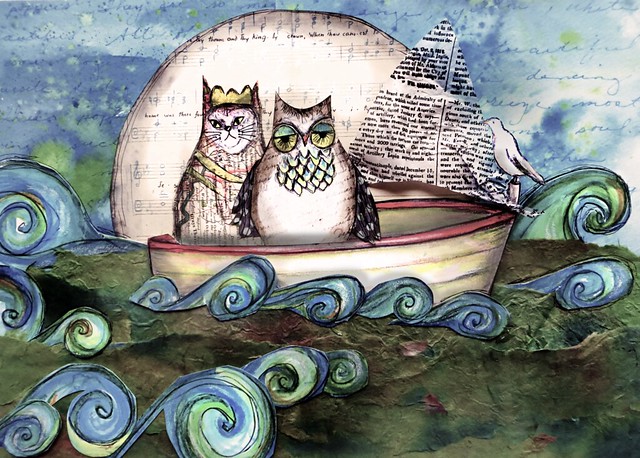
David readily admits he was not terribly fond of the assigned poem initially. Lear’s poem, like Carroll’s, is considered a nonsense poem but — unlike Jabberwocky — the nonsense comes more from the subject of the story and the poet’s whimsical plays on words rather than extensive use of nonsense words.
Students were assigned to use different instruments or sounds to represent various characters from the poem. David uses a central theme to carry the poetry, again, however for the quintet accompaniment he employs even more colorful uses of harmony, dissonance, and instrumentation to mirror events in the poem. In his setting, we hear several quirky harmonies, lop-sided rhythms, and even a few specific animal references (e.g., when the oboist is asked to crow his reed to simulate a pig’s squeal).
We’ve been enjoying rehearsals of these whimsical pieces — delighting in the crunchy harmonies and unexpected twists. For our concert, we’ve enlisted the vocal talents of our special guest, Emily Curtin Culler, soprano. Manitou Winds is delighted to present these two original settings of classic poetry for our Music Speaks concert.