
Translating A Sunset

As musicians, we translate written music—the composer’s instructions and all the technical demands—into an active, emotional experience for an audience. During our rehearsals, we often discuss where we think a piece is going—the story it’s telling, the images it brings to our minds, or the characters our instruments are becoming in the unfolding drama.
Unlike a painting or a sculpture, music is a temporal art form—art which exists only in the moment we experience it. We musicians spark a rippling effect, igniting the air with vibration, enlivening it with pulsating rhythms and patterns. It doesn’t stop there, though. Musical art is the shared experience between the composer’s plans, the musicians’ interpretation, and the audience’s imagination and spirit. Each performance is a new creation!
As both a musician and a composer, I relish the challenge of translating my personal memories, reflections, and creative musings into music. I’m honored to share my music with musicians I trust and admire—who will partner with me to create an earnest and heartfelt experience for an audience.
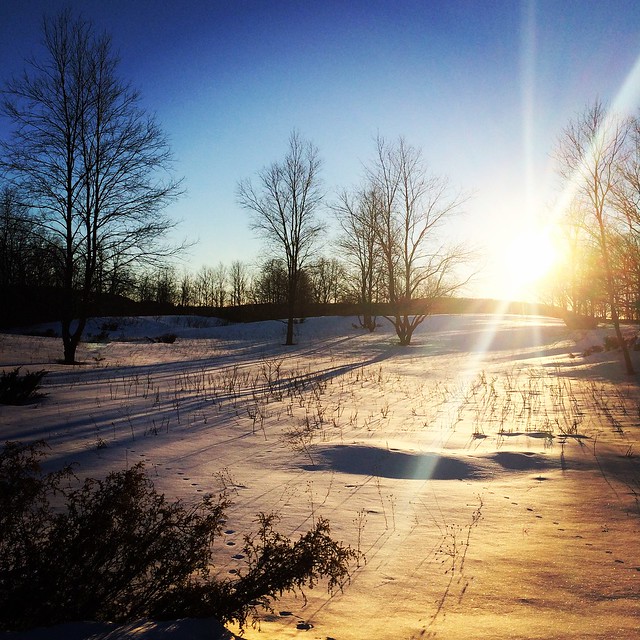
Last winter, on an evening drive into Traverse City, I was awestruck by a scarlet sunset. As I hurtled past the naked forest and snow-covered furrows bathed in those last few moments of daylight, I couldn’t help taking a mental picture. It was a picture of light and color as emotion and sound, of winter as a beginning rather than an end.
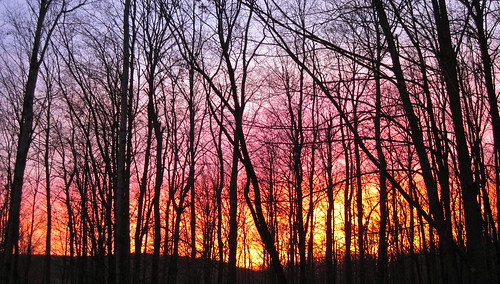
I’m excited to share with you on our debut album the premiere of the musical essay (Midwinter Twilight) that grew from that small moment. The music depicts the colors of a fiery twilight flickering through bare branches along a deserted country road, and the rush of memories of all four seasons across a single landscape. Interwoven into the musical score is narration taken from my personal journal, drawing parallels between sound and light, nature and music.
On behalf of Manitou Winds, I’d like to thank you for making music with us—by being an active participant in the art we create in our concerts and by making a pledge that has enabled us to create our debut album. We truly could not make our art without you.
Sincerely,
J.T. McKinney
P.S. Looking forward to visiting with all of you at this year’s Winter Songs & Carols performances where you can hear the first-ever live performance of (Midwinter Twilight)!
A Celtic Summertide: Thank You!

Thank You to everyone who came out to experience “A Celtic Summertide” with us at the Oliver Art Center in Frankfort! It was a lovely evening of music and art made all the lovelier by the warmth of your company.

The gallery became filled to capacity before the concert began and so many audience members were asked to sit in hallways or stand where possible. Unfortunately many others had to be turned away due to legal limits for capacity at the venue.
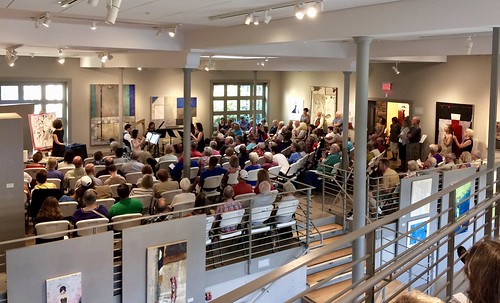
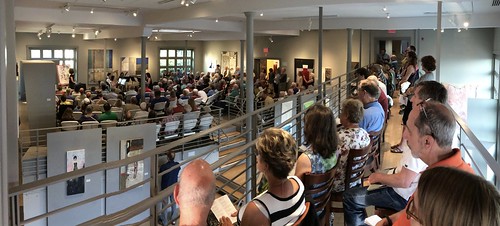
We apologize for any disappointment and inconvenience this may have caused any of our friends. As part of our planning for the next summer concert in Frankfort, we are working to secure a larger venue in the hope that you will all join us again for another wonderful evening.
The concert program was a journey across the Celtic realm with music from the Shetland Islands, Scotland, Ireland, and Nova Scotia in many different combinations of instruments.
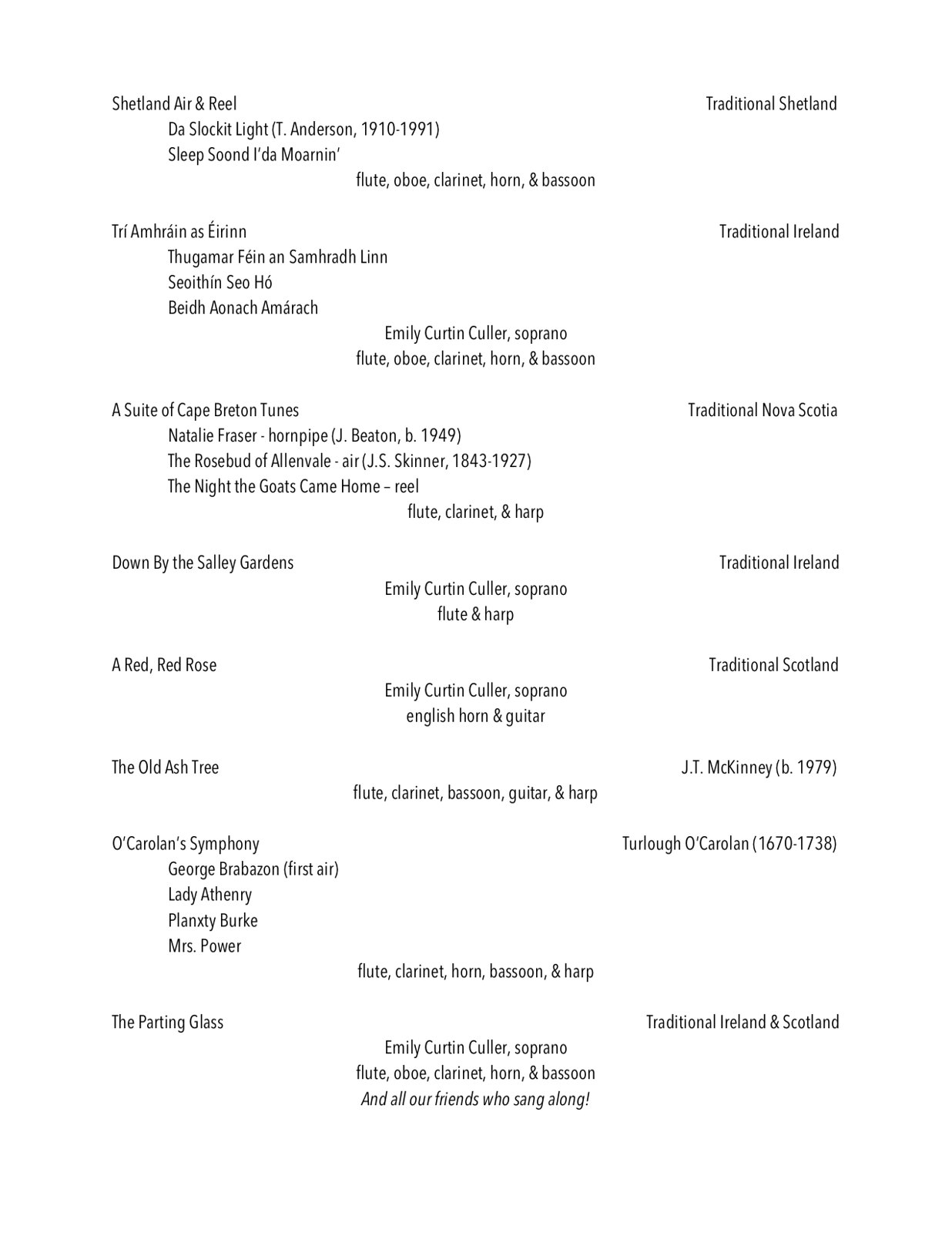
We were honored to be joined by Emily Curtin Culler, soprano, who premiered a brand new collection of traditional Irish folk songs set for soprano and wind quintet.
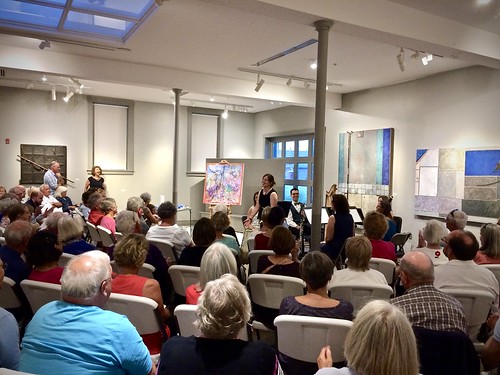
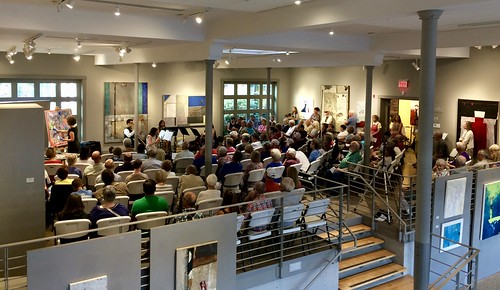
In addition to the musical journey, we were delighted to be joined by Frankfort artist, Ellie Harold, who dazzled our audience by bringing a brand new painting to life over the course of the program.
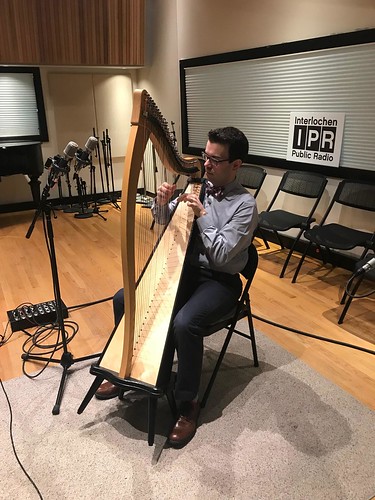 Just a few days before the performance, our founder, Jason McKinney, was invited to perform in Studio A at Interlochen Public Radio and share a bit about the program and talk about working with the music of Turlough O’Carolan. You can listen to the full interview here and watch Jason performing a harp solo in Studio A on the IPR Facebook Page.
Thank you to our entire Northern Michigan community for helping to make our performance a success. We are especially grateful to all those who gave donations toward our upcoming recording project.
A Story that Lingers, a Tune that Wanders

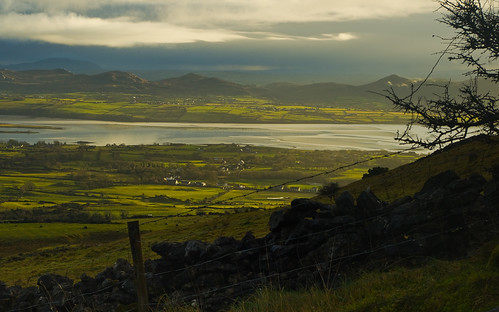
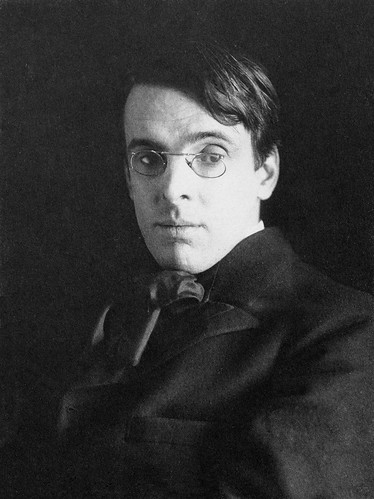
Picture the scene: The year, 1880-ish. Ballysadare (Irish: Baile Easa Dara) – a tranquil bayside village in County Sligo. The poet William Butler Yeats, who had spent many summers here as a child, returns for another sojourn. In his wanderings about the village, he comes upon an elderly Irish woman who seems to be troubled by a song she can’t remember. As she goes about the duties of her day, she sings the same lines over and over to herself, but can’t remember what comes next…
Down by yon flowery garden my love and I we first did meet.
I took her in my arms and to her I gave kisses sweet
She bade me take life easy just as the leaves fall from the tree.
But I being young and foolish, with my darling did not agree.
Yeats also found her song troubling, but perhaps for different reasons — he wanted to know the rest of the story! In the end, he constructed his own answer by writing a poem based on the few lines the woman could remember. His poem, An Old Song Re-Sung appeared in his 1889 volume “The Wanderings of Oisín and Other Poems”:
 Down by the salley gardens my love and I did meet;
She passed the salley gardens with little snow-white feet.
She bid me take love easy, as the leaves grow on the tree;
But I, being young and foolish, with her would not agree.
In a field by the river my love and I did stand,
And on my leaning shoulder she laid her snow-white hand.
She bid me take life easy, as the grass grows on the weirs;
But I was young and foolish, and now am full of tears.
— “An Old Song Re-sung”
Down By the Salley Gardens
W.B. Yeats (1865-1939)
By the time it was published, Yeats had come to realize he’d written a poem about a fairly well-known song. As it turns out, the song the elderly woman was futilely trying to recall was Ye Rambling Boys of Pleasure, but she could only call to mind the second stanza. The similarity between Yeats’ first stanza and the lines of the second stanza of the original song were too close to ignore. To acknowledge his accidental plagiarism, Yeats published his poem under the title An Old Song Re-Sung. However, when it was republished in 1895 it became known as Down By the Salley Gardens, a title which has firmly stuck.
And, the rest is history… except that what really imprinted Yeats’ poem in our hearts was the tune which was eventually married to it in 1909. Sadly, this tune was torn from yet another song (The Mourlough Shore, aka The Maids of Mourne Shore or The Mourne Shore) which will ever be overshadowed by the poem that stole its tune!
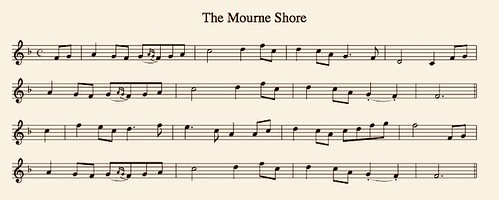
A story ripped from its song, turned into a poem, and then married to a tune borrowed from yet another song — what a tangled web! Aside from revealing the transient nature of tunes (which seem to 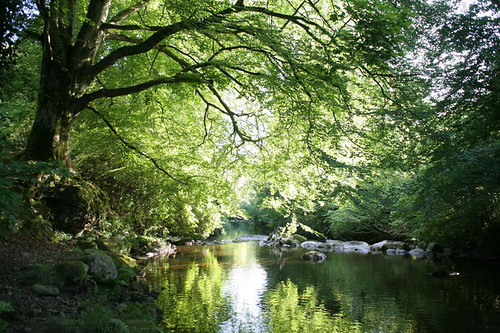 wander effortlessly from poem to poem until they find their true destiny), what might we glean from this fable of tunes and texts? Perhaps the moral is that — in spite of the tune originally given to the words which may have been intended — we cherish more the words we forgot sung to the tune that got away.
In arranging this beloved song for our program, I sought to bring out all the bittersweet feelings from the simple but timeless poetry which Yeats wrote in an effort to finish the story the old lady couldn’t remember. To accomplish this, I call upon the 34 strings of the Irish harp, the mellow breeze of the flute, and the beautiful voice of our special guest soloist, Emily Curtin Culler.
A Celtic Summertide: The Art of Collaboration

If you’ve attended a Manitou Winds concert, recently, you’ve no doubt experienced the wonderful voice of Emily Curtin Culler. Whether singing an aria from a Baroque cantata, a classic German lieder, or a traditional Irish lullaby, Emily’s voice has tremendous dynamic range and is tirelessly light on its feet. She is a consummate chamber musician who brings sensitivity and musicality to every performance.
[youtube https://www.youtube.com/watch?v=YUoufFo44do&w=450&h=253%5D
Emily came to northern Michigan by way of Boston. A soprano Choral Scholar with Boston University’s Marsh Chapel Choir, she performed weekly services for audiences throughout New England and around the globe via WBUR.
She’s also an original core member of the Lorelei Ensemble. 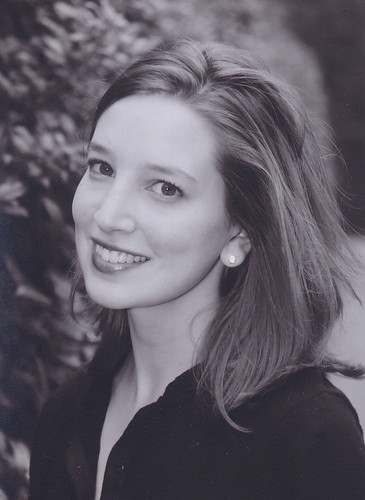 The ensemble specializes in performing lesser-known early music while also collaborating with living composers to produce innovative programming. (Hear recordings of Emily performing with Lorelei HERE!)
An in-demand performer and avid interpreter of new music, Emily is also a non-profit and arts management professional. Presently, she is Leadership Annual Giving Manager at Interlochen Center for the Arts and Interlochen Public Radio.
Last fall, when I began creating repertoire for “A Celtic Summertide”, I knew the program’s central element would be juxtaposing our instruments (most of which are not Celtic folk instruments) with traditional Celtic tunes. Since many of the tunes are also beloved folk songs, I couldn’t resist including a few of these. For a new collection of Irish Gaelic songs, I knew Emily was our ideal collaborator!
Trí Amhráin as Éirinn (Three Irish Songs) is a suite of three traditional Irish songs in modern settings for soprano and wind quintet. The opening song, Thugamar Féin an Samhradh Linn (We Brought the Summer with Us), is a centuries-old tune sung to celebrate May Day (Bealtaine) and the beginning of summertime.
Bábog na Bealtaine, maighdean an tSamhraidh,
Suas gach cnoc is síos gach glean.
Cailíní maiseach go gealgháireach gléasta,
Thugamar féin an Samhradh linn.Doll of the May, maiden of Summer,
Up every hill and down every glen,
Beautiful girls brightly dressed,
We brought the Summer with us.
Though sources claim the text and tune originated in early 15th-century Ulster in what is now primarily Northern Ireland, we can’t be certain. The precise age of the text and whether it was always married to this tune is also a matter of speculation as 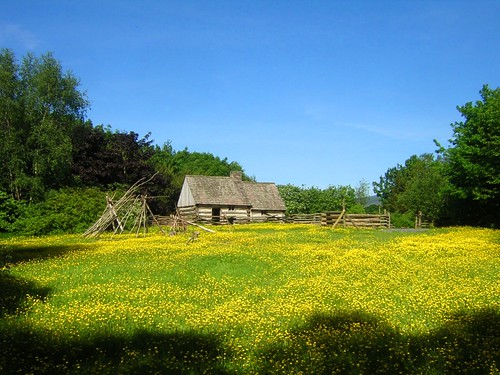 other versions exist alongside completely different tunes.
The song was sung by young women and men performing as “Mummers” or beggars during the Bealtaine celebration. Roaming door to door singing, they would have offered garlands of hawthorn, holly, and flowers in exchange for food and other gifts. Their garlands were believed to ward off fairies (mischievous little people) and thus bring good fortune to the recipient when placed at the entrance of their home.
I was inspired by the summery images in the stanzas (“yellow summer from the sunset…”, “the cuckoo and the lark are singing with pleasure…”) which were particularly inspiring in the dead of a northern Michigan winter. I also fell in love with the tune — it’s lilting phrases, for me, painted a lovely landscape of rolling hills and flowery glades. I employed the vivid colors of the wind quintet to bring these landscapes to life while parading the soprano’s line through them, spreading summer tidings.
The second song, Seoithín Seo Hó (Hushaby), is a lullaby whose tune is believed to predate its text. The 20th-century song collector Eileen Costello noted in her 1919 anthology (Amhráin Mhuighe Seóla) that many believed the tune was sung by the Blessed Virgin to lull the Christ Child, and so it was traditionally sung without lyrics. Costello credits the text to a Rev. O’Kelly of Galway. In keeping with tradition, alternate stanzas of the Irish lullabies are often hummed rather than sung.
While at first glance the lyrics are sweet and sentimental, one stanza warns that children are at risk of being abducted by fairies (a common theme in the folklore). Apparently, the fairies steal a child’s soul, exchanging it with an old or sickly fairy (a “changeling”) who inhabits the child’s body and soon dies.
Ar mhullach an tí, tá síogaí geala
Faoi chaoin ré an earraigh ag imirt is spoirt.
Seo iad anair iad le glaoch ar mo leanbh
Le mian é tharraingt isteach san lios mór.Atop the house, there are bright fairies
Playing sport under gentle rays of the spring moon.
Here they come to call out my child
Wanting to draw him into their mound.
 A number of Irish lullabies make mention of fairies as a way of coaxing children to close their eyes — it’s believed sleeping children can’t be lured away by wily fairies. Still, it’s hard to imagine easily falling asleep knowing your only protection is that your eyes are closed!
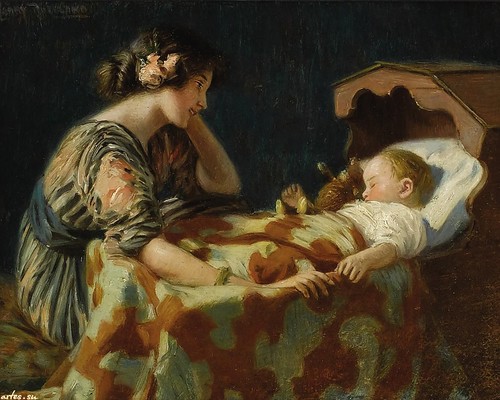
In my setting of the lullaby, rather than capitalizing on the sinister fairies lying in wait on the roof, I chose to focus on the love poured out by this mother as she shares an intimate moment with what I imagine is her first child.
Seoithín seo hó, mo stórín, mo leanbh.
Mo sheoid gan cealg, mo chuid den tsaol mhór.
Seoithín seo hó, is mór é an taithneamh,
Mo stórín ina leaba, a chodladh gan brón.Hushaby, my treasure, my baby.
My jewel without deceit, my share of the big world.
Hushaby, it is the greatest sight,
My treasure in his bed, asleep without care.
Unlike most lullabies, the chorus of this tune has a “soaring” quality, naturally drawing out a crescendo (the opposite of what you’d want when lulling someone to sleep!). Rather than working against this natural tendency, I set the music so that the mother becomes so caught up in her joy she accidentally wakes the baby and then coaxes him back to sleep.
The third and closing tune, Beidh Aonach Amárach (There Will Be a Fair Tomorrow), is a “dandling” song. Rather than telling a story, dandling songs are meant to be  simply entertaining to sing due to the sound or rhythm of the lyrics. These are often used to amuse or distract children (in the US, popular examples of dandling songs might be “Pat-a-cake” or “The Itsy-Bitsy Spider”).
Appropriately, the text in this song is a back-and-forth disagreement between daughter and mother. The daughter wants to go to the fair where she intends to marry the town’s shoemaker, but her mother won’t allow it… and the daughter’s pestering ensues!
A mháithrín, an ligfidh tú chun aonaigh mé?
“A mhuirnín ó, ná héiligh é!”Momma, will you let me go to the fair? (repeat 3 times)
“Darling, don’t ask again!”
In my setting, I wanted to highlight the playful quality of the lyrics and tune rather than presenting the entire text (which traditionally contains ten or more verses). I also interjected a bit of theater by adding awkward pauses and some mocking on the daughter’s part.
I crafted this entire song set with Emily’s voice in mind, and so I’ve dedicated it to her. Coaching her in the Irish Gaelic pronunciation as she painstakingly translated each syllable into IPA characters was great fun and a provided further encouragement for me to learn more about a language that has always fascinated me. Manitou Winds is honored to have her premiere this new work with us, adding her special signature to the performance!
Traveling Mercies

Traveling Mercies, written by Manitou Winds founder Jason McKinney, was completed in January 2018. Composing the work became both an adventure and a learning process.
To tell you more, here’s Jason in his own words:
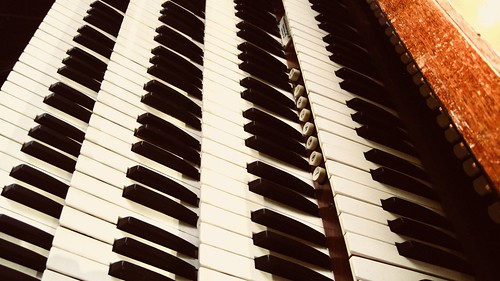
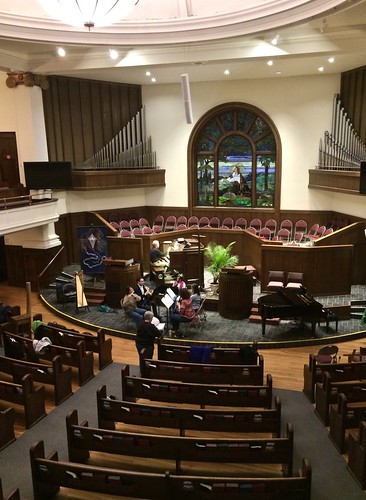
The idea to write a chamber work for organ first came to me in May 2017 as I sat at Central United Methodist Church, Traverse City, listening to a spectacular organ recital by Bradley Hunter Welch. The organ was not a favorite instrument of mine. I 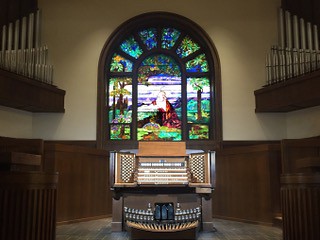 had tremendous respect for it (and for organists!), but I had never had a chance to fully understand or experience the instrument.
During the recital, as we were given a tour of the newly renovated organ, I began to connect to the sound. The whole building became an instrument, and we were sitting inside it! I physically felt the raw power of chords, dissonances crashing into consonance, the dynamic contrast from roar to purr. I was amazed how an organist combines timbres as though an entire orchestra were crammed into a single console. Wind players have to come up for air, string players have to reverse their bows, percussionists have to re-strike or keep rolling. But the organ is like a singing mountain, inhaling as it exhales, sending its sound wafting over us like a mist through a forest or cascading down on us like a waterfall. 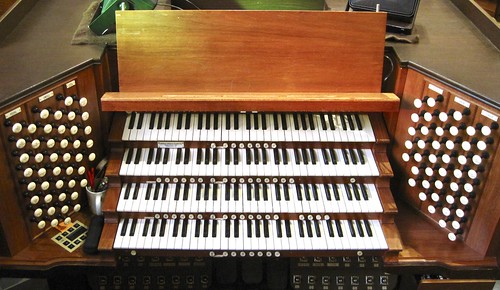
The recital had a profound effect on me, musically. It was months before I told anyone, but I left knowing I would write a work for organ someday. Still, there were hurdles to face. For starters, I’d taken it upon myself to write a piece featuring an instrument I’d neither written for nor played before. Frankly, the instrument scares me. Hundreds and hundreds of pipes — some of them quite a bit taller than me!
Before I hoped to compose anything, I had to learn more about this singing mountain. Fortunately, I had the best organ Sherpa anyone could ask for: Thomas Bara! He loaned me reams of organ music and a copy of his album. He 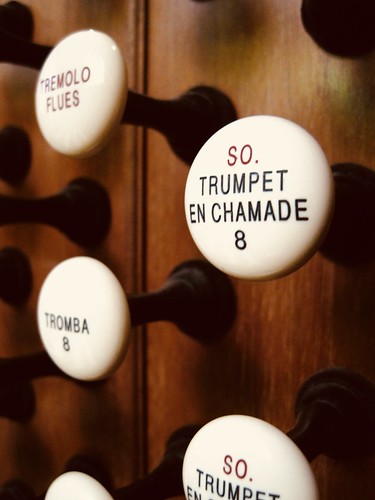 performed a personalized organ demonstration, explaining how various musical elements are performed and how all its manuals and stops come into play to create a unified sound. I also learned to speak its language — thumbing a glossary of strange words, discovering what the organ can and cannot do. As I pored over pages of organ repertoire, I realized I needed to understand what the individual organist brings to the music (yet more questions for Mr. Bara!).
The next hurdle was facing the blank page. My last original work was written in 2006 — more than a decade ago! When Manitou Winds came into being in 2014, I delved into my archives to dust off some of my older works, fashioning them into something better than the original. But it had been a long time since I’d faced a truly blank page.
I decided on a gradual approach by first facing smaller blank pages. I sketched musical ideas as they came to me, intuitively. Instead of forcing them into a specific context or direction, I let my mind wander, paying more attention to colors and textures. Once I’d 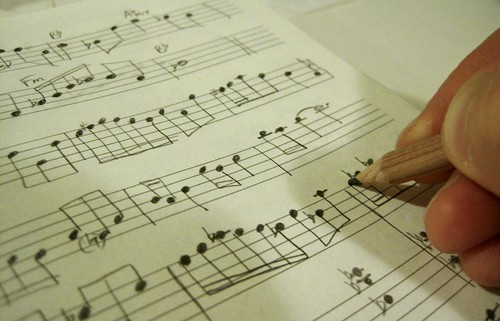 amassed several ideas, I sat down at my piano to play through them, gradually adding harmonies but allowing even those to change whenever I felt them shifting.
Working in this freer style put my imagination into overdrive. Soon, a story about a long journey and a search for deeper meaning began to build itself into the piece taking shape. Before I knew it, I’d reached the final hurdle: sitting at the computer to orchestrate the piece for the entire ensemble (the big blank page)! By this point, I was now more eager than afraid.
The task was akin to inviting friends to a party. Composing and arranging for Manitou Winds, I’ve learned not only the 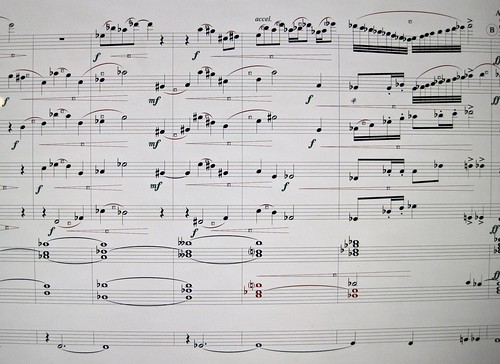 unique qualities each instrument brings to the music, but also each musician’s boundaries. We do occasionally surprise one another, but I’ve come to know by heart what they love to play, what will challenge them, what they will begrudgingly play, and what they cannot play.
While orchestrating, I listened for each part to ring out. Whenever I couldn’t hear an instrument’s distinctive voice, I knew I was likely on the wrong track. I also made certain the organ was an equal part of the ensemble — neither a domineering presence nor merely accompaniment. I wanted it to seem as though Thomas was sitting in a chair next to us, taking part in the conversation rather than far away at a giant console.
Once finished, I realized this is a tone poem about wanderlust. Hearing the call of adventure, our narrator seeks excitement and wisdom from faraway places, dismissing the concerns and well-meaning advice of loved ones. Life abroad proves to be inspiring and overwhelming, leading our narrator on an introspective journey to find himself. Eventually, the wanderer returns home to find he is forever changed.
The title, Traveling Mercies, came to me while I was still sketching in my notebook. The title has a double meaning: 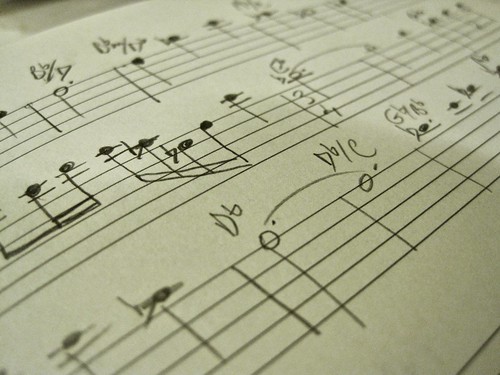 it evokes the special blessing travelers request as protection before embarking on a long journey, and it reminds me of a line from my favorite psalm, “Surely goodness and mercy shall follow me all the days of my life” (Psalm 23:6). I’ve always taken comfort in the notion that mercy can be a traveling companion — following us if we allow it.
Rehearsing the new work has been tremendous fun for me. Hearing my friends learn their parts, gathering precision, weaving all the lines together… it’s not unlike watching loved ones open gifts and seeing their unfiltered reaction to what’s hidden beneath the wrappings. After weeks of rehearsing apart, finally getting to add Thomas and the organ to the full ensemble was simply magical.
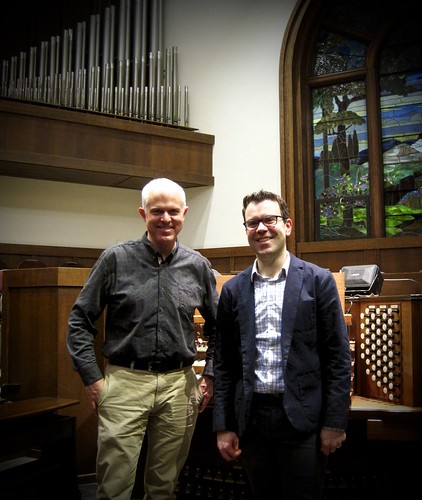
Without Thomas Bara and the members of Manitou Winds, this piece would never have been written, and so I’ve dedicated the work to them. I hope you’ll join us for the premiere.
Home Away from Home

Commissioned by the American Guild of Organists, Sojourn premiered at their 2010 convention in Washington, D.C. We’re pleased to bring this powerful work to Northern Michigan, backed by the artistry of guest soloist Thomas Bara!
sojourn
1) n. – a temporary stay;
2) v. – to stay as a temporary resident
Because it’s a word seldom heard outside the discussion of lengthy travel plans, sojourn is almost always defined as the act of traveling, or a word indicating a particularly  long or epic journey. In reality, however, it’s simply the act of setting up a temporary home away from home.
As creative director of Manitou Winds, I often find myself speculating about the deeper meaning and sometimes hidden origins of the music we perform. Composers ultimately create their art through music and are seldom in the business of storytelling, so this leaves me with a lot of detective work. Beyond the notes and instructions on the page, beyond the audible details of musical form at the heart of a piece, many musicians want to find an even stronger connection to a piece that touches them. Sometimes we feel we haven’t mastered a piece until we’ve understood why it was written.
Fortunately, when you’re playing music written by living composers, you can get in touch with them and pick their brains for these insights into their work. And so, I e-mailed Craig Phillips recently and asked him for more details about Sojourn.
It was during a February 2008 interview with The Diapason, that Phillips announced he had been awarded a 2010 AGO New Music Commission. As you might imagine, such a prestigious commission carries with it weighty expectations and a deadline! During the interview, he confessed he’d already begun to muse about what he might write.
By the summer of 2009, roughly a year away from the premiere, the work was still in its planning stages. Phillips took a sabbatical from his duties as Director of Music at All Saints’ Church in Beverly Hills to seek a time of rest and renewal — mental space to focus on 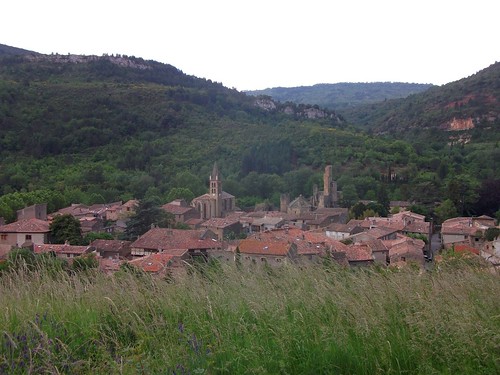 his composing. His travels landed him in southern France’s Occitanie region in the little medieval village of Alet-les-Bains where he’d arranged for an extended sojourn. Phillips says the sights and sounds of Alet-les-Bains were direct inspiration for Sojourn.
The village is a charming destination in the region. Hugging the eastern bank of the scenic Aude River, the heart of the hamlet is steeped in history from a tumultuous past, the remnants of which are some of its most popular features.
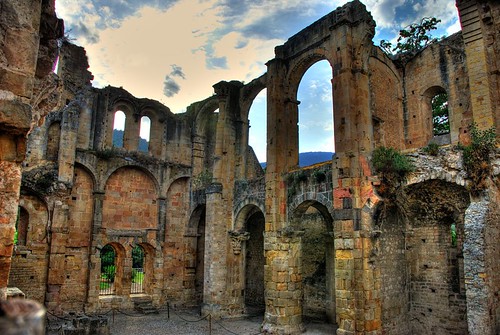
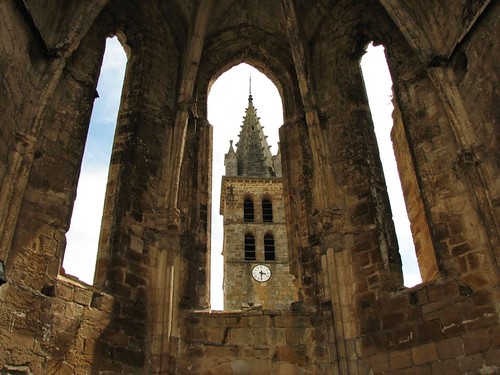
The ruins of the Cathédrale Notre-Dame d’Alet draw history buffs and photographers alike. The cathedral was destroyed by the Huguenots in 1577 during the early years of the French Wars of Religion in which Catholics and Protestants waged a bloody battle for the throne. The ruins are a fascinating example of Gothic architecture.
The town also boasts one of France’s largest sources of mineral water. The water of Alet-les-Bains was first bottled and sold over 120 years ago. Located near a natural hot spring, the town was also famous for its thermal spa. These days, both the bottling and the bathing have ceased commercially, but visitors still find a way to enjoy the water.
Southern France is a summer haven for many, especially writers and artists who take advantage of the slower pace of village life, delicious but simple food, and inspiring scenery set amid easy 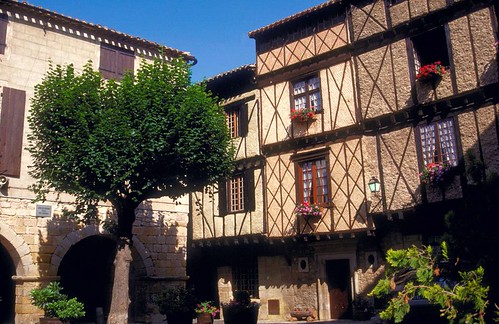 solitude. When shutting out modern distractions and interruptions, it becomes easier to access the creative impulse.
“It turns out, that first summer was a turning point in my composition career,” Phillips mentioned. “I have returned to the same village each summer since for a time of concentrated composing. I find it to be a place of inspiration and renewal each year.”
Clearly he’s onto something! Sojourn, his 2010 commission, was received with critical acclaim. Then, in 2012 he received another AGO New Music Commission and was awarded the American Guild of Organists’ Distinguished Composer Award, putting him among the ranks of composers such as Stephen Paulus, Richard Proulx, and 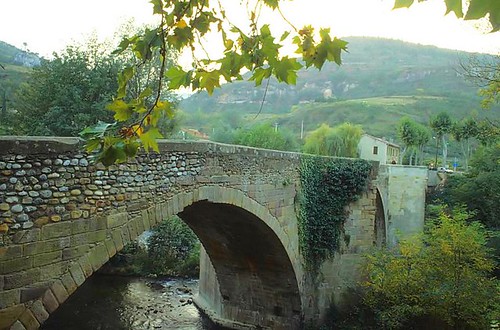 Virgil Thompson. To date, Phillips has published over 125 works.
While a summer’s sojourn in France may be out of the question for some of us, the value of respite and quiet remains universal and an integral part of tapping into one’s own creativity. We often think of a sojourn as a distant home away from home, but it can be as close as a favorite nook on the back porch or a quiet cove in the nearby woods or a spot at the water’s edge at your favorite beach. Sojourn can be a state of mind!
There’s Still My Joy

“One tiny child can save the world
One shining light can show the way
Beyond these tears for what I’ve lost
There’s still my joy for Christmas Day.”— from There’s Still My Joy by Beth Nielsen Chapman
If you’ve attended a recent musical production at Traverse City’s Old Town Playhouse, or if you attended 2016’s Winter Songs & Carols concert, Christy Burich is probably already a familiar face and unmistakable voice. She puts so much energy and feeling behind her voice and 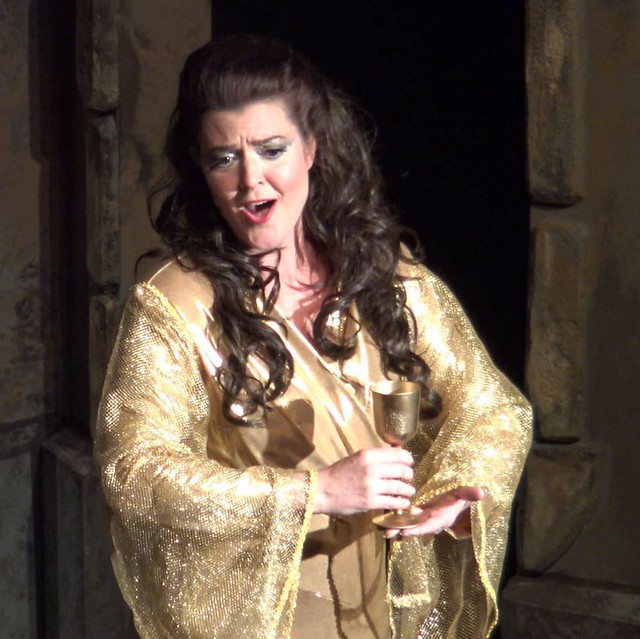 onto the stage, it’s hard to forget the experience.
While working with Christy in rehearsals for last year’s concert, she mentioned she’d always wanted to create a concert or an album to help those who may be suffering through grief — a program about hope, healing, and renewal.
My eyes widened as I quickly told her it was a theme I’d considered for our 2017 Winter Songs & Carols concert. I’d been afraid to mention my idea to anyone because I had serious doubts about putting together such a program. I reasoned our audience expects a reflective but generally light-hearted evening of music. How would we explain a holiday concert that touches on grief and loss? Thankfully, after our chance conversation, I began a collaboration with Christy over the following year in which I learned about her journey through grief and healing. Eventually, I realized my fears about this project were very short-sighted.
In 2013, Christy’s husband Larry passed away after a year-long battle with a very rare form of cancer. “From the very night Larry passed, I began a conversation with him on paper,” Christy says. “I was emptying my heart of all the pain and sadness — my longing to see him, my 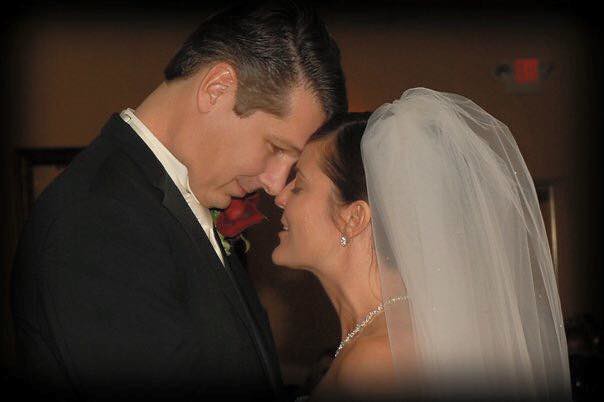 pleading for forgiveness for my anger at his leaving. I would pause, listen, and just wait for words and answers to come.”
Christy says a lot of her healing came through journaling and painting. “Some say my life is an open book — I’ve never been able to contain my feelings,” she says. “But, I believe that’s what makes me an artist: the desire, the need to express my feelings through art, song, or monologue. For me, art is a way to fully acknowledge, honor, and release my emotions. When I’m vulnerable with an audience — big or small — I feel a sense of Oneness, that our souls are deeply connected.”
This year’s program was created by pairing writings from Christy’s personal journals with a carefully-curated program of music. Though the holiday season often asks those who are grieving to hide their feelings of emptiness and uncertainty, we’re hoping our unique program will invite everyone to the holiday table to explore the season of winter as a time of peace, healing, and renewal. I talked with Christy, recently, about her collaboration with Manitou Winds, for our 2017 Winter Songs & Carols program.
Being an artist and a vocalist, it makes sense you’d feel drawn to music as a means of expression and a way to explore your grief journey. Do you remember the moment when the idea of a concert like this started to take shape for you?
Not too long after Larry’s passing, I realized I had two choices: either live a full and vibrant  life, or be swallowed up by grief simply waiting to die. I eventually chose to live fully. In part, my decision was inspired by my stepson who was just 13 years old when his father died. I realized if he could honor his father’s memory by consistently rising up, giving life his very best, then I could too! His determination to create something good from our loss is what inspired me.
In the deepest struggles of my journey, I was comforted by the writings of wise and inspired authors, and also through the personal stories of others who were taking part in grief support groups. Grateful for their support, I knew even early on I’d want to someday be that support for others. That’s when I began to have a vision of a healing concert.
I’ll never forget the moment when we were talking after rehearsal, last year, and we realized we’d both had this same idea about a concert to comfort and heal. Did it surprise you when I told you I’d been creating a holiday-themed concert?
I never imagined it would be during the holidays, but it all seems to be Divine timing! Larry and I were married just two days after Christmas — it was our favorite season! Since his passing, the holidays, our anniversary, and Larry’s birthday following New Year’s Day have always been hard to endure. The whole season of winter can be especially hard for those missing a loved one. While I hadn’t pictured it, I think that’s why this concert is happening during winter and the holidays.
 Part of the program we’ve put together is a monologue taking you and the audience all the way back to the beginning of your grief journey: the night Larry passed away. When we discussed using these particular pieces of writing, I remember asking you if you’d be able to get through the performance.
I’ve still got friends and family wondering the same thing! I feel like rejoicing when I tell them my strength is coming from the lasting and loving connection I still have with Larry. I don’t feel alone in this; I am so grateful to God and the Angels for this very auspicious opportunity to perform and share.
You’ll be reliving a very personal, painful time in front of an audience — entering into that vulnerability you’ve mentioned earlier. What sort of message are you hoping will stick with those who attend?
For all of us, I want this concert be a time of remembrance and unity with our loved ones. I also want to show there is healing beyond grief and give assurance that Love Never Dies! I’ve learned through my journey that our relationships continue in spirit. The connections we share are still real although they have changed. Perhaps, in some ways, we become more intimately connected than before. Our loved ones are only a thought away. Wherever we go, they are there guiding, loving, and protecting us. Always.
Without giving any spoilers, what do you think will be your favorite part of the program?
There’s a song toward the end of the program that happens to be Larry’s favorite song. It carries a beautiful and encouraging message. I sang it to him many times when he was ill, and over the years it has shown up in my own life at different times, bringing  an unexpected smile. I know I’m going to enjoy singing those words to him, again, and to our audience.
Collaborating with Christy for this year’s special program has been an honor and a treasured experience. We admire her bravery and strength in sharing this difficult journey with our audience, and we’re grateful our music can be a part of that experience. It has been a memorable experience for each of us. Along the way, there have been many moments during rehearsal when one or all of us have been choking back tears. Thankfully, just moments later we’ve also been brought to tears of laughter while gathered around the table sharing (embarrassing) stories and comfort foods.
As musicians, we are sometimes handed the burden and privilege of sharing music during difficult moments in people’s lives. Emotionally, that strain can be difficult to bear, but having music in those moments as a tangible means of expression can embolden us, strengthening us when words alone might fail. The message of our concert this December is one of hope and healing. We hope you can join us.
What the Stars Saw on the Prairie

“After silence, that which comes nearest to expressing the inexpressible is music.”
— Aldous Huxley (1894-1963)
from The Rest is Noise
When my paternal grandmother passed away suddenly and unexpectedly in December 2005, I had recently moved to Chicago and was unable to travel back to Louisiana to attend her services. Having been 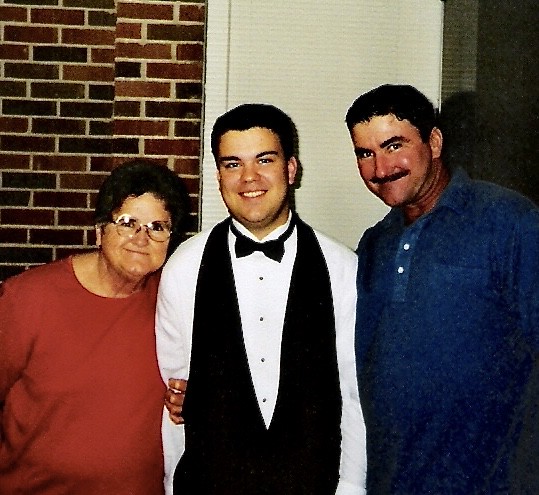 denied the chance to say goodbye was probably what sharpened my grief the most.
Her bear hugs were now out of reach, but it was a comfort to know our hearts could still communicate across any distance. She lived her whole life in Louisiana, rarely traveling more than 2 hours from home. Now freed from her earthly entanglements, I envisioned her flying effortlessly with her angel wings all the way to Chicago to say goodbye — a beautiful, healing journey before rising to take her place in the stars to watch over us.
A few years later, I was listening to music in my cubicle at work when I suddenly realized I was holding back tears. From an album entitled “A Handfull of Quietness” by Kathleen Ryan, a piano solo named What the Stars Saw on the Prairie instantly brought me back to that vision of my grandmother’s journey. I bought the mp3 and listened to it frequently; each time, it brought more comfort to me.
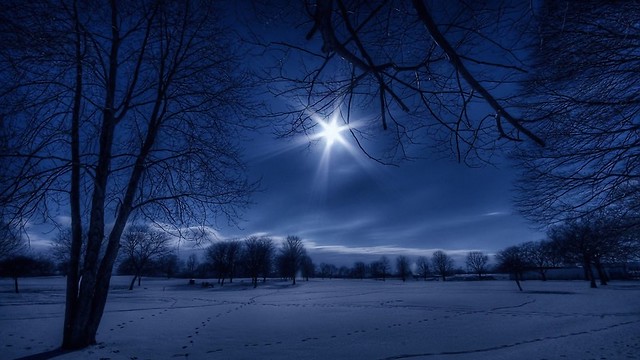
Eventually, I decided to take a bold step and try to perform this piece. I went to Kathleen’s website, but to my dismay the sheet music was not offered. Checking back several times over the course of a year, I finally built up the courage to write to her personally to ask for the music:
- “… For some reason — perhaps the combination of the sound of this piece and its programmatic title — this music brings me back to that time when I had to reconcile the death of a close loved one with the knowledge that she would still be looking down on me from above. It’s a very healing piece for me, personally. Her powerful but gentle presence, I feel, is within those harmonies you put together. If you could please consider releasing the sheet music someday, I’d be very grateful.”
To my delight and surprise, Kathleen wrote back the very same day:
- “Thank you so much for your very kind words. I am very touched that you find What the Stars Saw on the Prairie to be healing and to be a reminder of your grandmother. It is a very special piece for me, too, possibly my favorite of everything I’ve created. “Powerful but gentle” is indeed what that piece means to me; your grandmother must have been someone quite special.
… I’m just lazy about writing music down (happily I have a good memory!) and What the Stars Saw on the Prairie is just complex enough that I haven’t faced it yet. But since I know you would like to play it, I’ll make it the next one to be notated, how’s that?”
And so began a very meaningful collaboration with Kathleen. She wrote to me, occasionally, giving me updates on her progress of notating the piece. A rather  big complication arose when just a few months after we got in touch she broke her left wrist and was unable to play for some time. Being unable able to play, notating it became impossible.
Thankfully, Kathleen persevered. Then, when the music was finally in front of me, I became faced with a tall task of my own: learning what turned out to be quite a complex piano solo — the most technically-challenging piece I’d ever attempted to play! Learning to perform it became another way of connecting with the music and with my grandmother’s memory. It took over a year, but I eventually got up the nerve to perform it for a small home recital in 2013.
Honestly, I figured this was the end of my relationship with this piece of music: I’d faced the challenge and successfully performed it. But, when I began compiling pieces for this year’s Winter Songs & Carols concert with the theme of “grief, loss, healing, & renewal” in mind, I gradually came upon the idea of arranging Kathleen’s piece for winds and piano. I saw it as an opportunity to draw out even more of the colors  Kathleen had put into the work while reconnecting with the deep meaning the piece holds for me.
I wrote to her to explain my idea, and she kindly consented to let me tinker with her creation. Over the course of a few weeks, we passed drafts of the score back and forth until we were both pleased. The new arrangement is now officially available for sale (an exciting first for me), and will have its premiere at our concert this December!
I’m deeply grateful to Kathleen for her support and generosity during this entire experience: it’s no trivial matter to turn your music over to someone else’s imagination! I’m also grateful to Manitou 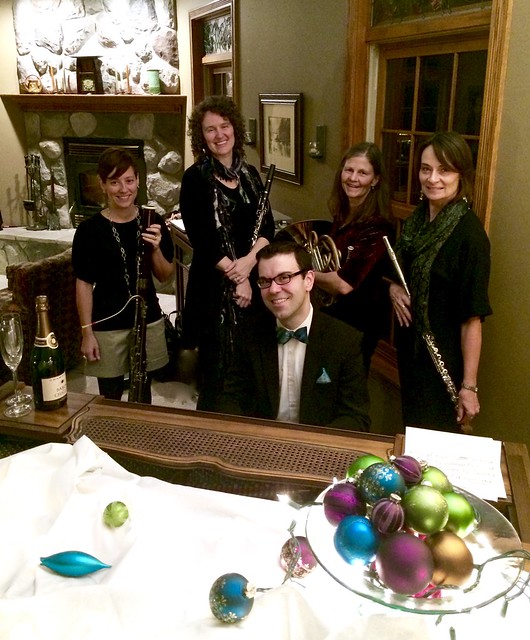 Winds. Rehearsing this has been an intense, emotional delight; their musicianship bringing these lines to life.
Collaborating for this project reminded me what little control we have as composers, arrangers, and musicians over the effect our music will have on each listener — and how wonderful it is to not have control of that! Music reaches out to each of us in unique and surprising ways, touching our hearts even amidst times of grief when words remain hopelessly out of reach.
Listening for Silence

In our annual winter concert, Manitou Winds presents
a program of music, poetry, and prose
inspiring you to embrace winter.
Embracing winter can be tricky for some of us as it tends to arrive on our doorstep with a significant amount of baggage, doesn’t it? As the days grow shorter and the weather becomes a daily challenge, we tend to spend a bit more time indoors ruminating over another year almost gone. Suddenly we’re also faced with the holidays — bringing a host of traditions, obligations, and (perhaps like Ebenezer Scrooge) “ghosts” from the past.
Finding the ability to embrace winter requires us to venture somewhere beyond the reaches of our comfort zone (or at least what presently seems comfortable). We have to step away from the inviting warmth of the fireplace, out-of-range of the familiar, hypnotic hum of our modern gadgetry. We have to shut out the ceaseless chatter of 24-hour news, the invasive ads, the mountainous junk mail, the screens of e-mails … Winter invites us outdoors to find a silence hard to find in our 365-days-of-summer lifestyles. In our harried world, could there be a sound more profound than silence?
Winter Uplands
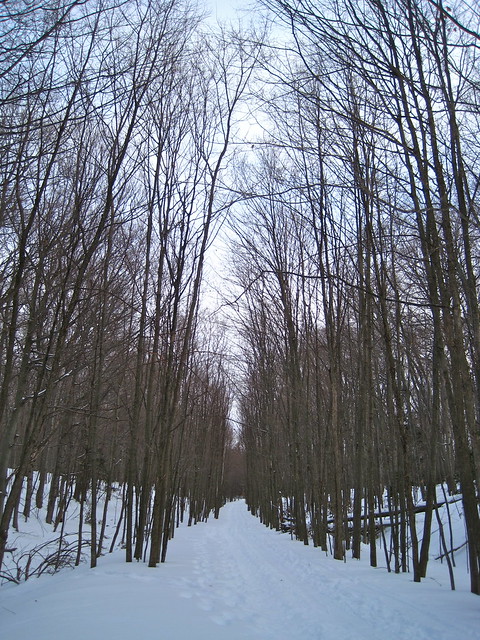
The frost that stings like fire upon my cheek,
The loneliness of this forsaken ground,
The long white drift upon whose powdered peak
I sit in the great silence as one bound;
The rippled sheet of snow where the wind blew
Across the open fields for miles ahead;
The far-off city towered and roofed in blue
A tender line upon the western red;
The stars that singly, then in flocks appear,
Like jets of silver from the violet dome,
So wonderful, so many and so near,
And then the golden moon to light me home–
The crunching snowshoes and the stinging air,
And silence, frost, and beauty everywhere.
— Archibald Lampman (1861-1899)
Canadian poet Archibald Lampman grew up in the countryside but spent much of his adult years in cities, only visiting the country for extended trips. He found simplicity and grace in the natural world when urban life proved to be utterly dehumanizing. An avid hiker and camper in the wilds of Ontario, Lampman’s poems are awash in sounds and imagery from nature and all four seasons.
Sadly, his life was cut short by a heart weakened by rheumatic fever; he died at 37. In his short life, however, he 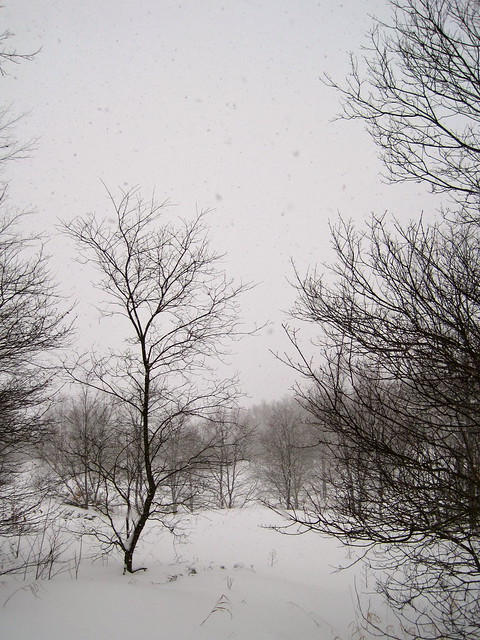 wandered along the banks and fields finding wonder in nature’s ordinary beauty. Even later in life, beset with sorrow from the sudden death of his infant son, he found solace in nature and the cycle of its seasons.
“The evening deepens, and the gray
Folds closer earth and sky;
The world seems shrouded far away;
Its noises sleep, and I,
As secret as yon buried stream,
Plod dumbly on, and dream.”
— from “Snow”, by Archibald Lampman
Celtic-New Age composer, Loreena McKennitt, set Lampman’s poem “Snow” to music for her 1987 album To Drive the Cold Winter Away. For our first-ever Winter Songs & Carols performance in 2015, I created an arrangement for piccolo, flute, clarinet, bassoon, lever harp, and soprano. Because the lyrics speak so perfectly to this year’s theme of peace, healing, and renewal, we’re dusting off the arrangement 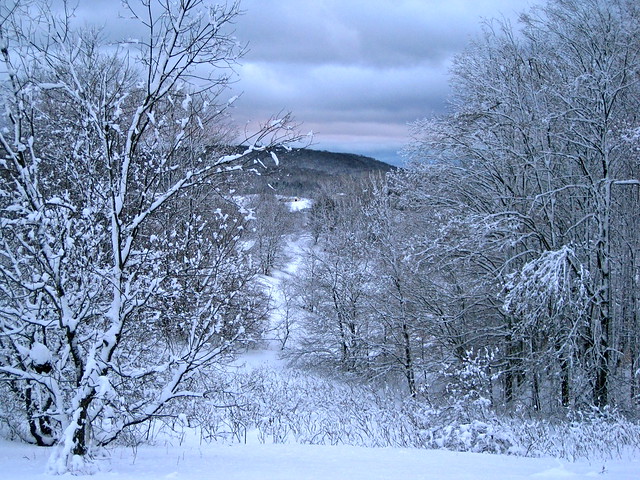 and are excited to perform it featuring Emily Curtin Culler, soprano.
Lampman’s poetic lines, McKennitt’s lyrical music, and the colorful combination of winds, harp, and Emily’s beautiful voice combine to create a heartwarming invitation to embrace winter as a welcome guest. Within winter’s blustery cold and hush lies a peaceful space to find quiet and time to dream.
We hope you’ll join us, this December, for an inspiring evening of music, poetry, and prose exploring the season of winter.
Variety: It’s the Spice!
Our September 24th concert was an experiment: a test to see just how much variety could be crammed into a single concert program performed by a single ensemble. To up the ante, we also added an element of chance; allowing the audience to play a game to randomly select the concert order.
Twelve different instruments and one guest musician later (Eric Olson, alto & tenor saxophone), we wound up with a concert that ran the gamut from Handel and Mozart to Hoagy Carmichael and Stevie Wonder! Here’s a list of the selections in the order they were performed:
Overture from “The Barber of Seville” G. Rossini/arr. B. Holcombe
flute, oboe, clarinet, horn, & bassoon
Playground H.A. Curtis
piano solo
Contradanza from “Three Pieces for Clarinet & Piano” P. D’Rivera
tenor saxophone
I. Allegro from “Horn Quintet in E-flat Major”, K. 407 W.A. Mozart/arr. B. Holcombe
flute, english horn, clarinet, horn, & bassoon
Royal Garden Blues C. Williams & S. Williams/arr. Ken Abeling
flute, oboe, clarinet, horn, & bassoon
Sir Duke S. Wonder/arr. J.T. McKinney
flute, oboe, clarinet, horn, & bassoon
The Nearness of You H. Carmichael
tenor saxophone & piano
III. Brazileira from “Scaramouche” D. Milhaud/arr. D. Stewart
piccolo, flute, oboe, clarinet, alto saxophone, horn, & bassoon
Ancient Pines L. McKennitt/arr. J.T. McKinney
flute, clarinet, & lever harp
I. Natalie Fraser (hornpipe) from “A Suite of Cape Breton Tunes” J.T. McKinney
flute, clarinet, & lever harp
Summer Waltz L. Hood
flute, clarinet, guitar, & lever harp
Cranberry Island D. Tolk
piano solo
Overture from “Music for the Royal Fireworks” G.F. Handel/arr. T. Cramer
flute, oboe, clarinet, horn, & bassoon
To facilitate this colorful program based purely on variety and fun, we enlisted the aid of Jan Ross (aka Janice B.), voice-over artist, and our production manager, James Deaton (aka. J.D), to co-host the concert as a game show. Janice B. and J.D. selected audience members at random to come forward and randomly select the concert order. Those audience members were then entered into a special prize pool for a chance to win one of three prizes.
Adding even more flair to the event, we were joined by guest artist, Lori Feldpausch, who brought a dazzling array of paintings from her home studio to create an elaborate exhibit in the church’s narthex.
We were honored to be a part of St. Andrews Presbyterian Church’s “Concert on the Hill” series, and we’re delighted to have played a part in raising funds for Habitat for Humanity of Benzie County and Northwest Michigan Supportive Housing.