
Found Objects

Do inanimate objects have a narrative, a story to tell from their perspective? Can ordinary objects be viewed as works of art? Artists have explored this concept throughout history in one form or another, but composer Jenni Brandon (b. 1977) may be the first to set this inanimate narrative to music.
 This spring, Manitou Winds will perform three movements from Jenni’s “Found Objects: On the Beach”. The six-movement trio, commissioned in 2014 for the PEN Trio, is a colorful, imaginative work bringing to life the narratives of “natural artifacts” the composer discovered on her walks along the coast in Long Beach, California. The motifs and themes of each movement perform double duty, setting the scene while inviting the listener into a world viewed from the perspective of each object.
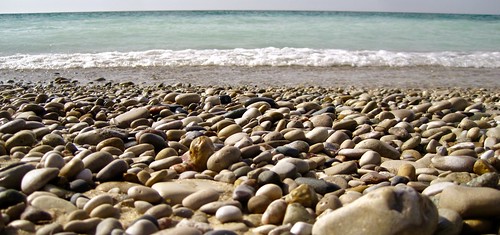
Movement one, Tumbled Stones depicts the power of the ocean’s currents and waves as they tumble and sculpt the stones littering the sand. With her masterful skills of tone painting, Jenni uses the three voices of the trio (oboe, clarinet, & bassoon) in rising and falling patterns to depict waves. The rounded waves are punctuated by playful motifs depicting the pounding surf and tales of each stone’s journey.
Our trio has enjoyed navigating and negotiating the musical challenges built into this movement—practically a synchronized dance for three! In order to avoid stepping on the toes of your partners, performing it requires knowing the other two parts as intimately as your own. We have to communicate constantly throughout the performance to keep each other in balance, but — at the same time — we have to allow each other the freedom to express our parts individually. The first movement of this trio, in particular, really forces us to flex our ensemble and musiciality muscles!
Kelly Green Sea Glass, movement two, is a beautiful unaccompanied clarinet solo. While finding glass on the beach can be dangerous, over time sand and sea wear away at its sharp edges to create small gem-like pieces. Gradually, the “gems” dissolve into tiny particles of sand, returning to their origin. Through the use of a special technique (timbral trill), Jenni tells a story of sea glass as it stares at the sun from beneath shallow waters. 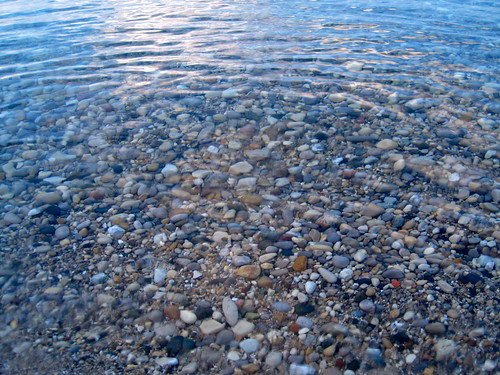 The melody rises and falls, shimmering and gradually disappearing.
The third movement we’ll perform for the concert is the final movement of the trio: Seashells. Jenni chose a lilting waltz as the storytelling medium for these colorful natural works of art. Just as each seashell is slightly different from the next, the context and color of the melody changes throughout the movement before the ocean waves eventually return, creating a rousing conclusion.
Up north, along the coast of Lake Michigan, where the water is unsalted and the waves are (usually) smaller, we can still appreciate these musical narratives about water’s beauty and its power to change the world around us. Though many of the rocks we find on our beaches were left behind by glaciers carving out our inland seas, they tell a compelling tale nonetheless (including the Petoskey stones). Thanks to a hopefully small cadre of careless beachgoers, we can even occasionally find sea glass all along Lake Michigan’s beaches in many shades!
We’re delighted to present another excellent work by Jenni Brandon, one of our favorite contemporary composers and a champion for modern chamber music. We hope you’ll join us May 11, 2019, to hear the trio as part of our spring concert, “Found Objects”.

To learn more about Jenni Brandon and her growing catalog of works, visit her website. To discover more about Manitou Winds’ ongoing exploration of Jenni’s music, click here to read past articles from our Manitou-Zine.
Sail Away Summer

On Friday, August 25, we presented Sail Away Summer, a special program combining music, poetry and storytelling at the Old Art Building in Leland, MI. On Saturday, September 16, we’re performing an encore presentation of this program at the Oliver Art Center in Frankfort, MI.
This is an eclectic program of traditional works and originals bridging Classical, Celtic, and Folk styles, interspersed with inspiring spoken word to tempt the imagination. Best of all, we get to share all of this with you a mere stone’s throw from one of your favorite Lake Michigan beaches!
Our entire program is interwoven with poetry and short stories thoughtfully selected by our reader and narrator, Jan Ross, and some written by Jason McKinney. The readings expand upon the themes of the music and are sometimes embedded within the musical performance.

We’ll start the evening by embarking on a journey to the Shetland Islands with Jason’s Shetland Air & Reel, a lyrical work he composed for wind quintet. A mix of large and small, inhabited and uninhabited, the Shetlands are certainly remote. Over centuries, the islands have been settled, ruled, and influenced by both the Celts and Norse peoples. The first movement, Da Slockit Light, is based on a tune composed by Shetland fiddler Tom Anderson (1910-1991). Having grown up on the islands, Anderson remembered the days when villages were teeming with life and activity. As the decades passed and economic hardships came, however, he noticed fewer and fewer lights in the hills as evening approached. A “slockit” light is a light that has gone out, referring to his fond memories of vibrant village life now dwindling. The second movement, Sleep Soond I’da Moarnin’, is a fast-paced reel straight from the Shetland Islands sure to get your feet tapping.

Next, we’re excited to present Jason’s newest work for wind quintet: Is This a Poem? Inspired by a poem (and a doodle in the margins) written by Izzy Simpson, a second grader at Leland Public School, this quintet is filled with color, surprises, humor, and maybe a touch of child-like wisdom. “At first, reading Izzy’s short poem made me chuckle,” Jason remembers, “but the more I thought about it, the more clever and inventive it seemed to me. I quickly began to hear musical lines in the words, see colors between the lines. I gradually began to feel this was a child’s exploration of the entire creative process. At some point, haven’t we all questioned our value, our creativity, our motivation, our material, etc., as part of the process of making whatever art it is that inspires us?” In a short piece, the entire quintet is called upon to play many different characters and mood changes. Each instrument has its moment to bask in the bold, yellow glow of the finger-painted sun. (You’ll be able to see a painting by Izzy at the performance!)

Our narrator will then transform into many different characters as we marry music with storytelling, combining Peter Shickele’s Seven Bagatelles with selections from Jason’s Seven Unfinished Stories. The performance calls on flute, oboe, clarinet & bassoon to create seven musical miniatures — each rife with curiosity and mystique — while Jan Ross brings to life an entire crew of unrelated characters onstage. Like each movement of the music, each story drops us into a different setting amid the saga of completely unrelated characters. The stories are “unfinished” because they conclude with a cliff-hanger, a lingering question, or they’re a full scene but clearly not the end of the story. You can find more about this musical pairing in an earlier Manitou-Zine article.

Then, we’ll follow the healing journey of a wounded raptor rescued by healing hands with Laura Hood’s First Flight. This unique quartet for flute, clarinet, guitar, and harp has been a concert favorite since we first premiered it in 2015. You can find out more about Laura’s inspiration for this piece in an earlier Manitou-Zine article.

Next, we set sail for the Orkney Islands where we’ll hear one of many legends about the Selkie people who are said to inhabit these islands, magically transforming from human to seal. Jan will regale us with the tale of The Goodman o’ Wastness set against the backdrop of harp accompaniment by Jason.
Last summer we premiered Jason’s The Old Ash Tree with the Benzie Area Symphony Orchestra. For this performance, we’ll perform Jason’s original chamber music version for flute, clarinet, bassoon, guitar, and harp. Dedicated to Jason’s grandfather who died in 2022 of Alzheimer’s Disease, this is a piece about strength, beauty, and hope. You can learn more about this piece in an earlier Manitou-Zine article.

Next, we’ll sail across the sea to Ireland, near Limerick, to discover the old fiddle tune that inspired Jason to create Willow Song (Baint Áirnidhe faoi Ghílúr na gCraobh), a peaceful work for clarinet, guitar, and harp. “When I hear the tune, especially now, I’m instantly brought to a place of peace,” Jason explains. “I feel it’s about seeking solitude and comfort beneath a favorite tree or in a forest. There’s a certain sadness or pain in the melodic line and harmonic motion, but there’s also the sense that this trouble is being lifted up into the branches — there’s communication between human and tree.”
Crossing the Atlantic, we’ll make our way to the Isle of Cape Breton to hear a lilting waltz in the little village of Mabou, where Joey Beaton wrote David Bradley Beaton’s Jig. Beaton wrote this to honor his son’s eighth birthday. Laura and Jason have turned it into a nice little dance number for guitar & harp.

And, to close out the evening, we make our way to our favorite barn in the heart of Leelanau County where there’s a toe-tapping dance to share by our own Laura Hood: Happy Feet! Laura wrote this inspired by the improvised dance steps of her five-year-old son.
We hope you’ll join us Saturday, September 16, for this inspiring program of music and story presented at Frankfort’s Oliver Art Center. Seating is limited, so you are encouraged to secure your seats in advance. CLICK HERE to reserve your seats via the Oliver Art Center website. Tickets are $40 each, OAC members receive a 10% discount! Limited VIP Bridge seats are available, with seating for two on the OAC’s bridge balcony (including private hi-top table with bar height chairs and light refreshments). VIP seating is $75 per person and must be purchased in pairs (limit 2 per order). For more information, visit the Oliver Art Center website or call 231.352.4151 (Mon-Sat; 10 am – 4 pm).
Complementary Colors


On Saturday, May 6, 2023, we’ll present Complementary Colors, our spring concert program exploring the use of color in many different artistic disciplines from music to painting to poetry and beyond. It’s a dynamic program of chamber music, spoken word, and visual art that combines divergent voices to create new colors and inspire broader perspectives.
The evening begins in the commons area at Grace Episcopal Church where Lauren Everett Finn, our Spring 2023 Collaborating Artist, will curate and host a special solo exhibit of her colorful floral and abstract mixed media paintings. Several of her larger works will be brought into the performance space to facilitate creative and visual inspiration during the concert. Lauren will be on site to answer any questions you might have about her pieces, you can learn more by visiting her website.
Our entire program is interwoven with poetry and excerpts of prose thoughtfully selected by our reader and narrator, Jan Ross. These readings expand upon the themes of the music and artwork. We’ll open the musical program with Landscapes, an epic three-movement work by Daniel Baldwin for clarinet, horn, bassoon, and piano.


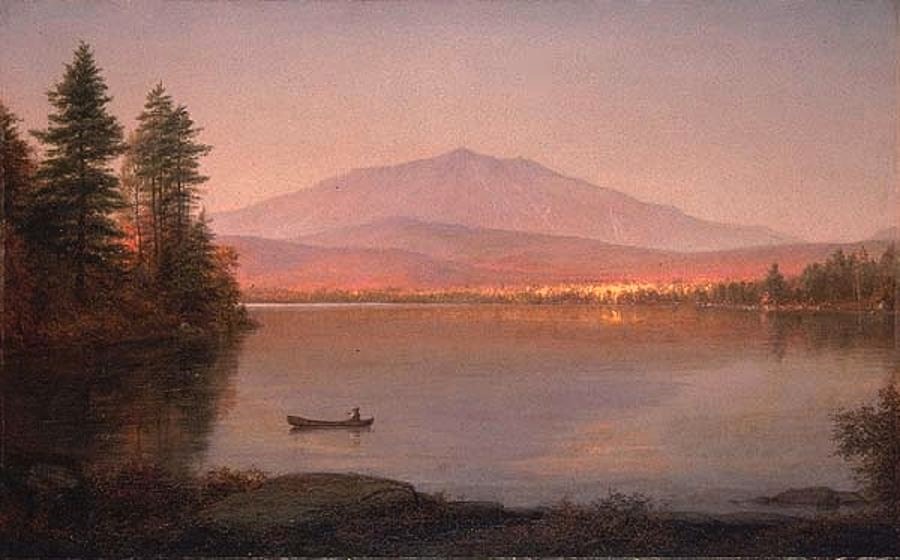
Baldwin employs this uncommon quartet to provide a soundtrack for three paintings by legendary American landscape painter Frederic Edwin Church (1826-1900). The music — more than a tone poem depicting scenery from these paintings — evokes both the imagery and its symbolism, translating it into the unique timbres of the quartet. The three-movement work is a lyrical saga exploring the early, middle, and late career of Church, covering a vast array of emotions and featuring all four voices of the quartet in heroic lines.

Next, we’ll head just beneath the surface of still waters to observe things from the perspective of seaweed dancing gently in the currents. Algues — a work for flute & harp by French composer and harpist Bernard Andrès — is a calming, ethereal piece. Each movement explores contrasting tempos, tonal colors, and textures, all evoking underwater scenes from the perspective of seaweed (French: algues). The flutist provides haunting lines while the harpist is called upon to apply special techniques to mimic the sounds of a xylophone, guitar, and even distant bells!
Then, we’ll invite to the stage our special guest, Matthew Cochran, Instructor of Guitar at Interlochen Arts Academy, who will share one of his recent compositions for solo guitar: 3 Non-Algorithmic Human Interactions.

Matthew says he wrote this triptych during the early lock-down phase of the pandemic. “My interactions with people outside of my immediate family were only possible through the intervention of software,” he says. “I suppose I’m vaguely thankful that video calls and social media are a thing, but even well-intentioned algorithms are a poor substitute for the warmth of human interaction.”

We’ll change colors again with Glory, Still, and Gentle by Janet Lanier, a moving piece employing the rare trio of english horn, horn, and piano.
In 2019, we received a donation in memory of Charles “Doug” Luther. The donor told us that — because music had always been such a big part of Doug’s life — she felt compelled to honor her friend in a way that would further the cause of music. We were very touched to learn about Doug, and as a tribute we used the donation to purchase this trio.
We’ll end our program by combining colors with Matthew to present his Cicadas at the Equinox, an evocative sextet for winds and guitar. Matthew’s unlikely sextet draws six contrasting voices into a dialogue where contrasts and commonalities are blurred like watercolors.

With Matthew’s evocative title and sensitive scoring, the mind can create its own mini documentary as the piece unfolds. You’ll follow the journey of the cicadas as they emerge emerge and take flight. A frenzied celebration soon descends as the meadow is filled with the sounds of their delight. Later, as the sun dips below the trees, they gradually disappear into the evening as one by one they go quiet.
We hope you’ll join us Saturday, May 6, 7:30pm at Grace Episcopal Church in Traverse City, MI, for this colorful and inspiring program. Admission is free. Your goodwill donations will benefit Manitou Winds and our ongoing mission to spread music and creativity throughout our region.
Cicadas at the Equinox


As creative director of Manitou Winds, I would have to say unconventional combinations are a specialty of our ensemble. Whether we’re combining seemingly unrelated instruments (e.g., clarinet, ukulele, and harp) or calling upon an instrument to play something most would consider “out of character,” we don’t mind breaking with tradition. That’s why I was excited to search for more opportunities to stretch both characters and colors in a program inspired by complementary colors.
A wind quintet is in itself an unconventional color combination. Each instrument in the ensemble has a strikingly different character because none of the instruments are in the same family. In contrast to the deeply rich and monochromatic sounds of a string quartet, brass quintet, or saxophone quartet; a wind quintet has an inherent edge to its sound. It offers a broad range of warmth, expressiveness, contrasts, and colors for a composer to experiment with.
You can imagine my delight when I stumbled upon Cicadas at the Equinox: a composition for wind quintet and guitar written by Matthew Cochran, Instructor of Guitar at Interlochen Arts Academy. After listening to the recording he created with the Coreopsis Quintet, I was determined to bring this unique color combo to a Manitou Winds program.
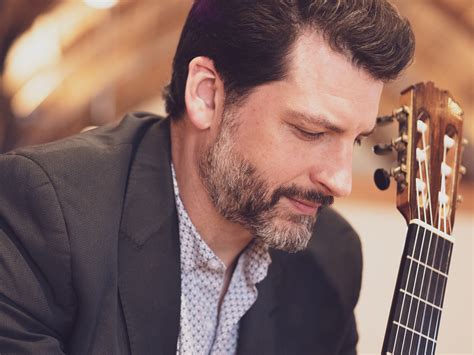
Pairing guitar and wind quintet is a bold move – some might call it “out of character.” While the acoustic guitar is an instrument capable of a large range of sound and character, many listeners generally associate it with subtlety, mellowness, romanticism, and the gentle quietude of solo passages. By comparison, the wind quintet is a ragtag, ad-hoc choir pulled straight from the quirkiest section of the orchestra. And yet Matthew’s unlikely sextet draws these voices into a dialogue where contrasts and commonalities are blurred like watercolors.
He begins with a beautiful solo guitar passage and alternates with the sustaining power of the quintet in gentle underscoring. As the piece progresses, members of the quintet take on more of the guitar’s character in their own voices. Though you might expect this to be a guitar-driven piece, as the piece reaches its climax you will likely question who’s at the wheel! The parts become remarkably interwoven and collaborative.
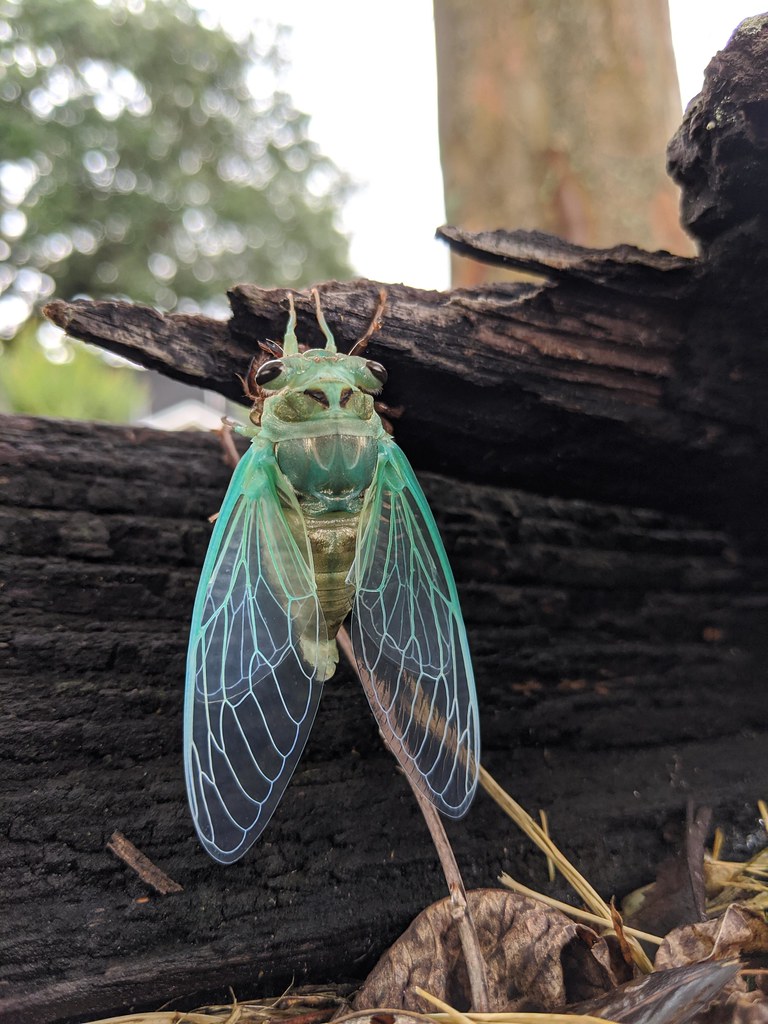
With Matthew’s evocative title and sensitive scoring, the mind can create its own mini documentary as the piece unfolds. A quiet summer morning dawns as a single cicada emerges from the ground, climbs a nearby tree, and waits for its wings. More and more cicadas emerge and take flight until a frenzied celebration descends and the meadow is filled with the sounds of their delight. Later, as the sun dips below the trees, they gradually disappear into the evening as one by one they go quiet.
“Cicadas at the Equinox is the lone survivor from an ill-fated crossover record I made in 2013 called ‘Vapor Trail from a Paper Plane’,” Matthew explained. “I’m deeply grateful to Manitou Winds for this opportunity to exhume an old friend!”
We’re honored to collaborate with Matthew to share this unique work with a Northern Michigan audience!

As part of our program Matthew will also share a three-part solo guitar composition entitled 3 Non-Algorithmic Human Interactions. Matthew says he wrote this triptych during the early lock-down phase of the pandemic. “My interactions with people outside of my immediate family were only possible through the intervention of software,” he says. “I suppose I’m vaguely thankful that video calls and social media are a thing, but even well-intentioned algorithms are a poor substitute for the warmth of human interaction.”
I couldn’t agree more! We’re grateful for each opportunity we get to share musical moments with each of you – live and in-person. We hope you’ll join us for Complementary Colors on Saturday, May 6, 2023, at Grace Episcopal Church in Traverse City. Together we’ll take you on a journey of color and texture through a dynamic program of music and spoken word. Surrounded by the artwork of our collaborating artist, Lauren Everett Finn, and the voices of modern composers, we’ll explore how artists in many disciplines use color as their language of expression.
The Art of Collaboration: Lauren Everett Finn

This article was written in preparation for our Spring 2023 concert, Complementary Colors.
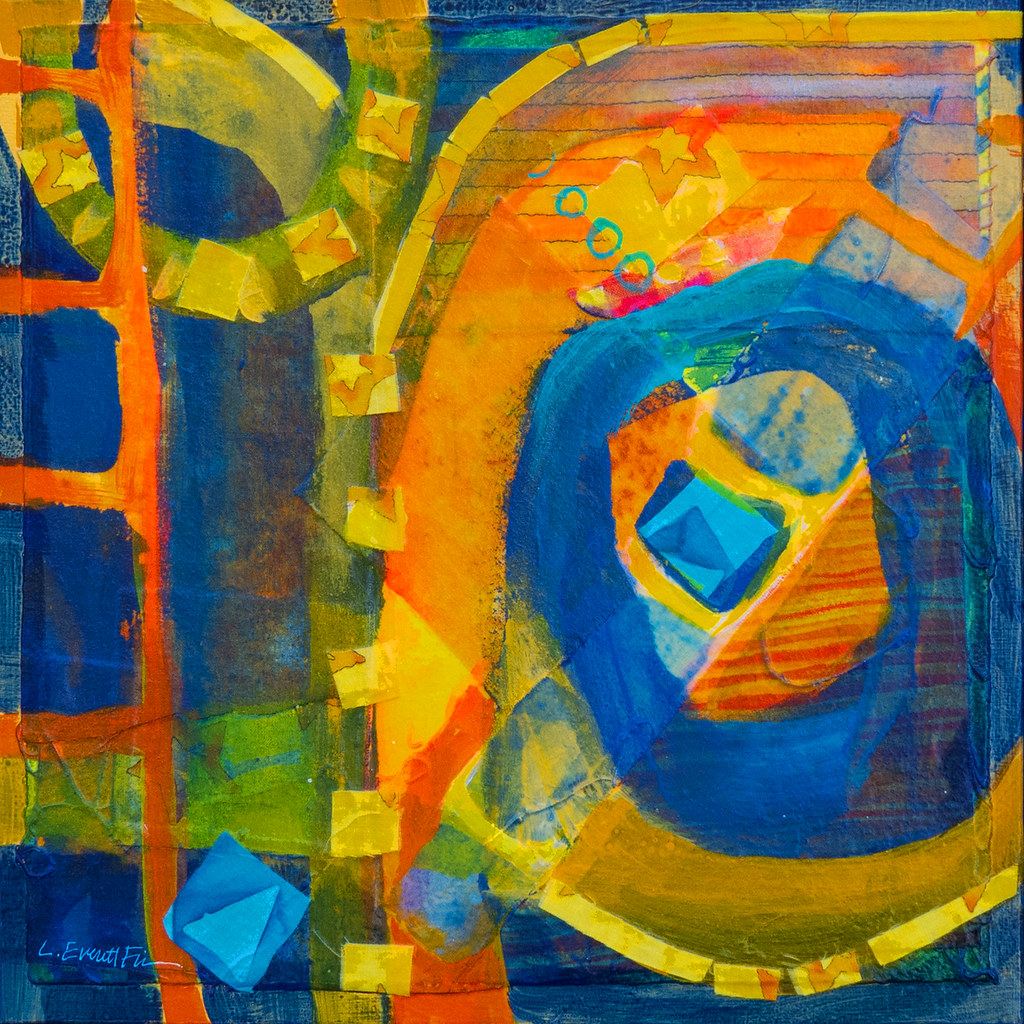
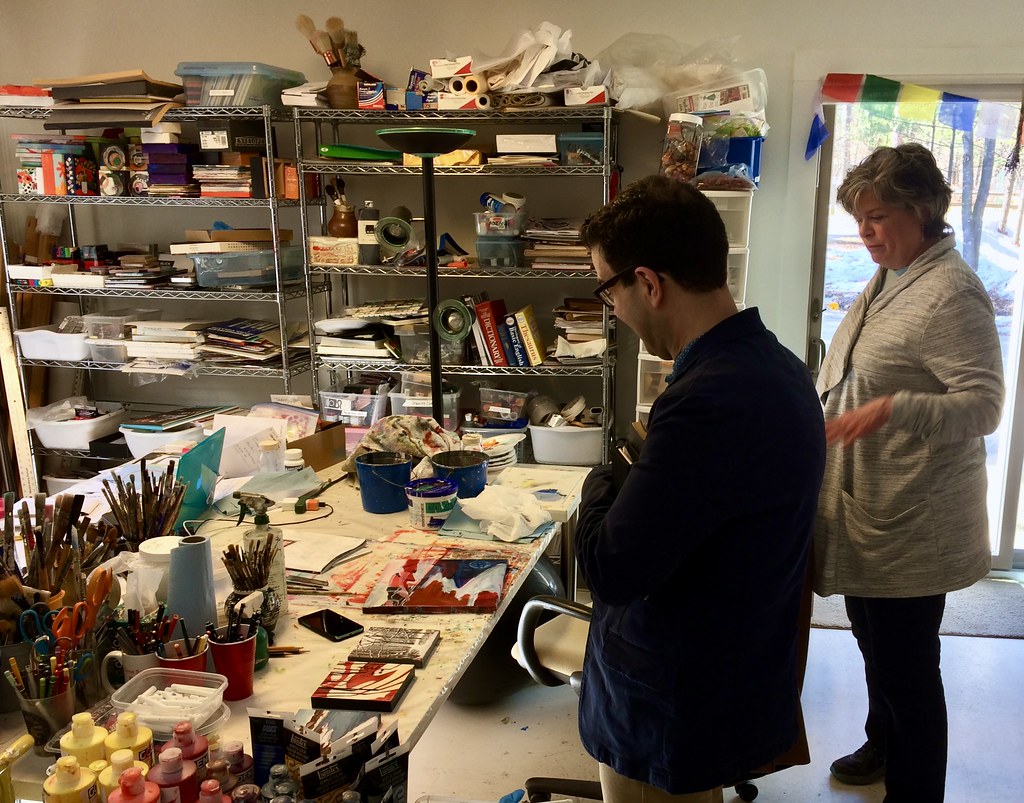
It was on a spontaneous visit in early 2020 to the Glen Arbor Arts Center that I happened upon a work by Lauren Everett Finn. Her piece was displayed along with many other artists that day as part of a juried exhibit. I remember what leapt out at me immediately was her daring use of both color and texture. Whether it’s in one of her many dazzling floral paintings or her action-packed abstract works, it’s that adventuresome juxtaposition of color and texture that often takes front and center in her art.
Lauren’s work — filled with such evocative use of color and contrast — seemed a natural fit for our upcoming program (Complementary Colors). The staff at GAAC helped me get in touch with her in March of 2020, and she was kind enough to invite us to her studio. We chatted at length about her processes, her studio atmosphere, a few specific pieces from her vast catalog, and we even selected a beautiful painting for use on the concert poster.
We couldn’t have predicted that less than two weeks later we’d all be sent into lock-down. Our spring program which was just getting on its feet was abruptly cancelled indefinitely. Though it meant shelving the collaboration, I vowed to keep in touch with Lauren and promised that we’d one day pick things back up.
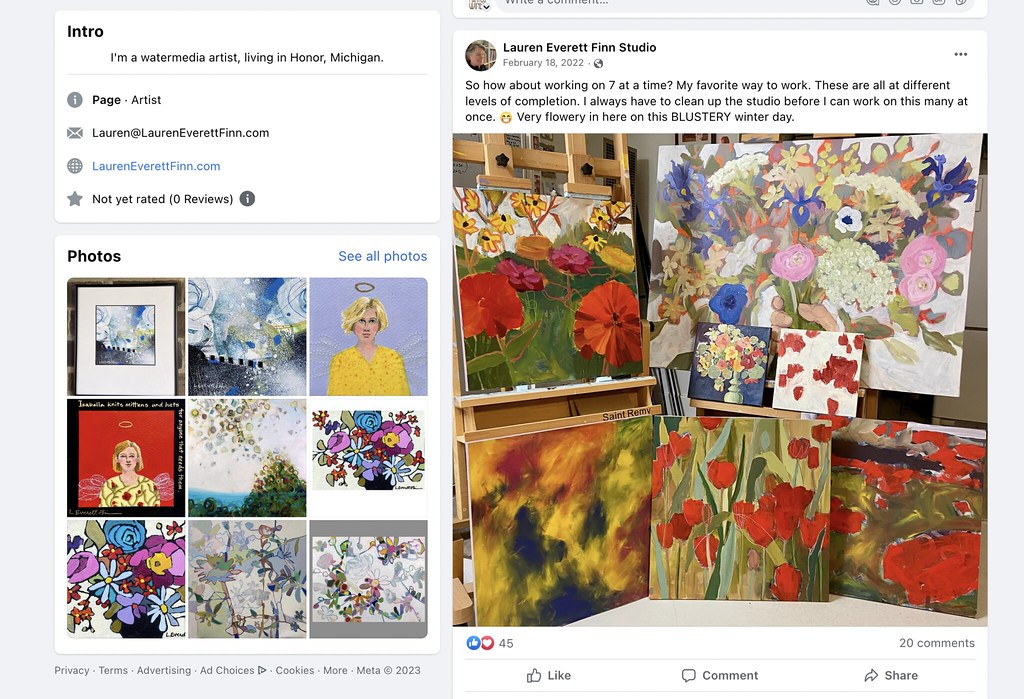
Since that introductory visit, I’ve had the pleasure of seeing more of Lauren’s work at local galleries and in exhibits and even online. Although she admits to having a love-hate relationship with social media, Lauren’s Facebook and Instagram pages provide a stunning glimpse into her process and growing catalog.
Scrolling through her feed, you can watch as pieces take shape, change, and virtually come to life. In the realm of social media where it seems literally everything is shared these days (albeit selectively curated), there’s something so inherently vulnerable and intimate in her allowing this window into her studio. It’s inspiring!
Lauren’s work is arguably about the creative process itself. “It’s the ‘what ifs.’ I wonder what would happen if — this on top of that, and that is on top of that. Some results you can predict from your experience, but sometimes you get something unexpected,” she says. “It’s the actual process. The paint. The feel of it. The opacity. The transparency. Color mixing. It’s so versatile — that’s the reason I like painting.”
Likewise, a composer summons colors and textures in the form of voices and timbres. These combine to form both a palette and an image (sometimes even a story) for the listener’s imagination. As a musician, I enjoy pondering a composer’s intentions while probing the music for more context. Sometimes there are clues in the title, style instructions over key passages, or perhaps we know from history that the piece was written during a specific event in the composer’s life. I also enjoy when there are no clues and we’re free to bring something more of ourselves to the interpretation. Some of us do that no matter what!
Much of Lauren’s recent work has been focused on two themes: florals and abstracts. This might be surprising to some who encounter the breadth her work in a solo exhibit. Somehow we expect an artist to choose one or more related themes rather than two drastically different ones. Lauren says she loves the contrast between the two themes: florals come to her fairly easily while abstracts tend to present a challenge both for her and her audience.

When was the last time you allowed a piece of artwork (be it visual or performance) to ask something of you rather than expecting it to merely entertain or distract you?
– J.T. McKinney
“With florals, you know what your subject is going to look like; abstract, you don’t. You have to create your subject,” she says. “Floral paintings are easy to live with. I find more people prefer to look at flowers than abstracts because they’re not intimidated by a floral. Somebody looks at an abstract, and you’re asking something of them.”
When was the last time you allowed a piece of artwork (be it visual or performance) to ask something of you rather than expecting it to merely entertain or distract you? Have you ever stopped scrolling to look carefully at a piece of artwork that popped up in your newsfeed? In an uncertain world, is there room to allow artwork evoke to ambiguity? Can we allow art to make us as vulnerable as the artist, and — perhaps, for a moment — become the artist ourselves?
Lauren knows this vulnerability well. “Painting is not risky in the physical sense, but in a personal sense, it can be very risky,” she says. “Every time I create a painting and show it— It. Is. Judged. It’s judged by everyone that views it, with all different levels of expertise. There is one thing you can count on; everyone won’t love it. You have to get comfortable with this.”

Creatives can make connections where there previously were none, and bring a richness and depth to an experience.
– Lauren Everett Finn
Composers and musicians confront that same risk in creating music and curating programs to present to audiences. It is tempting to present only the old favorites — those pieces that are guaranteed to get toes tapping and heads bobbing. But, as artists we long to dig deeper in order to challenge ourselves. We also want to challenge our audience — taking them with us through unfamiliar territory, asking questions while providing no quick answers, presenting colors and motifs that might take time to digest fully. (Not just head bobbing, but head tilting!)
“Creatives can make connections where there previously were none, and bring a richness and depth to an experience. We can illustrate a problem that may bring a person to a new understanding or perspective,” Lauren says. “I also think we encourage non-artists to try their hand at creating.”
We hope you’ll join us for Complementary Colors on Saturday, May 6, 2023. Together we’ll embark on a journey of color and texture in a dynamic program of chamber music, spoken word, and visual art. Surrounded by Lauren’s artwork and the voices of modern composers, we’ll explore how artists in many disciplines use color as a language of expression. Together we’ll combine divergent voices to create new colors and inspire broader perspectives.
Portions of this article were taken from an interview with Lauren
by Sarah Bearup-Neal of the Glen Arbor Arts Center.
Colors Passing Through Us

Here is my bouquet, here is a sing
from “Colors Passing Through Us”, (New York: Alfred A. Knopf, 2003) — Marge Piercy (b. 1936)
song of all the things you make
me think of, here is oblique
praise for the height and depth
of you and the width too.
Here is my box of new crayons at your feet.
When Manitou Winds takes the stage again on Saturday, October 15, 2022, at Central United Methodist Church, Traverse City, it will be the first seasonal concert our ensemble has been able to perform since September 2019. We’re excited to share music with you again, and our upcoming concert program is one you won’t want to miss!

Our program title, taken from a poem by Marge Piercy, alludes to the broadest brushstrokes of color we can encounter: color in nature, color in emotion, color in music… is there a limit? You’re invited to explore with us!

The program opens with Avian Suite by composer (and oboist) Stacey J. Berk (b. 1970). Composed in 2011 for the Polaris Wind Quintet, the work presents five movements, each depicting a different bird in its natural habitat. The soaring eagle, the owl on her eerie nocturnal hunt, the plucky territorial chickadee, the elegant swan, and the tiny hummingbird powered by nectar — you’ll hear them all take flight! This quintet has been dog-eared in our library for a while. We’ve read it and discussed it in rehearsals, and we’re eager to finally have an opportunity to share it with you.

Next we’ll be joined by special guest Thomas Bara, Instructor of Organ at Interlochen Center for the Arts and organist at Central United Methodist Church, Traverse City. Together we’ll perform Traveling Mercies by J.T. McKinney, a work for wind quintet and organ. Jason describes the work as, “a tone poem about wanderlust in which the central character seeks excitement and wisdom from faraway places, eventually returning home to find peace among familiar surroundings through the lens of his new perspective.” The limitless palette of the organ melds with the striking colors of our wind quintet to create a cinematic soundtrack.

Continuing in the theme of travel, we’ll perform Travel Notes 2 by Richard Rodney Bennett (1936-2012). An Academy Award-nominated composer of TV and film music known for his eclectic compositional interests from classical to jazz to modernist avant-garde, Bennett’s woodwind quartet presents four short musical essays depicting scenes from an adventurous vacation. Soaring high above in a hot air balloon, zipping around in a thrilling helicopter ride, relaxing poolside in an easy chair, and speeding through crowded streets in a car chase — this piece certainly keeps our fingers busy!

And we’ll end our journey with Swansea Town by Gordon Jacob (1895-1984) which is based on a Hampshire folk tune of the same name. Our fellow band musicians will immediately recognize the tune since it was featured in the opening movement of Gustav Holst’s Second Suite in F. But, unlike Holst’s treatment, Jacob’s rendition takes the listener through a series of eight variations where we can imagine the tune traveling on the wind to visit the various town folk busily going about their day.
We hope you’ll join us for a delightful autumn evening of evocative music and thoughtfully curated poetry and prose. Admission is free! Your goodwill donations will benefit our ensemble’s efforts to spread music and creativity throughout our region and beyond.
The Art of Collaboration: Thomas Bara
This article was published in preparation for our Spring 2018 performance. We’re proud to collaborate once again with Thomas Bara on October 15, 2022, and so we’re sharing it again!
The organ studio at Interlochen Arts Academy is thoroughly alive and continues to thrive thanks to the support and devoted 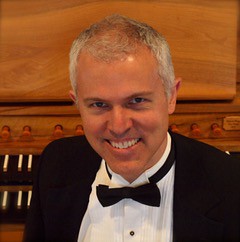 service of instructor Thomas Bara.
It’s true that organs are large, costly, and rarely found in the average home, but the reason organ students are a rare commodity is multifaceted. “For better or for worse, the organ is historically linked to the music of the church,” says Thomas. “Before the prevalence of amplified music, organ played a pivotal role in most congregational worship, so the pool of people exposed to the instrument was larger than it is today.”
With fewer people counting themselves as regular churchgoers, and some churches removing their organs or letting them fall into disrepair, the organ faces a shrinking opportunity to make an impression on budding musicians. Still, Thomas insists this is not an insurmountable challenge.
Thanks to the Internet and various forms of social media, it’s actually easier than ever for organists, composers, and would-be organ students to find one another. “Many of the young people attracted to organ, today, are drawn in by the dynamic body of work now posted online. They have instant access to the most dramatic organs and charismatic performers,” says Thomas. “I would say that finding dedicated students is still a challenge; I wouldn’t say the challenge is growing, but my students are coming from a different place than when I began teaching.”
Organists can sprout up almost anywhere, and Thomas is living proof of that! Although he came from a musical family where everyone loved singing, he grew up on a pick-your-own strawberry farm far away from his classically trained relatives. Life on the farm fostered a love of mechanical things and fed his penchant for problem-solving, as there was always something needing to be  fixed. “Embarrassingly, my entry point into music was all of the organ’s gizmos and thing-a-ma-gigs,” admits Thomas. “I loved all of the keyboards and buttons… the ultimate mechanical marvel that also sounds cool!”
“The organ in the church I grew up in was in clear view of the congregation,” he remembers. “I always picked my seat so I could watch the organist during the service.” Not surprisingly, it was a church organist (John O’Brien) who eventually became Thomas’ first music teacher. Though he wanted to hop right on the organ bench, he was first required to learn piano.
He went on to study at Interlochen Arts Academy and then earned degrees from the University of Michigan and the Eastman School of Music, where he received the prestigious Performance Certificate and the first Harold Gleason Emerging Artist Award. Having performed as both an acclaimed soloist and accompanist in New York, Copenhagen, Cambridge, and 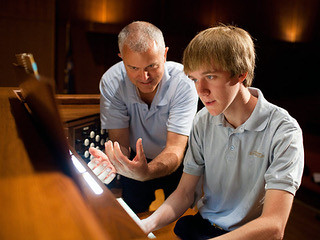 London, Thomas has returned to Interlochen where he masterfully trains students, most of whom go on to attain impressive accolades and performance positions.
Asked if teaching organ might be different than teaching other instruments, Thomas says he believes all instruments require basically the same core values in both teachers and students. “The traits I work to model and champion for my students are passion and individuality,” he explains. “Passion drives us to work hard, to strive to learn as much as we can, and to do the dirty work even when we don’t feel like it. Passion motivates us to leave our comfort zones and to try again after we fail. Passion goes hand-in-hand with individuality, so I do not believe in doling out the ‘definitive’ interpretation of pieces. I want my students to invest themselves in the music and commit to 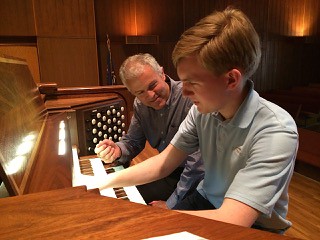 their ideas.”
While the organ may not be as familiar to concert audiences (especially chamber music audiences) as it once was, organists know firsthand it is surprisingly versatile, adding color and richness no other instrument can provide. Thomas admits there are cringe-inducing misconceptions about the organ and what it’s like to play it. “Any guesses how many times I get asked to play ‘The Phantom of the Opera’ or ‘Come on Baby, Light My Fire’?” he laughs. “People often identify the organ with loud, spooky chords full of clamorous harmonics — that, or the Hammond B-3. Truth is, the organ is extremely versatile. It can cover everything from super-soft pianissimos to towering fortes. I love surprising people with how great the organ can be as a collaborative instrument.”
Great musicians can often discover new insights even within familiar repertoire as they return to those pieces over the years. When Thomas joins Manitou Winds in concert,  however, he’ll premiere a brand-new work for organ and wind quintet written by Manitou Winds founder, Jason McKinney. There will be more on this collaboration in a future article.
Interpreting a piece of music with absolutely no performance history demands a creative spirit and an adventurous musicality. “More and more, I want to feel like I’m presenting a piece as a fellow composer — someone who understands intimately how a piece is put together,” he says. “With any music, new or old, I want to find the inherent genius in it and find a way to move the audience to experience it as I do.”
It starts with a downbeat

This post was originally published in preparation for our May 2016 performance. We’re sharing it again in anticipation of the world premiere of Jason’s first two works for symphony orchestra! We hope you’ll join us Saturday, July 9, as Manitou Winds joins with the Benzie Area Symphony Orchestra to premiere Ransom Lake and Platte Plains!
 I have always been hesitant to call myself a composer. Looking through scraps of manuscripts saved from my college years and my high school journals, it’s obvious I’ve always aspired to be one. Thankfully, it wasn’t some misguided pursuit of fame or fortune driving me to compose. It was a spark of inspiration that often seemed to come out of nowhere — a brisk fall breeze, a bumpy bus ride home from school, being afraid of the dark — all of these stories and sensations transcribed themselves in my head as tunes needing to be written down.
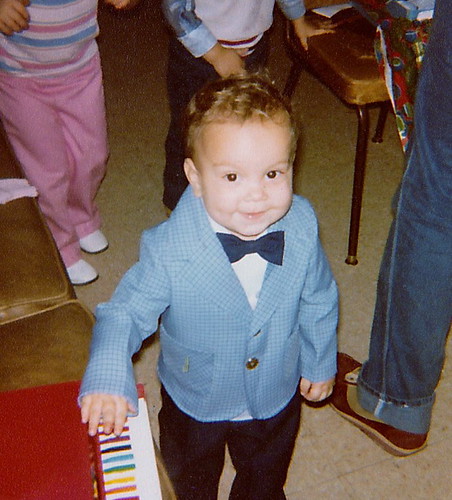
As a kid, I composed tiny pieces on my tiny Casio keyboard; I never wrote them down, I only kept them in my mental repertory. In early high school, I created my own staff paper — one line at a time — using a ruler, a pencil, and some typing paper. It would be an embarrassingly long time before I discovered or had opportunity to buy manuscript books (where the staves are already printed for you!). Between my slow, uneducated process and my unending obsession with perfectly parallel lines, it’s a wonder I ever committed anything to paper at all!
All of this scribbling eventually led to an event that forever changed my life. On October 23rd, 1996, one of my compositions was performed by a local university’s wind symphony. My high school band director, who loaned me his old orchestration textbooks, urged me to enter a national composition contest and arranged for my piece to be recorded.
To properly set the scene, I should mention I’d set aside my saxophone a few months earlier to start playing oboe (poorly). Nonetheless, I had great affection for the oboe and featured it rather prominently in my composition. Just days before the recording session, the conductor called my band director to inform us the university’s oboist would not be able to perform for the recording. He was wondering if I would perform with the group. Suddenly, writing that big oboe solo in the opening few measures of the piece seemed less than inspired. Did I want to perform oboe on the recording? I honestly wasn’t sure I wanted to play oboe ever again! But, it was my oboe or no oboe, so I agreed.
The big day came and I was onstage in the massive recital hall with all of these college people. It was my music sitting on their stands (all the lines were perfectly parallel). I had my cheap oboe reed and my school’s janky student-model oboe in my lap. I was trying to keep my cool while the musicians were warming up. I could hear random bits and pieces of my composition flying all over the place.
The pianist came over to me and very politely mentioned that — for my next piece — I should be sure all the beats line up in both staves for the piano part. Wide-eyed, I nodded in agreement. In time, I would also learn that dots always go to the right of the note-head and flags always fly to the right regardless of which direction the stem is pointing (or which way the wind is blowing).
Finally the moment came, and the conductor gave that first downbeat…
For as long as I live, I’ll never forget the feeling. It was as though the room was spinning while sound was coming from all around me — not just any sound, but a “living sound”. It was more than sound, it was colorful and vibrant — almost tangible, as if every particle in the air was vibrating, coming to life, glowing. The sound was more alive than anything I’d been able to imagine while making all those scribblings on my homemade staff paper.
When the time came, I played the oboe solo to the best of my ability… my warbly, reedy, sharp, unrefined ability. As much as I should have been afraid, the energy inside that swirling sound buoyed my sunken confidence, overshadowing my worries about how unqualified and unworthy I was. Music really is a miraculous thing.
I did not win the competition, of course. I didn’t even land an honorable mention. It was a national competition. I was from a very small public high school (fewer than 300 students). I’d never had an opportunity to write a large-scale piece before; my entire high school band was never more than about 25 students. I’d never had a music theory class or used music software. I had so much to learn! Rather than being disappointed, however, I was hooked: the spark from that first downbeat forever branded me a composer.
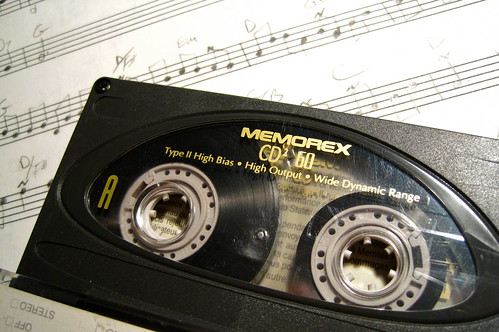
I listened to that recording every day for a long time. I kept wanting the feeling of the first downbeat to come rushing over me again, to feel that sound coming to life and coursing through me. I quickly learned it is a very elusive feeling not even the best recording can capture. Now when I listen to that cassette recording, more than 20 years later, that piece, that day, that oboist, all seem so distant, unreal. I also understand the biting, cringing feeling of regret and remorse driving some composers to destroy their early compositions!
Fortunately, among the musicians of Manitou Winds, I have found an opportunity any composer would envy: living, breathing musicians who willingly play any scribblings I place in front of them. I have the honor of learning from their experience while enjoying that elusive “living sound” far more often than I would have ever imagined.
And now I’m delighted to share my work with the entire Benzie Area Symphony Orchestra and Maestro Tom Riccobono. I’m excited to see how much more I can learn. I can’t wait to see where the music will take us, how far the collective energy of that many musicians can go (it’s gonna be rocket fuel!!)… and it all starts at the first rehearsal and that downbeat!
Album Release Party!

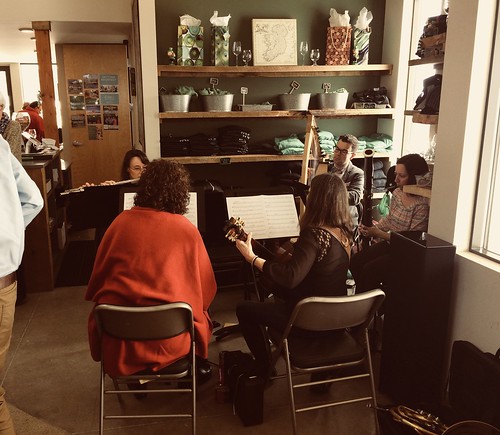
On Saturday, March 9, 2019, we invited everyone to Rove Estate Vineyard & Winery in Leelanau County to celebrate with us in the release of our debut album, First Flight. An afternoon of excellent local wine and beautiful local music, it was great to visit with you and share some selections from our album along with some newer things we’ve been working on.
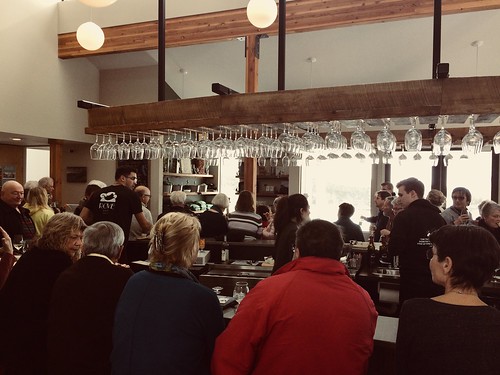
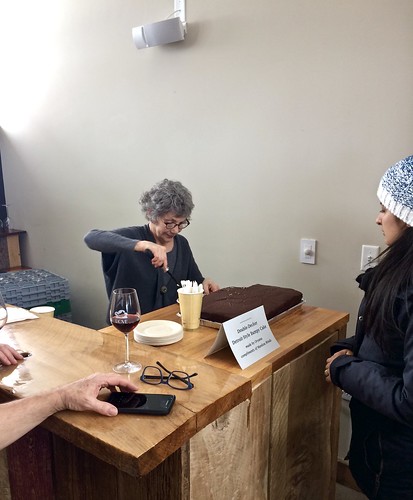 In addition to the award-winning wines and beautiful charcuterie platings from Rove, we were dishing out a Double-Decker Detroit-Style Bumpy Cake from Oryana Community Co-Op.
It isn’t often a local chamber group has the opportunity to create and produce an album. The best part of the party for us, was the opportunity to thank, face to face, many of the people who made our album possible through their donations at our concerts or during last autumn’s Kickstarter campaign.
In our first performance set, we performed colorful quintets:
Shetland Air & Reel — Traditional Shetland, arr. J.T. McKinney
flute, oboe, clarinet, horn, & bassoon
Royal Garden Blues — Clarence & Spencer Williams, arr. Ken Abeling
flute, oboe, clarinet, horn, & bassoon
The Old Ash Tree — J.T. McKinney
flute, clarinet, bassoon, guitar, & harp
A Fine Winter’s Day — J.T. McKinney
flute, clarinet, soprano saxophone, bassoon, & guitar

After more chatting (and cake and wine) we performed a second set of mixed quartets & trios:
Lytlington Tune — S.H. Nicholson, arr. J.T. McKinney
flute, clarinet, & harp
Summer Waltz — Laura Hood
flute, clarinet, guitar, & harp
Seoithín Seo Hó — Traditional Irish, arr. J.T. McKinney
flute, clarinet, & harp
First Flight — Laura Hood
flute, clarinet, guitar, & harp
III. The Night the Goats Came Home — Traditional Cape Breton, arr. J.T. McKinney
flute, clarinet, & harp
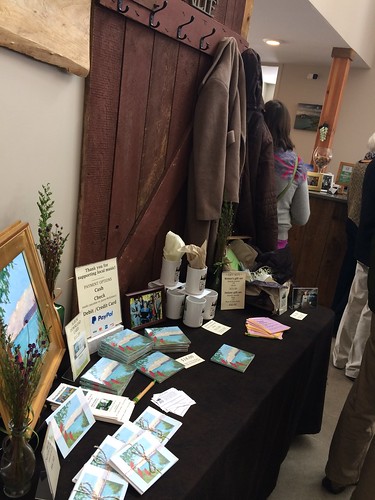
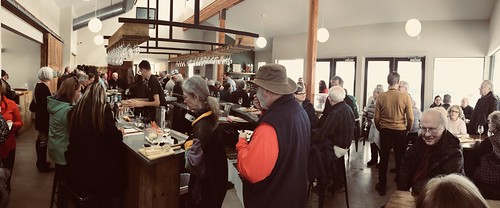
We hope you enjoyed the party as much as we did! If you didn’t have a chance to purchase a copy of the album during the festivities, please stop by our CD table at our next concert. Or you can visit CD Baby any time to order a copy or download it to your preferred device.
Winter Songs & Carols: Our 2018 Concert Program

Our 2018 Winter Songs & Carols program was tremendous fun to present and an exciting evening for both performances! We were honored to perform with two very special guests: Emily Curtin Culler, soprano, and Katherine Drago Luellen, mezzo-soprano.
The year had been a very busy one for the ensemble: multiple concerts, a fundraising campaign, a recording project, and recording sessions. Needless to say, we were happy to put together this program of favorite wintry pieces pulled from past programs plus a few new pieces to spice things up!
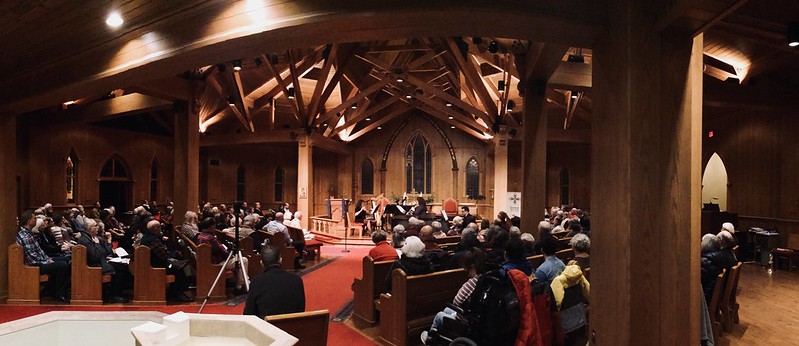
We presented an updated arrangement of Gregory Norbett’s Winter’s Coming Home which Jason arranged for our performance with Emily. You can watch the premiere performance right here!
We premiered a joyful, Celtic-flavored original work by Jason entitled A Fine Winter’s Day inspired by a full day of sledding in Leelanau County. We pulled together a truly unique instrumentation for the occasion: flute, clarinet, soprano saxophone, bassoon, & guitar! Watch the premiere performance here!
We premiered another original work entitled Midwinter Twilight which Jason composed especially for our upcoming debut album. It was an intertwining of music and narration depicting a fiery sunset just after the winter solstice. It was a fun experience (and challenge) incorporating narration into live performance! If you weren’t able to join us you’ll just have to wait for your copy of the album to hear the piece.
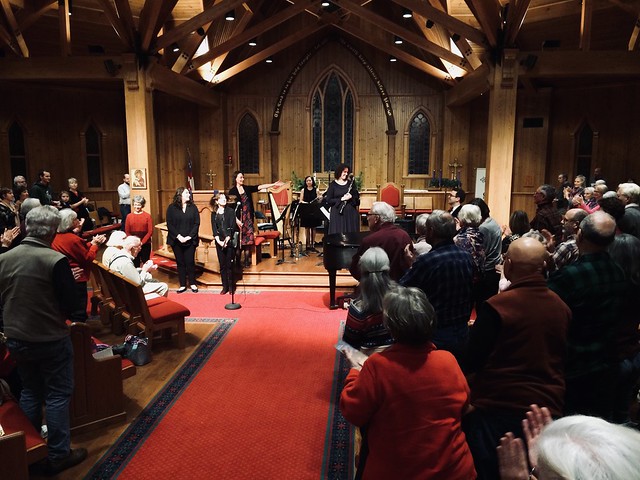
As usual, admission to the concert was free. Freewill offerings from our audiences at both performances helped to raise funds for the Friday Community Lunch at Grace Episcopal Church, arts and music programs at the Leelanau School, and operating expenses for our ensemble. Many thanks to our audience for helping us help our community.
And special thanks to our hosts (Grace Episcopal Church, the Leelanau School, and Glen Arbor Arts Center) who provided wonderful venues and support for both concerts.
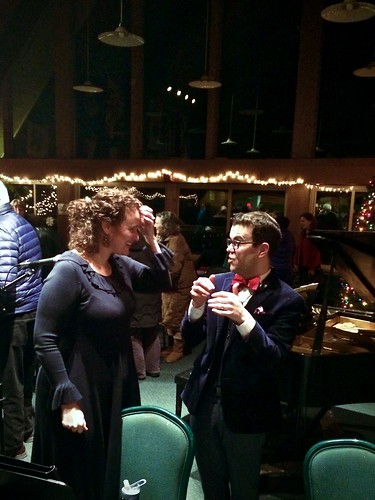
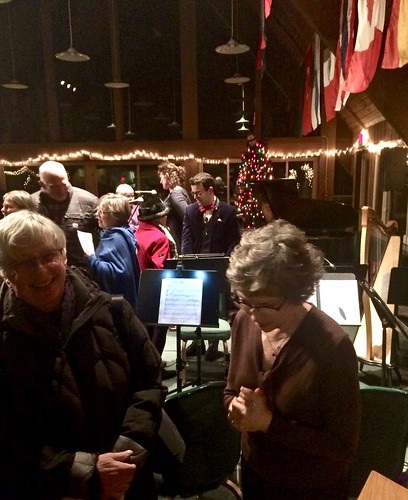
We so enjoy presenting this annual concert—a beautiful, meaningful way to kick off the holiday season each year. We especially enjoy the opportunity to talk with you afterward and hope you’ll join us at a performance in our 2019 season!